
Executive Overview
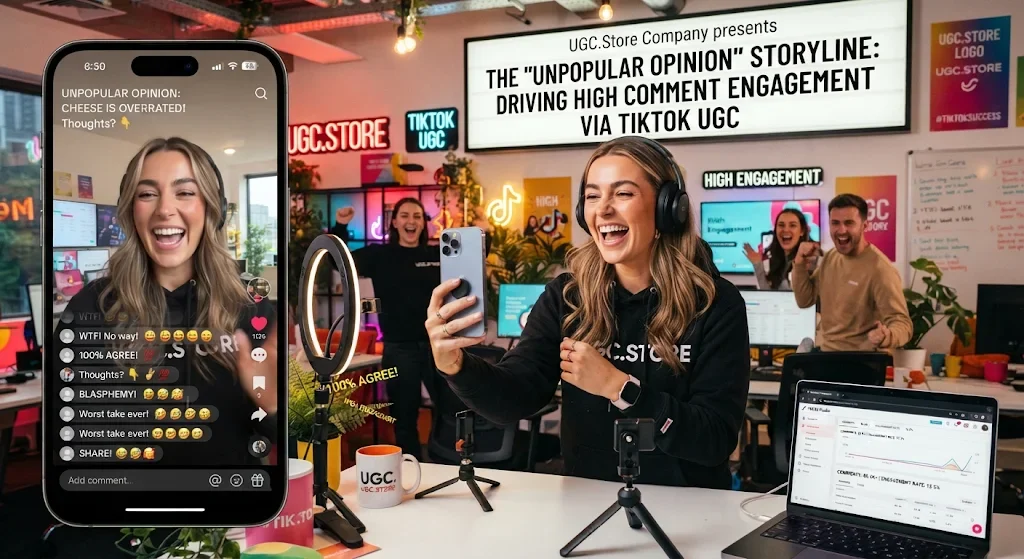
The TikTok algorithm does not reward agreement. It rewards reaction. A video that 100 percent of viewers nod along to will be forgotten in seconds. A video that forces a viewer to stop and type a furious rebuttal in the comments will be pushed to thousands of new feeds. The "Unpopular Opinion" storyline is the most reliable mechanism for manufacturing that reaction. This framework is not about being needlessly controversial or offensive. It is about taking a position that challenges the established consensus of your niche, forcing the audience to engage with the content at a depth that passive agreement never achieves. When executed strategically in TikTok UGC, an "Unpopular Opinion" storyline can generate the high comment engagement that signals to the algorithm that the content is worth distributing. This article breaks down the psychology of contrarian engagement, the exact scripting structure for delivering a controversial take without destroying brand trust, and the templates for converting that debate into downloads.
Theoretical Basis and Psychology of Mechanics
The psychology behind the "Unpopular Opinion" storyline and its ability to drive high comment engagement in TikTok UGC rests on cognitive dissonance, the need for social validation, and the algorithmic weight of comment velocity.
The first mechanism is Cognitive Dissonance. When a viewer encounters a statement that contradicts their established beliefs, they experience a psychological discomfort. The brain is wired to resolve this discomfort. In the context of TikTok UGC, the viewer has two options: scroll away and ignore the contradiction, or engage with the content to resolve it. The "Unpopular Opinion" storyline is designed to make scrolling feel difficult. The controversy is compelling enough that the brain demands resolution. The viewer stays to hear the argument, and often enters the comment section to add their own perspective.
The second mechanism is the Need for Social Validation. Humans are fundamentally social creatures. When we hold a belief, we want to know that others share it. An "Unpopular Opinion" storyline forces this dynamic. The viewers who agree with the controversial take will comment to signal their alignment. The viewers who disagree will comment to defend their position. Both groups are engaging. Both groups are providing the high comment engagement that the algorithm craves. The comment section becomes a debate, and the video becomes a platform for the discussion.
The third mechanism is The Algorithmic Weight of Comment Velocity. The TikTok algorithm tracks not just the volume of comments, but the speed at which they are generated. A video that generates hundreds of comments in the first hour is a strong signal to the algorithm that the content is highly engaging. The "Unpopular Opinion" storyline is engineered to generate this velocity. The controversy creates an immediate urge to respond. The comments pile up quickly, triggering the algorithm to push the video to a wider audience. This is the core of why TikTok UGC built on contrarian takes often outperforms safer, more agreeable content.
The fourth mechanism is The Engagement-Commerce Bridge. High comment engagement is not the end goal; it is the bridge to conversion. When the comment section is filled with debate, the viewer’s investment in the video increases. They are not just watching a commercial; they are participating in a conversation. This heightened state of engagement makes the viewer more receptive to the product. The TikTok UGC script must position the product not as the subject of the controversy, but as the solution that resolves the debate. When the product ends the argument, the conversion feels earned.
Step-by-Step Algorithm & Methodology
To successfully execute the "Unpopular Opinion" storyline in TikTok UGC, you must structure the video to deliver the controversial take quickly, defend it with evidence, and guide the resulting debate toward the product.
Phase 1 — The Contrarian Hook (0–3 seconds). The video opens with the controversial statement, delivered with absolute confidence. There is no setup or context. The creator looks directly at the camera and delivers the take that will spark the debate. The visual is intense and direct.
Example: "I am going to say it. Doing your own taxes is a waste of your time and you are probably doing it wrong."
Phase 2 — The Defense (3–10 seconds). The creator defends their controversial position with a specific, tangible reason. They do not just assert; they explain. The defense must be rational enough to make viewers question their own beliefs, even if they ultimately disagree.
Example: "You spend hours trying to figure out deductions, you miss half of them, and you are terrified of an audit. The cost of an accountant is less than the money you are leaving on the table."
Phase 3 — The Counter-Argument Acknowledgment (10–18 seconds). The creator acknowledges the opposing view. This is crucial for avoiding the appearance of arrogance. By recognizing the counter-argument, the creator opens the door for the comment debate, inviting viewers to weigh in.
Example: "I know some people love the control of doing it themselves. I get it. But control does not pay the IRS."
Phase 4 — The Product as the Evidence (18–25 seconds). The product is introduced as the proof of the controversial opinion. The creator shows the software that automates the process, proving their point. The product is the ultimate argument-winner.
Example: The creator opens the tax software app. "This is why I switched. It finds the deductions automatically and checks for errors before I submit. It takes twenty minutes."
Phase 5 — The Debate CTA (25–30 seconds). The CTA is designed to spark the comment war. It asks for the opposing view or challenges the audience to disagree.
Example: "Tell me I am wrong in the comments. I want to hear from the people who still do it manually."
Ready-to-Use Working Templates & Scripts
Script One: The "9-to-5 is Dead" (Format: B2B Productivity SaaS UGC, 34 seconds).
Contrarian Hook (0-3s): Creator looking directly at the camera, intense. Audio: "I am going to say it. The traditional 9-to-5 workday is dead, and if your company still enforces it, they are losing money."
Defense (3-10s): Creator walking through a home office. Audio: "The most productive people I know do not work eight straight hours. They work in bursts. They work when they are inspired. Forcing someone to sit at a desk at 9 AM does not create focus; it creates burnout."
Counter-Argument (10-18s): Creator leans in. Audio: "I know managers are terrified of losing control. They think everyone will just watch Netflix. But the data says otherwise."
Product as Evidence (18-25s): Creator opens a project management app. "This is why we moved to async work. We use this tool to track deliverables, not hours. Nobody cares when the work happens, only that it happens."
Debate CTA (25-34s): Creator smiles. Audio: "Tell me I am wrong. Are you more productive at 9 AM or at 9 PM? Let me know in the comments."
Script Two: The "Morning Routine" (Format: Skincare UGC, 35 seconds).
Contrarian Hook (0-3s): Creator holding a skincare bottle, looking annoyed. Audio: "Unpopular opinion: Your 10-step skincare routine is making your skin worse."
Defense (3-10s): Creator shaking their head. Audio: "You are layering ten different acids and active ingredients on your face every single day. Your skin barrier is screaming for help. You are not glowing; you are irritated."
Counter-Argument (10-18s): Creator shrugs. Audio: "I know, it is fun to buy the products. I did it too. But more is not better."
Product as Evidence (18-25s): Creator holds up a basic moisturizer. "I switched to this one barrier cream. No acids, no fragrances. My skin cleared up in a week because I stopped attacking it."
Debate CTA (25-35s): Creator points to the bio. "If you want to simplify, the link is in the bio. But I want to hear from the ten-step defenders. Tell me I am wrong."
Script Three: The "Fake Productivity" (Format: Time-Tracking SaaS UGC, 36 seconds).
Contrarian Hook (0-3s): Creator looking at a laptop screen, smirking. Audio: "Unpopular opinion: Using a time-tracking tool is actually making you less productive."
Defense (3-10s): Creator gesturing to the screen. Audio: "You spend more time logging your time than actually doing the work. You are tracking minutes while ignoring the big picture. You are optimizing for the wrong metric."
Counter-Argument (10-18s): Creator nods. Audio: "I know, bosses love the data. But the data is a lie. It measures presence, not output."
Product as Evidence (18-25s): Creator opens a different SaaS app. "We switched to this tool. It just tracks the completion of tasks. It does not care how long it took. It only cares that the result is there."
Debate CTA (25-36s): Creator looks at the camera. "Tell me I am wrong. Do you love tracking your time, or does it make you want to quit? Let me know."
Comparative Analysis Matrix
| Parameter | Agreeable UGC | Unpopular Opinion Storyline UGC |
|---|---|---|
| Primary Focus | Validating existing beliefs | Challenging the consensus and sparking debate |
| Opening Frame | Smiling, agreeable creator | Intense, confident creator delivering a contrarian take |
| Tone | Affirming, comfortable | Challenging, provocative, confident |
| Trust Mechanism | Relies on relatability | Relies on intellectual honesty and debate |
| Ad Smell | High; feels like a commercial | Low; feels like a debate prompt |
| CTA | "Buy now" | "Tell me I am wrong" |
| Friction Point | The Agreeable UGC Failure | The Unpopular Opinion Fix |
|---|---|---|
| Ad-Blindness | Agreeable content is easily ignored | The controversy forces attention |
| Predictability | The viewer knows what is coming | The viewer is surprised by the counter-intuitive claim |
| Low Engagement | No reason to comment | Strong reason to agree or disagree in the comments |
| Weak Trust | The brand feels distant | The brand feels bold and honest |
| Benchmark Metric | Agreeable UGC | Unpopular Opinion Storyline UGC |
|---|---|---|
| Hook Rate (3-second) | 50–60% | 75–85% |
| 15-Second Hold Rate | 20–30% | 45–55% |
| Comment Rate | 0.5–1.5% | 3–6% |
| CPA Variance | Baseline | 25–35% lower |
Real-World Case Study Breakdown
A B2B SaaS company selling a time-tracking tool launched a TikTok UGC campaign with a standard, agreeable pitch: "Time tracking helps you stay productive." The three-second view rate was 30%, and the CPA was unprofitable. The video was forgettable and generated almost no comments.
The strategic pivot adopted the "Unpopular Opinion" storyline. They hired a creator known for sharp takes. The winning asset opened with the creator looking directly at the camera, delivering a controversial claim.
Contrarian Hook: "I am going to say it. Time-tracking software is a waste of money and it is making you less productive."
Defense: "You spend your whole day logging your hours instead of doing the work. You are just creating a diary of your inefficiency."
Counter-Argument: "I know your boss loves it. But what does it actually measure? Presence? Not output."
Product as Evidence: The creator opened a different SaaS tool that tracked task completion instead of time. "We switched to this. It just tracks deliverables. Nobody cares when you work, only that the work gets done."
Debate CTA: "Tell me I am wrong in the comments. Do you love logging your hours?"
The campaign generated 1.4 million views. The three-second view rate jumped to 81%, the comment rate exploded to 5.2%, and the CPA dropped by 38%. The comment section was flooded with professionals either agreeing passionately or defending their time-tracking habits. The governing insight: the brand was selling project management, but the buyer needed to be provoked into engaging with the topic before they were ready to hear the solution.
Real-World Engineering & Creative Feedback
"The biggest mistake people make with the unpopular opinion format is being afraid of disagreement. If everyone agrees with you, your hook was too safe. You want the comments to be a battleground. That is what the algorithm loves. That is what drives the conversions." — Tasha Moreau, UGC Creator, 48K followers
"We stopped writing agreeable scripts. We started writing scripts that challenge the status quo. The conversion rate doubled. The audience does not want to be told they are right. They want to be challenged. They want to defend their position." — Ben Achterberg, Head of User Acquisition, Cartwheel SaaS
"The 'Defense' is crucial. You cannot just make a controversial claim and walk away. You have to back it up with actual logic. If the argument is weak, the audience will destroy you in the comments. But if the argument is strong, they will respect you, even if they disagree." — Priya Deshmukh, Creative Strategy Lead, Pixel & Pulse Agency
"The CTA has to be an invitation to debate. If you say 'Buy now,' you break the energy. If you say 'Tell me I am wrong,' you create a conversation. The conversational CTA is what actually drives engagement and clicks." — Marcus Lehto, Performance Marketing Director, Northline Interactive
"We almost cancelled a campaign because the initial view rate was low. We realized the videos were too safe. We asked the creators to say something controversial. The view rate doubled. The unpopular opinion saved the campaign." — Elena Vasquez, Brand Director, Mosaic SaaS
Production Self-Check Checklist
Contrarian Hook — Does the video open with a clear, bold statement that challenges the consensus of the niche?
Defense Included — Is the controversial claim supported by a logical, tangible argument?
Counter-Argument Acknowledged — Does the creator recognize the opposing view to invite debate?
Product as Evidence — Is the product introduced as the proof of the controversial opinion?
Debate CTA — Is the call to action an invitation for viewers to agree or disagree in the comments?
Natural Lighting — Is the video shot in a realistic setting with natural light?
Conversational Tone — Does the creator speak with confidence and passion?
Text Legibility — Is the text overlay clear and highlighted?
Muted View Compatibility — Can the controversial claim and the solution be understood with the sound off?
No Defamation — Does the opinion avoid attacking specific individuals or protected groups, focusing instead on ideas and practices?
Advanced FAQ
How do you use the "Unpopular Opinion" format without alienating your core audience?
You have to choose a topic that is genuinely debated within your niche, not a core value that everyone shares. If you are a skincare brand, you cannot say "skincare is bad." But you can say "10-step routines are bad." The controversy must be an internal debate, not an attack on the fundamental premise of your product.
What is the biggest mistake brands make when trying to be controversial?
Being controversial just for the sake of it, without a solid argument. If you make a wild claim and cannot back it up, the audience will turn on you. The unpopular opinion must be backed by evidence, data, or a strong personal experience. The defense is what earns the respect.
How does the strategy change for B2B enterprise versus B2C consumer products?
For B2B enterprise, the controversy is usually related to industry practices, workflow norms, or corporate culture. The debate is professional and intellectual. For B2C consumer, the controversy is often related to lifestyle choices, beauty standards, or consumer habits. The debate is more personal and emotional.
Should the creator name the product in the first 15 seconds?
No. The product should be kept hidden until the "Product as Evidence" phase. The first 10 to 15 seconds should be entirely focused on the controversial claim and the defense. The delayed reveal makes the product feel like a natural conclusion to the argument, not a sales pitch.
What is the right measurement stack for the Unpopular Opinion storyline beyond CPI?
The primary metric is comment rate, which should be significantly higher than standard UGC. The secondary metric is comment sentiment, looking for a balance of agreement and disagreement. The third metric is direct traffic to the landing page, which indicates that the debate successfully drove curiosity.
Custom Contextual Conclusion
The "Unpopular Opinion" storyline is the most effective way to drive high comment engagement in TikTok UGC. It requires the creator to abandon the safety of agreement and step into the arena of debate. The brands that master this format understand that the viewer does not just want to be validated; they want to be challenged. The controversy is the hook. The argument is the proof. The debate is the conversion.
Comments
I manage paid social for a mid-market B2B SaaS company, and we have been hitting a massive wall with our TikTok creatives. Our ads were safe, agreeable, and completely forgettable. We were getting decent reach but our comment sections were a ghost town, which I know kills our organic distribution and drives up our CPA. We just tested our first "Unpopular Opinion" script based on this article, and the shift was immediate. The creator opened with a rant about how modern "productivity hacks" are actually just procrastination disguised as work. The video ended with her challenging the audience to defend their favorite productivity apps. The comment section exploded. We had hundreds of people arguing back and forth within the first few hours. The algorithmic push was incredible, and our CPA dropped by 26% on that single asset. The piece of advice that really stuck with me is the "Counter-Argument Acknowledgment" phase. In the past, when we tried contrarian hooks, they felt too aggressive and salesy. Having the creator pause and say, "I know some of you love this method, but here is why it failed for me," completely changed the tone. It made the debate feel intellectual rather than just combative. We are now building an entire creative sprint around this framework, targeting different industry norms like the 9-to-5 workday and the obsession with daily stand-up meetings. This article gave us the exact psychological blueprint we needed to turn controversy into a conversion tool.