Executive Overview
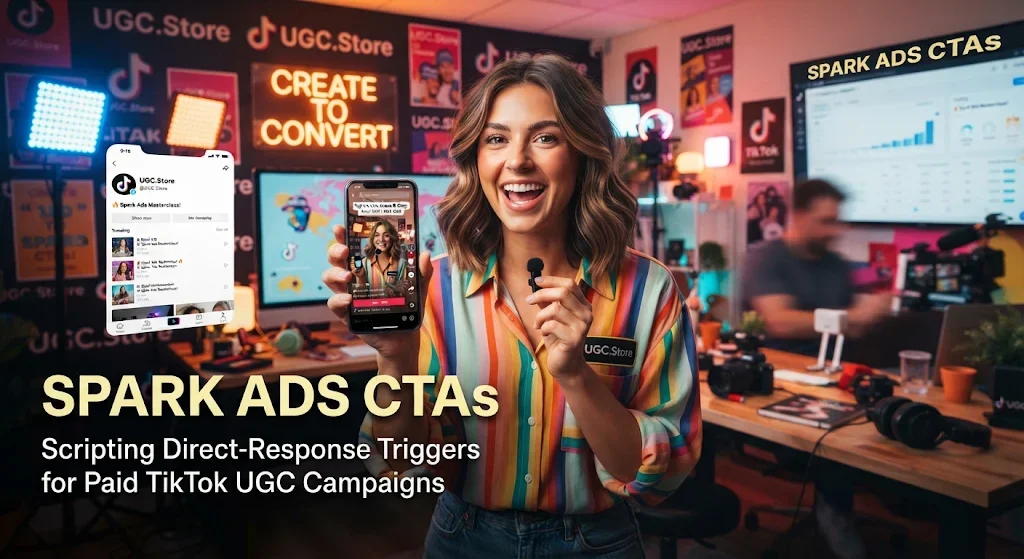
The fundamental mistake advertisers make with Spark Ads is treating them like standard In-Feed advertisements with a creator's face attached. This misunderstanding wastes the format's single greatest advantage: pre-existing social proof. A Spark Ad is not a new creative. It is an existing organic post that already earned its engagement, now amplified with paid distribution . The CTA in a Spark Ad cannot feel bolted on at the end like a traditional commercial. It must feel like a natural extension of the story the creator was already telling. When scripted correctly, Spark Ads CTAs achieve 134% higher completion rates and 157% higher six-second view-through rates than standard In-Feed Ads, with a 37% lower cost per action . The data is unambiguous: the format works. The question is whether your direct-response triggers are engineered to capitalize on it.
Theoretical Basis and Psychology of Mechanics
The psychology behind Spark Ads CTAs in paid TikTok UGC campaigns rests on borrowed trust, the social proof cascade, and the reduction of format-induced skepticism. Understanding why Spark Ads outperform standard paid placements is the prerequisite for scripting a CTA that converts.
The first mechanism is Borrowed Trust. When a viewer sees a standard In-Feed Ad, the brain immediately categorizes it as "advertising" and raises defenses. A Spark Ad retains the creator's handle, profile picture, caption, and existing engagement. The viewer sees a post from someone they already follow, with comments and likes already attached . The CTA does not arrive from a faceless brand. It arrives from a trusted peer. This borrowed trust is the foundation of every successful Spark Ads CTA.
The second mechanism is the Social Proof Cascade. A Spark Ad arrives with its organic engagement intact. The viewer sees that hundreds or thousands of people have already watched, commented, and liked the post before the ad spend ever touched it . This visible social proof does persuasive work that a brand-account ad can never manufacture. The CTA is not the first signal of legitimacy. The existing comment section is. The CTA simply provides the next step for a decision the social proof has already prepared.
The third mechanism is Format-Induced Skepticism Reduction. Standard In-Feed Ads carry the visual grammar of advertising: polished production, brand-account attribution, and a clear pitch structure. Spark Ads carry the visual grammar of organic content: the creator's voice, the creator's environment, the creator's pacing . The viewer's ad-detection system does not fire. The direct-response trigger must preserve this illusion. If the CTA suddenly shifts into corporate sales language, the spell breaks. The trigger must sound like the creator, not the brand.
The fourth mechanism is The Engagement-Commerce Bridge. Spark Ads generate paid comments, shares, and follows that flow back to the original organic post . This means the CTA is not just driving clicks to a landing page. It is driving engagement that strengthens the post's organic footprint. The direct-response trigger must be designed to generate this dual outcome: conversion for the brand, and continued engagement for the creator. The most effective Spark Ads CTAs invite action in a way that feels like a natural continuation of the conversation the creator started.
Step-by-Step Algorithm & Methodology
To successfully script Spark Ads CTAs and direct-response triggers in paid TikTok UGC campaigns, you must treat the CTA as the final beat of the creator's story, not a separate advertising layer.
Phase 1 — Select the Organic Post with Proven CTA Compatibility (Pre-Production). Not every organic post is a Spark Ad candidate. The post must already contain a natural pause where a CTA could live without disrupting the narrative. Posts that end mid-story or mid-demonstration are poor candidates. Posts that conclude a demonstration or deliver a clear result are strong candidates. The CTA is not written first. It is identified as the missing final beat of an already-performing organic asset.
Phase 2 — The Native CTA Frame (0–3 seconds before the end). The creator does not stop the action to pitch. They continue whatever they were doing—finishing a task, closing a laptop, walking away—while delivering the CTA as a conversational afterthought. The visual and audio must maintain the organic rhythm. The Spark Ads CTA is not a separate scene. It is the final sentence of the scene already in progress.
Phase 3 — The Direct-Response Trigger (Final 3–5 seconds). The trigger is specific, low-friction, and aligned with the campaign objective. For app installs, the language is "Download" or "Install" matched with the TikTok native button . For purchases, the language is "Shop" or "Grab yours." For lead generation, the language is "Sign up" or "Book." The trigger must be spoken and shown on screen because a significant portion of the audience watches with sound off . The on-screen text must use TikTok's native fonts and styles to maintain the organic aesthetic .
Phase 4 — The Social Proof Reinforcement. The creator references the existing engagement or the community response as part of the CTA. "A lot of you have been asking about this in the comments, so I'm putting the link below." This leverages the social proof cascade already visible on the post. The CTA is not a cold ask. It is a response to demonstrated demand.
Phase 5 — The Button Alignment. The spoken and on-screen CTA must match the native TikTok CTA button selected in Ads Manager. If the button says "Download," the creator says "Download." If the button says "Shop Now," the on-screen text says "Shop Now." Mismatches between the creative CTA and the platform button create friction and reduce conversion rates .
Ready-to-Use Working Templates & Scripts
Script One: The "Link Below" App Install (Format: B2B SaaS Spark Ad UGC, 32 seconds).
Native CTA Frame (27-29s): Creator closes a laptop and leans back, looking relieved. The SaaS dashboard is visible on the screen behind them. Audio: "I've been using this for about three months now. It's just part of my routine."
Direct-Response Trigger (29-32s): Creator looks at the camera. On-screen text appears in the bottom corner using TikTok's native font: Download free. Audio: "If you want to try it, the link is below. It's free to start."
Social Proof Reinforcement: Creator gestures toward the screen. "A bunch of people in my comments asked what I use, so I'm just putting it there."
Button Alignment: The TikTok native "Download" button is active. The spoken and on-screen CTAs match.
Script Two: The "Comment Asked" Product Purchase (Format: Consumer E-commerce Spark Ad UGC, 34 seconds).
Native CTA Frame (28-31s): Creator finishes applying the product and caps the bottle. Audio: "That's it. That's the whole routine. It takes about two minutes."
Direct-Response Trigger (31-34s): Creator picks up the bottle and holds it casually, not aggressively. On-screen text: Shop the serum. Audio: "I've linked the exact one I use below if you want to grab it."
Social Proof Reinforcement: Creator smiles. "So many of you asked about it after my last video, so here it is."
Button Alignment: The TikTok native "Shop Now" button is active. The on-screen text says "Shop the serum."
Script Three: The "Learn More" Lead Gen (Format: B2B Enterprise Spark Ad UGC, 36 seconds).
Native CTA Frame (30-33s): Creator finishes explaining the workflow solution, sitting at a desk. Audio: "That's how we cut the reporting time from three hours to about fifteen minutes."
Direct-Response Trigger (33-36s): Creator looks directly at the camera. On-screen text: Learn more. Audio: "If you want the full breakdown of how we set it up, there's a link below."
Social Proof Reinforcement: Creator nods. "The comments on this one have been wild. A lot of teams are dealing with the same thing."
Button Alignment: The TikTok native "Learn More" button is active. The on-screen text matches.
Comparative Analysis Matrix
| Parameter | Standard In-Feed Ad CTA | Spark Ads Native CTA |
|---|---|---|
| Attribution | Brand account | Creator handle and profile retained |
| Social Proof | None at launch | Existing likes, comments, and shares visible |
| Trust Mechanism | Brand authority | Borrowed creator trust |
| CTA Tone | Corporate, directive | Conversational, peer-to-peer |
| Button Alignment | Often mismatched with creative | Spoken, on-screen, and button CTA aligned |
| Post-CTA Engagement | Flows to ad account | Flows back to creator's organic post |
| Friction Point | In-Feed CTA Failure | Spark Ads CTA Fix |
|---|---|---|
| Ad-blindness | Brand attribution triggers scroll | Creator identity bypasses defense |
| Cold start | Zero engagement at launch | Pre-loaded social proof |
| CTA mismatch | Spoken CTA differs from button | Spoken, text, and button aligned |
| Trust deficit | "This is an ad" | "This is a recommendation" |
| Benchmark Metric | In-Feed Ads | Spark Ads |
|---|---|---|
| CTR | 1.0% | 2.4% |
| CPA | $23.18 | $14.62 |
| Completion Rate | Baseline | 134% higher |
| 6-Second View-Through | Baseline | 157% higher |
Real-World Case Study Breakdown
A B2B SaaS company selling a workflow automation tool had been running standard In-Feed Ads with brand-account attribution. The CTR hovered at 1.1%, and the CPA was $28.40. The ads were professionally produced, clearly scripted, and completely ignored. The brand-account attribution triggered the viewer's ad-detection system before the value proposition could land.
The strategic pivot involved identifying an existing organic post from a mid-tier creator that had already generated 42,000 views and 1,200 comments in its first week. The post showed the creator using the software to automate a reporting task, and the comments were filled with variations of "what app is this" and "how do I set this up." The post had no CTA. It simply ended with the creator looking relieved and saying, "That's it. That's the whole thing."
The brand secured the Spark code and added a CTA that matched the existing conversation. The creator filmed a five-second addendum: "A lot of you asked, so I'm putting the link below. It's free to try." The on-screen text read "Download free" using TikTok's native font. The TikTok native button was set to "Download."
The Spark Ad ran for three weeks with a modest budget. The results were diagnostic. CTR climbed to 2.8%, CPA dropped to $16.20, and the comment section continued to grow with new viewers asking the same question the original commenters had asked . The brand did not create a new ad. It amplified an existing conversation and attached a CTA that felt like a natural response to demonstrated demand. The governing insight: the best Spark Ads CTA is not written. It is identified in the comments of an organic post that was already doing the persuasive work.
Real-World Engineering & Creative Feedback
"The CTA in a Spark Ad is not the beginning of the conversation. It is the end of it. The comments already asked the question. The CTA is just the creator finally answering. If you script a CTA that ignores what the comments are actually saying, you waste the social proof the post already earned." — Tasha Moreau, UGC Creator, 48K followers
"We stopped treating Spark Ads like a new creative format. We treat them as an amplification layer for posts that already proved they could hold attention. The CTA is the only thing we add. Everything else stays exactly as the creator posted it. The performance gap between Spark and In-Feed is not a targeting gap. It is a trust gap that the CTA either preserves or destroys." — Ben Achterberg, Head of User Acquisition, Cartwheel SaaS
"The single biggest mistake I see is a mismatch between the spoken CTA and the button. The creator says 'link in bio' while the TikTok button says 'Shop Now.' The viewer hesitates. Hesitation kills conversion. The spoken line, the on-screen text, and the native button must be the same instruction in three channels." — Priya Deshmukh, Creative Strategy Lead, Pixel & Pulse Agency
"Spark Ads carry a CPC premium—about $1.41 versus $1.02 for In-Feed . But the CTR is more than double and the conversion rate is significantly higher. The effective CPA is lower. The premium buys native inventory and borrowed trust. The CTA is what converts that trust into action. If the CTA sounds like a brand, you paid the premium for nothing." — Marcus Lehto, Performance Marketing Director, Northline Interactive
"We almost killed a Spark campaign because the initial CTA was too aggressive. The creator said 'download now' and the comments turned hostile. We re-cut with a softer line—'link is below if you want to try it'—and the CPA dropped by a third. The lesson: the Spark audience knows they are being advertised to. They tolerate it because the creator feels real. The moment the CTA reminds them it is an ad, the tolerance ends." — Elena Vasquez, Brand Director, Mosaic SaaS
Production Self-Check Checklist
Organic post selected for CTA compatibility — the original post ends at a natural pause where a CTA can live without disrupting the narrative.
Spark code secured before scripting — the creator has authorized ad usage for the required duration; batch authorization used for multiple posts .
CTA delivered in creator's voice — the spoken line sounds like the creator, not a brand copywriter.
On-screen text uses native TikTok styling — the CTA text matches the creator's aesthetic and the platform's visual grammar .
Native button matches spoken CTA — "Download" button aligns with spoken "Download"; "Shop Now" aligns with "Shop" .
Social proof referenced in CTA — the creator acknowledges the comments or questions that prompted the link, leveraging existing engagement.
No hard-sell language — phrases like "Buy now," "Limited time," and "Hurry" are removed unless the original post established that tone.
CTA is low-friction and specific — "link below" or "check it out" is clearer and less resistant than a generic command.
Sound-off legibility confirmed — the on-screen CTA text is readable without audio, in the safe zone, and survives compression.
Post-CTA engagement flow mapped — the team understands that paid engagement flows back to the organic post and has planned for the compounding effect .
Advanced FAQ
How do you write a Spark Ads CTA when the organic post has no existing comments or questions to reference?
You do not force a social proof reference that does not exist. Instead, the CTA leans on the creator's personal experience as the proof. "I've been using this for a while and it's just part of my routine now. Link below if you want to try it." The credibility comes from the creator's demonstrated use, not from comment volume. A post with low engagement but high authenticity can still perform if the CTA feels like a genuine personal recommendation rather than a manufactured response to demand.
What is the correct way to handle the CTA when the Spark Ad is running to a cold audience that has never seen the creator before?
The CTA must do slightly more work for a cold audience. It should name the specific action and the specific benefit in the same breath. "If you want to see how I cut my reporting time in half, the link is below." The cold viewer needs the value proposition restated at the CTA moment, because they may have missed it in the opening. The warm audience already knows. The cold audience needs the reminder.
Should the CTA appear in the original organic post or be added as a separate edit for the Spark version?
The strongest Spark Ads use the original post unedited, with the CTA delivered as a final beat that was always part of the creator's plan. If the original post did not include a CTA, the brand can ask the creator to film a five-second addendum and append it. But this addendum must match the lighting, audio, and tone of the original. A visibly bolted-on CTA breaks the native aesthetic that makes Spark Ads effective . If the creator cannot film a matching addendum, the post is not a Spark Ad candidate.
How does the CTA change for app install campaigns versus e-commerce purchase campaigns?
For app installs, the CTA names the install action and the low commitment: "Download free," "Install and try it." The button is "Download" or "Install Now" . For e-commerce, the CTA names the product and the shop action: "Grab the serum below," "Shop the exact one." The button is "Shop Now." The critical distinction is commitment level. An install is a low-friction trial. A purchase is a financial commitment. The CTA language must match the risk the viewer is being asked to take.
What is the right measurement stack for Spark Ads CTAs beyond CPA?
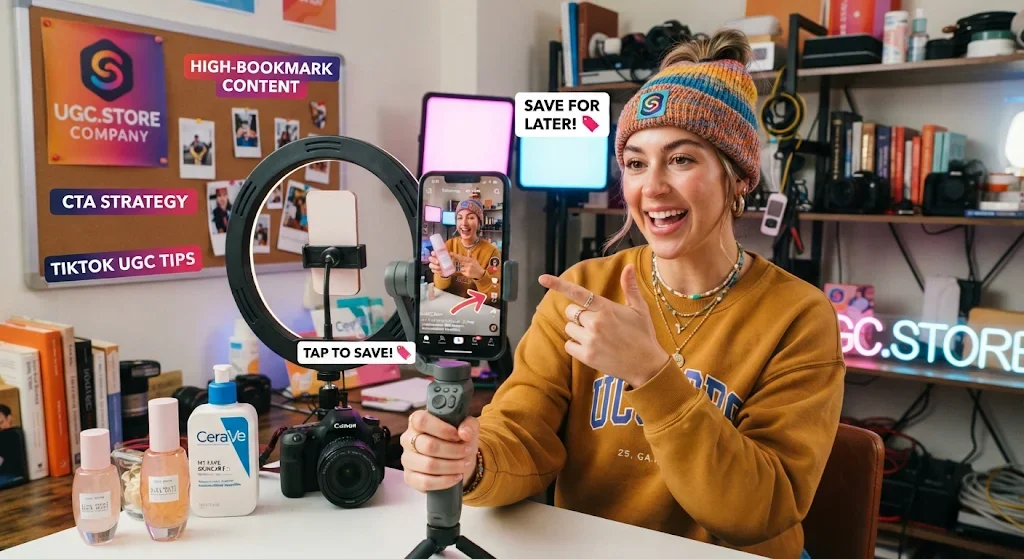
CPA is the primary metric, but it must be segmented by CTA variant and button type. A Spark Ad with a "Download" button and a spoken "link below" CTA will perform differently from one with a "Learn More" button and the same spoken line. The second metric is destination CTR versus all-click CTR, which TikTok reports separately; the destination CTR reflects actual intent to leave the platform, not just engagement with the post . The third metric is organic residual—the comments and follows that remain on the post after the paid campaign pauses. A Spark Ads CTA that generates lasting organic engagement is doing work that a standard ad cannot replicate .
Custom Contextual Conclusion
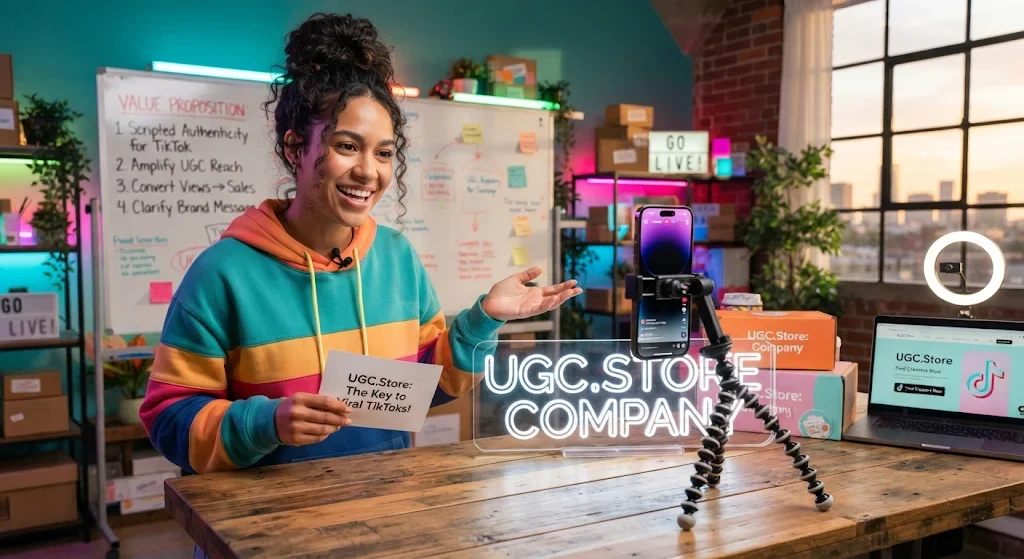
Spark Ads CTAs are not written in a vacuum. They are identified in the organic posts that already proved they could hold attention, and they are attached as the final beat of a story the audience was already telling. The format's advantage is not the targeting. It is the pre-existing trust that the creator earned before the ad spend arrived. The CTA either preserves that trust or destroys it. A CTA that sounds like a brand wastes the premium. A CTA that sounds like the creator answering a question the comments already asked converts the borrowed trust into measurable action. The post is the proof. The comments are the demand. The CTA is the answer. When the answer sounds like the creator, the campaign works.



Comments
I have been running paid social for a mid-market DTC brand for about three years, and we had been treating Spark Ads as just another line item in the ad account—upload the creator video, slap a "Shop Now" button on it, and hope for the best. Our CTR was hovering around 1.2%, and I was starting to believe the hype about Spark Ads was overblown. Reading this breakdown made me realize we were completely missing the point. We were stripping away the one thing that makes Spark Ads work: the native context. We had been re-editing the creator's video to add our own branded end card and a corporate voiceover CTA. We were literally paying the Spark premium and then turning it back into an In-Feed ad. We just ran a test where we took an organic post that already had 800 comments of people asking "what app is this" and simply appended a five-second addendum from the creator saying, "A lot of you asked, so the link is below." No branding, no corporate voice, just the creator answering the question her audience was already asking. The CTR jumped to 3.1%, and the CPA dropped by almost 40% in the first week. The insight about social proof cascade is the piece I am taking to my entire team. We were ignoring the comments, but the comments were the whole conversion mechanism. The CTA is not the pitch. The CTA is the response to the pitch the audience already made in the comments. This article completely rewired how I think about paid creator content.