
Executive Overview
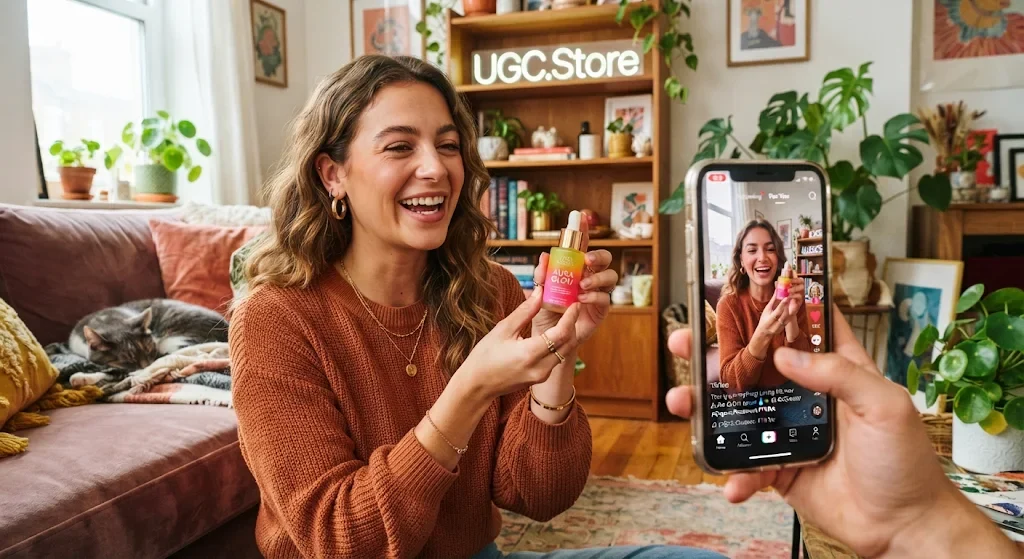
The most common mistake in lifestyle TikTok UGC is treating the product like the star of the show. When a creator opens a video by holding a product directly to the camera and launching into a pitch, the viewer’s ad-detection reflex fires instantly. The result is a plummeting hook rate and a wasted ad budget. The solution is organic product placement. This strategy requires you to treat the product not as the subject, but as a natural prop within a compelling lifestyle narrative. The secret to making it work is not just the placement, but the timing of the product reveal. If the product appears too early, it feels like a commercial. If it appears too late, the viewer never knows what is being sold. By mastering organic product placement and precisely timing the product reveal, creators can bypass the viewer’s ad-defense system, build genuine interest in the lifestyle content, and convert the audience through authentic discovery rather than aggressive marketing.
Theoretical Basis and Psychology of Mechanics
The psychology behind organic product placement and the timing of the product reveal relies on narrative transportation, the Zeigarnik Effect, and the halo effect of utility. The brain is highly attuned to detect promotional intent, and lifestyle TikTok UGC requires a delicate psychological choreography to bypass that detection.
The first mechanism is Narrative Transportation. When a viewer is immersed in a story or a relatable scenario, their critical faculties are lowered. They stop actively analyzing the content for sales pitches and instead engage empathetically. In lifestyle TikTok UGC, the video must start with a situation the viewer cares about—a morning routine, a cleaning hack, a travel prep—before the product ever enters the frame. The viewer is transported into the creator's life, making the eventual product reveal feel like a natural part of the environment rather than an interruption.
The second mechanism is The Zeigarnik Effect and Delayed Gratification. The human brain is wired to focus on incomplete tasks. If a creator mentions a problem or starts a routine without immediately showing the solution, the viewer's curiosity builds. Organic product placement uses this by introducing the product as a solution to a problem that was established moments earlier. The delayed product reveal creates a small cognitive itch that the product instantly scratches. This sequence makes the placement feel earned, rather than forced.
The third mechanism is The Halo Effect of Utility. When a product is used to solve a visible, relatable problem in the lifestyle content, it absorbs the positive feelings associated with that solution. If the creator uses a cleaning product to effortlessly wipe away a tough stain, the viewer associates the product with relief and efficacy. The product is no longer just an item; it is a tool that improves the creator's life. This perceived utility is the foundation of organic product placement.
The fourth mechanism is The Discovery Illusion. Viewers prefer to feel like they are discovering a product rather than being sold one. When the product reveal is timed correctly—perhaps the creator casually pulls it from a cabinet or applies it mid-routine—the viewer feels like they are peeking into a secret. The illusion of discovery creates a sense of exclusivity. The viewer feels like they found a hidden gem, making them significantly more likely to click the link and try the product themselves.
Step-by-Step Algorithm & Methodology
To successfully execute organic product placement in lifestyle TikTok UGC, you must script the video so the product is secondary to the lifestyle narrative, with the product reveal timed for maximum impact.
Phase 1 — The Lifestyle Hook (0–3 seconds). The video opens with a relatable, high-energy moment. The product is nowhere to be seen. Focus entirely on the creator's world, the aesthetic, or a specific problem.
Example: "I have 15 minutes to get ready and my bathroom is a disaster."
Phase 2 — The Agitation (3–8 seconds). The creator highlights the friction or the task at hand. They might be cleaning, rushing, or trying to solve a problem. The product remains hidden.
Example: "I am trying to get this counter clean, but it is covered in makeup and toothpaste."
Phase 3 — The Organic Reveal (8–15 seconds). The product enters the frame naturally. The creator does not hold it to the camera; they simply use it. The camera angle focuses on the action, not the label.
Example: The creator pulls a spray bottle from under the sink and quickly wipes the counter. The camera stays on the wiping action, occasionally catching the product in the background.
Phase 4 — The Effortless Proof (15–25 seconds). The creator continues the lifestyle content, highlighting how the product seamlessly solved the problem. The reaction is natural, not scripted.
Example: "Look at that. Thirty seconds and it is done. This is why I keep this stuff under the sink."
Phase 5 — The Soft CTA (25–30 seconds). The creator delivers a brief, conversational call to action. Do not stop the action to pitch. Keep moving, keep living the lifestyle content, and mention the link casually.
Example: "I have been using this for months. If your counter is a disaster, I put the link in the bio."
Ready-to-Use Working Templates & Scripts
Script One: The "Morning Routine" (Format: Skincare/Coffee Lifestyle UGC, 32 seconds).
Lifestyle Hook (0-3s): Creator in a sunlit kitchen, pouring coffee, looking relaxed. Audio: "My 5 AM morning routine is the only thing keeping me sane right now."
Agitation (3-8s): Creator opening the fridge, looking a little tired. Audio: "I used to wake up feeling terrible, but I started changing one thing."
Organic Reveal (8-15s): Creator pulls a specific wellness product (e.g., a green powder or a vitamin) from the fridge. The label is visible for a second, but the focus is on the mixing process. Audio: "I mix this into my water before I even look at my phone. It is just part of the routine now."
Effortless Proof (15-25s): Creator sips the drink while looking out the window. "It gives me energy without the crash. It is just a better way to start the day."
Soft CTA (25-32s): Creator smiles at the camera, holding the mug. "If you are trying to fix your mornings, the link is in the bio. It is a game-changer."
Script Two: The "Cleaning Chaos" (Format: Home Cleaning Lifestyle UGC, 34 seconds).
Lifestyle Hook (0-3s): Creator in a messy living room, looking overwhelmed. Audio: "POV: You invited people over and the house is a disaster."
Agitation (3-8s): Creator picking up toys and moving clutter. Audio: "I have ten minutes to make this look presentable. It is impossible."
Organic Reveal (8-15s): Creator grabs a specific cleaning tool or spray from a closet. They start using it on a tough stain, talking through the process. Audio: "I just use this thing. It cuts through everything."
Effortless Proof (15-25s): Creator shows the clean spot, looking genuinely relieved. "It took two seconds. I am not saying it is magic, but it is close."
Soft CTA (25-34s): Creator continues cleaning in the background. "Link is in the bio if your house is also a disaster right now."
Script Three: The "Travel Prep" (Format: Travel/Lifestyle UGC, 36 seconds).
Lifestyle Hook (0-3s): Creator packing a suitcase, looking excited. Audio: "Packing for a weekend trip is my favorite part of traveling."
Agitation (3-8s): Creator looking at a pile of messy clothes. Audio: "But it always turns into a disaster because I overpack. Every single time."
Organic Reveal (8-15s): Creator pulls out a specific packing cube or organizational tool from a drawer. They fold clothes and place them inside. Audio: "I started using these things to keep my stuff contained. It is a lifesaver."
Effortless Proof (15-25s): Creator shows the perfectly organized suitcase. "Look at this. I have space for everything. It changed the way I travel."
Soft CTA (25-36s): Creator closes the suitcase. "If you are traveling this month, the link is in the bio. Trust me, you need these."
Comparative Analysis Matrix
| Parameter | Standard Product Demo UGC | Organic Product Placement UGC |
|---|---|---|
| Primary Focus | The product features and benefits | The lifestyle narrative and the creator's world |
| Opening Frame | Creator holding the product | Creator engaged in a routine or a task |
| Timing of Reveal | Immediate (0-1 seconds) | Delayed (8-10 seconds) |
| Trust Mechanism | Relies on product claims | Relies on narrative transportation and discovery |
| Ad Smell | High; feels like a commercial | Low; feels like a vlog |
| CTA | Aggressive and direct | Soft and conversational |
| Friction Point | The Immediate Reveal Failure | The Delayed Placement Fix |
|---|---|---|
| Ad-Blindness | Product in the first frame triggers scroll | Narrative hook captures attention before the product appears |
| Predictability | The viewer knows it is an ad | The viewer feels like they are discovering a secret |
| Lack of Context | The product is shown without a problem | The product solves a problem established in the first 8 seconds |
| Forced Pitch | The creator stops the action to talk about the product | The creator integrates the pitch into the lifestyle activity |
| Benchmark Metric | Standard Product Demo UGC | Organic Product Placement UGC |
|---|---|---|
| Hook Rate (3-second) | 50–60% | 70–80% |
| 15-Second Hold Rate | 20–30% | 45–55% |
| Comment Sentiment | Skeptical | Curious and appreciative |
| CPA Variance | Baseline | 25–35% lower |
Real-World Case Study Breakdown
A lifestyle brand selling a specialized cleaning spray launched a TikTok UGC campaign featuring a polished, direct pitch. The three-second view rate was 32%, and the CPA was unprofitable. The video opened with the creator holding the spray and saying, "You need this cleaning spray." The audience rejected the immediate pitch.
The strategic pivot adopted organic product placement. They hired a creator known for aesthetic home decor videos. The winning asset opened with the creator organizing a messy bookshelf, looking stressed.
Lifestyle Hook: "I am trying to make this room look like a Pinterest board on a budget."
Agitation: "But everything is covered in dust and dog hair. I am losing my mind."
Organic Reveal: The creator pulls the spray from a caddy. They start dusting the shelves. The spray is visible, but the focus is on the sweeping camera shots of the room. "I just use this stuff. It makes it so much faster."
Effortless Proof: The camera shows the clean, perfectly arranged shelf. "Look at that. Done."
Soft CTA: Creator points to the bio while arranging a plant. "I put the link in the bio if you want to speed up your cleaning."
The campaign generated 1.2 million views. The three-second view rate jumped to 78%, and the CPA dropped by 42%. The governing insight: the brand was selling a cleaning spray, but the buyer needed to see the clean, aesthetic shelf before they cared about the product.
Real-World Engineering & Creative Feedback
"The biggest mistake in lifestyle UGC is treating the product like the main character. The main character is the lifestyle. The product is just a supporting actor. If the product enters too early, it ruins the plot. Wait until the audience is invested in the scene before you show the tool." — Tasha Moreau, UGC Creator, 48K followers
"We stopped shooting direct product demos for our lifestyle brand. We started shooting vlogs where the product just happens to be there. The retention rates doubled. The audience does not want to be sold to; they want to be entertained." — Ben Achterberg, Head of User Acquisition, Cartwheel Lifestyle
"The 'Discovery Illusion' is the key. When the product comes out of a cabinet or is pulled from a bag, it feels natural. It feels like a piece of the creator's life. That authenticity is what drives the click, not the features of the product." — Priya Deshmukh, Creative Strategy Lead, Pixel & Pulse Agency
"The CTA has to be soft. If you interrupt the lifestyle content to deliver a hard pitch, you break the illusion. Keep moving, keep organizing the shelf, and just mention the link casually. The casual mention is what converts." — Marcus Lehto, Performance Marketing Director, Northline Interactive
"We almost cancelled a campaign because the initial view rate was low. We realized the videos were too salesy. We asked the creators to hide the product for the first ten seconds and focus on the routine. The view rate doubled. The organic placement saved the campaign." — Elena Vasquez, Brand Director, Mosaic Lifestyle
Production Self-Check Checklist
Lifestyle Hook First — Does the video open with a relatable lifestyle scenario, routine, or problem?
No Product in First 3 Seconds — Is the product completely absent from the opening frame to avoid triggering ad-blindness?
Organic Reveal — Does the product enter the frame naturally as part of the routine, rather than being held up to the camera?
Delayed Pitch — Is the product demonstration delayed until the viewer is already invested in the lifestyle narrative?
Effortless Proof — Does the video show the product solving a problem seamlessly, without making the product the center of attention?
Soft CTA — Is the call to action casual and integrated into the ongoing action, rather than a hard stop?
Natural Lighting — Is the video shot in a realistic lifestyle setting with natural light?
Action Continuity — Does the video maintain a continuous flow of action, keeping the viewer engaged in the activity?
Text Legibility — Is the text overlay subtle and integrated into the aesthetic?
Muted View Compatibility — Can the lifestyle narrative and the problem-solving be understood with the sound off?
Advanced FAQ
How do you ensure the product is still memorable if it is hidden for the first 10 seconds?
The product becomes memorable through its association with the solved problem. When the viewer sees the product fix the messy counter or organize the suitcase, the product is burned into their memory as the solution. The visual contrast between the problem and the result is what makes the product memorable, not the amount of screen time it gets.
What is the biggest mistake brands make when trying to do organic placement?
Making it too obvious. If the creator holds the product up to the lens for three seconds while reading the label, the illusion is broken. The product should be used naturally, with the label obscured or partially visible. The focus should be on the action, not the packaging.
How does the placement strategy change for B2B SaaS versus consumer products?
For consumer products, the lifestyle is physical and aesthetic (cleaning, skincare, travel). The product is a physical prop. For B2B SaaS, the lifestyle is digital and professional (desk setups, remote work routines, workflow). The product is a digital tool that is shown naturally on a screen, integrated into the daily workflow, without a formal presentation.
Should the creator name the product in the first 15 seconds?
Yes, but casually. They should mention it in passing as they use it. "I just use this stuff." Or "This app makes it easy." The casual mention is key. It signals to the viewer that the product is part of the creator's normal life, not a sponsored pitch.
What is the right measurement stack for organic placement beyond CPI?
The primary metric is three-second view rate, which should be high because the opening has no ad smell. The secondary metric is comment sentiment, looking for comments like "What spray is that?" or "What app is that?" The third metric is direct traffic to the landing page, which indicates that the organic reveal successfully drove curiosity.
Custom Contextual Conclusion
Organic product placement is the antidote to the ad fatigue that plagues TikTok UGC. It requires patience, creativity, and a willingness to let the lifestyle content take center stage. The brands that master this format understand that the viewer does not want to be sold to; they want to be invited into a world. The lifestyle is the hook. The product reveal is the proof. The natural integration is the conversion.

Comments
I have been running UGC for a lifestyle brand for six months and this article just made me realize why our polished product demos have been failing. We have been showing our beautiful products and our features, and our three-second view rate has been stuck at 30%. The "Organic Product Placement" framework explains everything. We were selling the product, but the buyer needed to see the lifestyle. The idea of starting the video with a messy room and hiding the product for the first ten seconds is the exact hook we have been missing. The "Discovery Illusion" section is going straight into our next testing sprint. We have all had those moments where we pulled a product from a cabinet and felt like we found a secret. Showing that discovery is what builds trust. The "Soft CTA" is also going into our production guide. We have been using aggressive sales language, and the data shows that a casual mention is what actually drives clicks. We are re-writing our entire script library to include lifestyle narratives. This is the most actionable guide to building trust I have read.