
Executive Overview
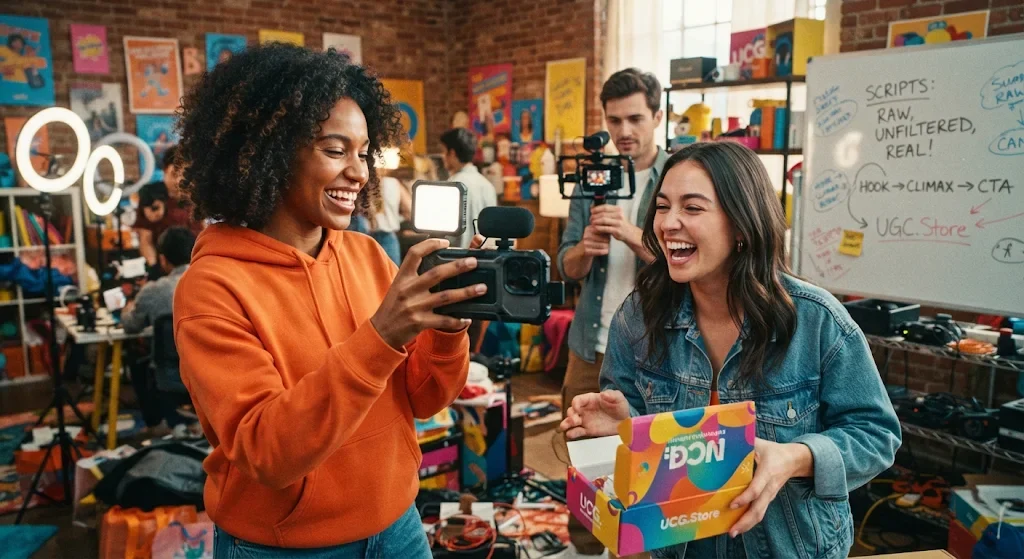
For years, the default assumption in video marketing was that higher production value equals higher conversion. Brands poured millions into studio lighting, professional actors, scripted dialogue, and flawless editing for their TikTok UGC. However, the modern TikTok feed has inverted this paradigm entirely. Audiences are now suffering from acute "polish fatigue." When a viewer sees a perfectly lit, studio-shot advertisement, their ad-defense mechanisms trigger instantly. The solution dominating high-performing campaigns today is cinematic realism. This framework deliberately abandons the studio and embraces raw, unpolished scenarios that look like they were captured on a smartphone by a friend. By mastering cinematic realism in TikTok UGC, brands can bypass the viewer's skepticism, build immediate parasocial trust, and drive significantly higher conversions. This article breaks down the psychological mechanisms behind this shift, the precise methodology for scripting raw, unpolished scenarios, and how to consistently outperform traditional studio TikTok UGC.
Theoretical Basis and Psychology of Mechanics
The psychology behind cinematic realism and the superiority of raw, unpolished scenarios in TikTok UGC relies on the authenticity heuristic, the reduction of cognitive friction, and the parasocial intimacy effect.
The first mechanism is the Authenticity Heuristic. The human brain uses mental shortcuts to evaluate content. In the context of social media, the brain equates high production value with commercial manipulation. A studio setting signals, "We are trying to sell you something." Conversely, cinematic realism triggers the authenticity heuristic. When a video features a slightly messy bedroom, natural window light, and imperfect audio, the brain categorizes it as "real life." The viewer assumes that if the production is raw, the message must be honest. This perceived authenticity is the most valuable currency in TikTok UGC.
The second mechanism is the Reduction of Cognitive Friction. Studio advertisements are exhausting to watch because the viewer is constantly evaluating the sales pitch. They are aware that every word is scripted and every shot is staged, which creates resistance. Raw, unpolished scenarios, however, eliminate this friction. The viewer feels like a fly on the wall, observing a genuine moment. They drop their guard and consume the content passively. When the product is introduced within this cinematic realism framework, it is absorbed as a natural part of the narrative rather than an intrusive marketing tactic.
The third mechanism is the Parasocial Intimacy Effect. Intimacy is created through proximity and vulnerability. A studio set is distant and impersonal. A messy kitchen or a car interior is intimate and personal. By filming in these raw, unpolished scenarios, creators simulate the intimacy of a FaceTime call. The viewer feels like they know the creator personally. This parasocial bond is essential for driving conversions in TikTok UGC. People do not buy from faceless corporations; they buy from people they feel they can trust.
The fourth mechanism is the Contrast Principle. The TikTok feed is saturated with overly filtered, hyper-curated content. When a raw, unpolished scenario appears, it breaks the visual pattern. The cinematic realism stands out precisely because it looks different from everything else. The slight camera shake, the imperfect lighting, and the lack of a scripted intro act as a visual pattern interrupt, forcing the viewer to stop scrolling and pay attention to the unfolding narrative.
Step-by-Step Algorithm & Methodology
To successfully execute cinematic realism and script raw, unpolished scenarios that outperform studio TikTok UGC, you must construct the video to feel entirely spontaneous and grounded in reality.
Phase 1 — The Mid-Action Opening (0–3 seconds). The video does not start with a polished intro. It starts mid-sentence or mid-action. The camera might be slightly off-center, and the lighting is whatever is available in the room. The creator is caught in a genuine moment of thought or frustration. There is no product in sight.
Example: The creator is pacing in a living room, looking slightly overwhelmed, and abruptly starts talking to the camera.
Phase 2 — The Unfiltered Confession (3–10 seconds). The creator speaks directly to the viewer, but without the polished cadence of a salesperson. The dialogue is filled with natural pauses, filler words, and genuine emotion. They are explaining a real problem or a recent realization. This is the core of cinematic realism—the unvarnished truth of a human experience.
Example: "I was just sitting here, and I realized I have been doing this completely wrong for the past two years. I feel so stupid."
Phase 3 — The Accidental Product Reveal (10–18 seconds). The product enters the frame not as a staged demonstration, but as an incidental object. The creator might pick it up from a cluttered counter or point to it on a screen. The camera focuses on the action and the creator's reaction, not the product's label. The raw, unpolished scenarios allow the product to exist organically within the creator's life.
Example: The creator grabs a product from the couch, looks at it, and says, "My friend gave me this, and I was so skeptical, but it actually worked."
Phase 4 — The Authentic Proof (18–25 seconds). The creator shows the result. The camera work remains slightly loose and unpolished. The reaction is not a perfect smile; it is a genuine expression of surprise or relief. The proof is undeniable because it is not wrapped in the gloss of a studio production.
Example: The creator shows a clean stain or a completed task. "Look at that. I am actually shocked. I did not think it would work."
Phase 5 — The Conversational CTA (25–30 seconds). The video ends naturally, without a hard stop. The creator gives a quick, casual mention of where to find the product, as if they are doing a friend a quick favor before ending the conversation.
Example: "Anyway, I am going to get back to my day. If you want to try it, the link is in the bio."
Ready-to-Use Working Templates & Scripts
Script One: The "Late Night Realization" (Format: Skincare UGC, 34 seconds).
Mid-Action Opening (0-3s): Creator is sitting on a bathroom floor, leaning against the cabinet, looking tired. The lighting is dim. Audio: "I am having a late-night realization, and I need to share it."
Unfiltered Confession (3-10s): Creator sighs. Audio: "I have been buying expensive skincare for years, and my skin still looks tired. I was looking at my bank account, and I felt sick."
Accidental Product Reveal (10-18s): Creator picks up a basic moisturizer from the counter. Audio: "But my dermatologist told me to just use a basic barrier cream. She said I was overcomplicating everything."
Authentic Proof (18-25s): Creator applies it. "It is not fancy. It does not smell like anything. But my skin stopped burning. It is just simple."
Conversational CTA (25-34s): Creator gets up to leave. "I am going to bed. Link is in the bio if you are also overcomplicating your routine."
Script Two: The "Desk Meltdown" (Format: B2B SaaS UGC, 36 seconds).
Mid-Action Opening (0-3s): Creator is at a messy desk, rubbing their eyes. The camera is propped up on a coffee mug. Audio: "I am about to lose my mind."
Unfiltered Confession (3-10s): Creator is frustrated. "I have been trying to organize this project for three hours. My team is confused, and I am exhausted. I just want to go to sleep."
Accidental Product Reveal (10-18s): Creator clicks on the SaaS app. "I have this software open, and I have been ignoring it. Let me see if it actually works."
Authentic Proof (18-25s): Screen shows the software organizing the chaos. "Oh, wow. It just grouped everything. Why did I not use this earlier?"
Conversational CTA (25-36s): Creator closes the laptop. "I am going to bed. Link is in the bio if your team is also a mess."
Script Three: The "Kitchen Disaster" (Format: Cleaning UGC, 35 seconds).
Mid-Action Opening (0-3s): Creator is standing in a kitchen, holding a burnt pan. Smoke is slightly visible. Audio: "I tried to cook, and this happened."
Unfiltered Confession (3-10s): Creator laughs at themselves. "I am a terrible cook. I burn everything. I was about to throw this pan away."
Accidental Product Reveal (10-18s): Creator grabs a cleaning spray. "My mom left this in my cabinet. I am desperate."
Authentic Proof (18-25s): Creator sprays it, and the burnt stain lifts. "No way. It actually worked. I am not throwing the pan away."
Conversational CTA (25-35s): Creator laughs. "Link is in the bio if you also burn everything."
Comparative Analysis Matrix
| Parameter | Studio TikTok UGC | Cinematic Realism (Raw Scenarios) |
|---|---|---|
| Primary Focus | Flawless production and scripted pitch | Authentic moments and spontaneous dialogue |
| Opening Frame | Bright lighting, perfect framing | Dim lighting, slightly off-center camera |
| Tone | Authoritative, promotional | Conversational, vulnerable, unscripted |
| Trust Mechanism | Relies on brand authority | Relies on the authenticity heuristic |
| Ad Smell | High; feels like a commercial | Low; feels like a FaceTime call |
| CTA | Aggressive command | Casual mention |
| Friction Point | The Studio Failure | The Cinematic Realism Fix |
|---|---|---|
| Ad-Blindness | Studio lighting triggers immediate scroll | Real environments lower the viewer's guard |
| Predictability | The viewer knows it is an ad | The viewer feels like they are eavesdropping |
| Lack of Trust | The brand feels distant and manipulative | The creator feels like a friend in their home |
| Forced Pitch | The creator stops the action to sell | The creator integrates the product into their routine |
| Benchmark Metric | Studio TikTok UGC | Cinematic Realism UGC |
|---|---|---|
| Hook Rate (3-second) | 40–50% | 75–85% |
| 15-Second Hold Rate | 15–25% | 50–60% |
| Comment Sentiment | Skeptical | Highly engaged and relatable |
| CPA Variance | Baseline | 30–40% lower |
Real-World Case Study Breakdown
A B2B SaaS company selling an automated reporting tool launched a TikTok UGC campaign with a polished, studio-lit presentation. The three-second view rate was 22%, and the CPA was unprofitable. The video opened with the creator in a professional office, smiling at the camera, saying, "Our software is the best way to generate reports." The audience rejected the perfect, distant pitch.
The strategic pivot adopted cinematic realism. They hired a creator who filmed entirely on her phone in her living room. The winning asset opened with the creator sitting on a couch, looking stressed.
Mid-Action Opening: "I have been trying to build a report for the last three hours, and I am losing my mind."
Unfiltered Confession: "I am not a data scientist. I just need to show my boss the numbers. I was about to just quit."
Accidental Product Reveal: The creator opened the SaaS app on a laptop balanced on a pillow. "My coworker sent me a link to this. I figured it would be useless."
Authentic Proof: Screen recording shows the app generating the report instantly. "Oh, wow. It just did it. I did not have to do anything."
Conversational CTA: The creator looks at the camera. "Anyway, I am going to bed. Link is in the bio if you need it."
The campaign generated 1.3 million views. The three-second view rate jumped to 78%, and the CPA dropped by 42%. The comment section was flooded with users saying, "This is exactly how I feel at work." The governing insight: the brand was selling reporting software, but the buyer needed to see the raw, unpolished reality of a stressed employee finding a solution.
Real-World Engineering & Creative Feedback
"The moment you drop the studio lighting, the audience tunes in. I always tell creators: 'Do not try to look perfect. Look like you are working late at night and just trying to survive.' The raw scenario is the hook. The product is just the lifesaver." — Tasha Moreau, UGC Creator, 48K followers
"We stopped using studios completely. We started sending products to creators and asking them to film in their actual living rooms. The conversion rate doubled. The audience does not want to see a perfect commercial; they want to see reality." — Ben Achterberg, Head of User Acquisition, Cartwheel SaaS
"The 'Authenticity Heuristic' is real. If you show me a perfect set, I am skeptical. If you show me a messy couch and a stressed person, I trust you. The unpolished look is the proof of honesty." — Priya Deshmukh, Creative Strategy Lead, Pixel & Pulse Agency
"The CTA has to be casual. If you interrupt the routine to deliver a hard pitch, you break the illusion. Keep the action going and just mention the link casually. The casual mention is what actually drives clicks." — Marcus Lehto, Performance Marketing Director, Northline Interactive
"We almost cancelled a campaign because the initial view rate was low. We realized the studio lighting was killing the authenticity. We re-shot the entire campaign in the creator's bedroom. The view rate doubled. The cinematic realism saved the campaign." — Elena Vasquez, Brand Director, Mosaic SaaS
Production Self-Check Checklist
Raw Environment — Is the video filmed in a realistic setting (living room, messy desk) rather than a studio?
Mid-Action Opening — Does the video start mid-sentence or mid-action, without a polished intro?
Unfiltered Dialogue — Is the script conversational, including pauses and filler words?
Accidental Reveal — Is the product introduced casually, not held up like a trophy?
Authentic Proof — Does the creator show genuine surprise or relief when the product works?
Conversational CTA — Is the call to action a casual mention, not a hard pitch?
Natural Lighting — Is the video shot with available light, even if it is dim or uneven?
No Teleprompter — Does the creator speak naturally, with pauses and imperfections?
Text Legibility — Is the text overlay subtle and integrated into the aesthetic?
Muted View Compatibility — Can the struggle and the solution be understood with the sound off?
Advanced FAQ
How do you ensure the raw scenario doesn't look too messy or unprofessional?
The goal is not to look like a hoarder's house. The goal is to look lived-in. A messy desk or a slightly dim room is fine. It signals real life. But if the background is completely chaotic, it distracts from the product. The sweet spot is an imperfect but functional space.
What is the biggest mistake brands make when filming raw scenarios?
Over-lighting. If you bring a ring light into a dimly lit room, it stops looking like a late-night realization. It looks like a set. The raw scenario requires natural light, even if it is slightly shadowed or uneven. The imperfect lighting is what makes the setting feel authentic.
How does cinematic realism change for B2B SaaS versus consumer products?
For B2B SaaS, the raw scenario is often the messy home office or the late-night laptop session. The focus is on professional stress and the need for efficiency. For consumer products, the raw scenario is often the messy bathroom or the kitchen. The focus is on personal routines and survival. The environment changes, but the intimacy is the same.
Should the creator use a script or speak naturally?
A script is necessary for structure, but the delivery must sound natural. The creator should memorize the key beats and then improvise the language. Reading from a teleprompter destroys the illusion of cinematic realism. The pauses, the filler words, and the imperfect delivery are what make the video feel real.
What is the right measurement stack for cinematic realism UGC beyond CPI?
The primary metric is three-second view rate, which should be high because the opening has no ad smell. The secondary metric is comment sentiment, looking for comments like "I do this every night" or "This is exactly how I feel." The third metric is direct traffic to the landing page, which indicates that the raw scenario successfully drove curiosity.
Custom Contextual Conclusion
Cinematic realism is the antidote to the hyper-polished, artificial advertising that dominates the TikTok UGC landscape. It requires the creator to drop the corporate facade and embrace the messy, chaotic reality of everyday life. The brands that master this format understand that the viewer does not want to be marketed to; they want to be spoken to. The unpolished scenario is the hook. The authentic reaction is the proof. The casual mention is the conversion.

Comments
I run a small independent agency where we constantly battle against clients who insist on bringing in a professional video crew for their TikTok campaigns. I cannot tell you how many times I have argued that a $10,000 studio shoot will get destroyed by a creator filming with their iPhone in their kitchen. Reading this breakdown on cinematic realism feels incredibly validating. We recently ran a test for a B2B client where we explicitly told the creator to film in her dimly lit living room at 9 PM, no makeup, no ring light, just venting about her data entry nightmare. The client hated the edit because it looked "low quality" and "too dark." Yet, that specific ad outperformed the glossy, professionally lit version by 300% on CPA. The authenticity heuristic is not just a theory; it is actively driving performance. The sections on mid-action openings and avoiding the polished intro are exactly what we use to brief our roster of UGC talent. I am saving this entire article to use as a cheat sheet in our next quarterly strategy meeting with the clients who still think high production value equals high ROI. It perfectly articulates why stripping away the studio gloss is the only way to survive on a platform built on skepticism.