
UGC Portfolio Examples: 10 Mock Projects That Land Real Brand Deals
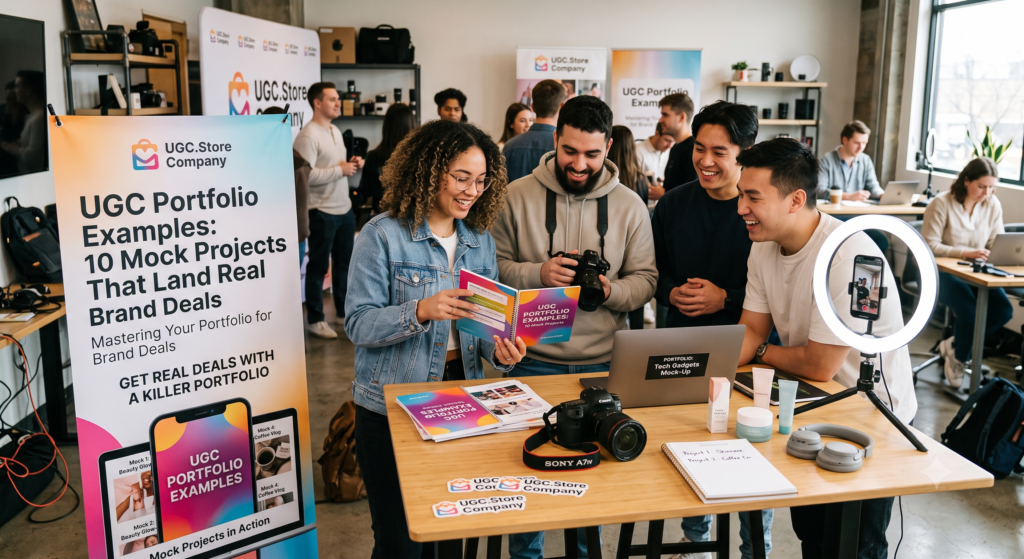
You are standing at the edge of your UGC journey, staring at the single biggest obstacle every beginner faces. You need a portfolio to get hired, but you need products to build a portfolio, and you need to get hired to receive products. It is the classic chicken-and-egg problem that stops more aspiring UGC creators than any other challenge in the industry. The solution is not waiting for a brand to send you free products out of charity. The solution is not buying expensive items you cannot afford just to film them. The solution is the mock project — a UGC-style video created using products you already own, designed to demonstrate your creative skills to brands who are actively looking to hire.
A mock project is not a fake video. It is not a lie. It is a professional demonstration of your capabilities, filmed with the same energy, structure, and authenticity as a paid deliverable. Every photographer has a portfolio of unpaid shoots. Every graphic designer has spec work. Every filmmaker has a reel of personal projects. Mock UGC videos are the exact same thing — proof that you can execute before someone pays you to execute. Brands understand this. They expect it from new creators. In fact, many brand managers specifically look for mock videos to assess a creator’s raw talent before committing to a paid campaign.
This guide gives you ten detailed mock project concepts that you can film today using products already in your home. Each concept includes the exact niche it serves, the UGC format to use, the hook to open with, the structure to follow, and the specific skills it demonstrates to brands. Film all ten and you will have a portfolio that rivals creators who have been in the industry for a year. Film five and you will still have enough variety to attract your first client. Film even one and you have taken the first real step from aspiring creator to working professional.
“My entire first portfolio was mock videos. I filmed my own skincare routine, my boyfriend’s gaming setup, my mom’s air fryer, and my roommate’s protein powder. Not a single brand had paid me yet. But when I sent my UGC.Store portfolio link to a DTC beauty brand, they watched my mock unboxing and hired me for a $500 campaign the same day. They did not care that the original video was unpaid. They cared that I understood the format.”
— Jasmine T., UGC Creator (Beauty & Lifestyle), $8K/month
What Makes a Mock Project Convert
Before diving into the ten examples, it is important to understand what separates a portfolio-winning mock video from a forgettable one. The difference is not production value. It is not camera quality. It is strategic intent. Every mock project in your portfolio should accomplish three specific goals simultaneously.
First, it should demonstrate format mastery. Brands need to see that you understand the structural conventions of UGC content — the hook, the pacing, the call to action, the visual language that makes a viewer stop scrolling. A mock testimonial should look and feel like a testimonial that already ran as a paid ad. A mock tutorial should solve a problem in under 60 seconds with the efficiency of a seasoned creator.

Second, it should prove niche fluency. A beauty brand does not want to see that you can film generic content. They want to see that you understand their specific customer, their product category, and the visual vocabulary of their industry. A mock project filmed in your actual bathroom using your actual skincare products signals that you live in this world. You are not an outsider trying to break in. You are already inside.
Third, it should showcase range without sacrificing focus. Your portfolio needs variety — unboxings, testimonials, tutorials, problem-solution videos, lifestyle integrations — but all within a coherent niche. Ten random videos across ten random categories make you look scattered. Five videos across three related categories make you look versatile. Two videos in one category make you look like a specialist. Specialists get hired first.
Mock Project 1: The Skincare Unboxing (DTC Beauty Niche)
The product: Any skincare product you already own — serum, moisturizer, cleanser, mask. The format: Unboxing with first-impression testimonial hybrid. The hook:“I have been waiting three weeks for this vitamin C serum to arrive, and I am genuinely nervous because the last one I tried destroyed my skin barrier.”
This mock project works because it combines anticipation with vulnerability. The hook immediately establishes stakes. The viewer is not just watching someone open a package. They are watching someone take a risk, and that emotional investment keeps them watching through the unboxing. As you peel back the packaging, comment on every detail — the box texture, the bottle weight, the dropper design, the scent. These sensory specifics are what separate amateur unboxings from professional ones.

After the unboxing, transition into a 15-second first impression. Apply the product on camera. Describe the texture — is it watery, creamy, sticky? Describe the scent — is it floral, medicinal, fragrance-free? End with a soft commitment: “I am going to use this for seven days and track my results. But first impressions? This feels expensive.” That closing line signals to beauty brands that you understand the premium positioning of DTC skincare.
What this demonstrates: Attention to packaging detail, sensory descriptive language, on-camera comfort, and the ability to build anticipation — all skills that beauty brands pay premium rates for.
Mock Project 2: The Tech Gadget Review (Consumer Tech Niche)
The product: Any tech accessory — wireless earbuds, phone case, portable charger, mechanical keyboard, smartwatch. The format: Problem-solution with tutorial elements. The hook:“I have gone through four pairs of wireless earbuds in two years because every single one either died in the gym or fell out of my ears on the subway.”

This project targets the massive consumer tech UGC market, where brands spend millions monthly on UGC ads for accessories and peripherals. The hook establishes a relatable pain point that anyone who owns wireless earbuds has experienced. The body of the video should show the product solving that exact problem. Put the earbuds in at the gym. Shake your head aggressively to show they stay in place. Mention the battery life in real-world terms — “I used these for three full gym sessions before I had to charge them” — rather than reading specs from the box.
Include one quick tutorial moment. Show how the touch controls work. Demonstrate the pairing process. Tech brands love UGC creators who can make their products look intuitive, because purchase anxiety around tech is rooted in the fear of complexity.
What this demonstrates: Technical product understanding, real-world usage context, ability to reduce purchase anxiety, and comfort filming in active environments.
Mock Project 3: The Fitness Routine Integration (Activewear/Supplements Niche)
The product: Protein powder, resistance bands, yoga mat, running shoes, or fitness apparel. The format: Lifestyle integration with testimonial overlay. The hook:“I am going to show you my actual post-workout routine, and the one thing I have added that has completely changed my recovery.”

Fitness UGC thrives on authenticity because fitness consumers are deeply skeptical of overly polished content. They have seen too many Instagram models promoting products they clearly do not use. Your mock project needs to feel like a real workout video filmed by a real person. Wear your actual gym clothes — the ones with the faded logo and the small stain. Film in your actual space — the living room with the couch in the background, not a pristine studio.
The structure is a “day in my life” compressed into 45 seconds. Show yourself finishing a workout, reaching for the product, preparing it, and consuming it while talking about the result. The key is specificity. Do not say, “This protein tastes great.” Say, “This tastes like chocolate milk, not chalk, which matters at 6 AM when I am barely awake.” Do not say, “I feel more energized.” Say, “I used to crash by 2 PM every day. Now I make it to dinner without needing a nap.”
What this demonstrates: Lifestyle authenticity, physical on-camera comfort, integration of product into narrative, and the ability to speak to fitness consumers in their own language.
Mock Project 4: The SaaS Tutorial (B2B Software Niche)
The product: Any productivity app, project management tool, note-taking app, or design software you already use — Notion, Trello, Canva, Figma, Slack, or even your phone’s built-in calendar. The format: Screen recording with voiceover tutorial. The hook:“I used to spend 20 minutes every morning figuring out what I actually needed to do that day. Then I built this one dashboard, and now I know in 30 seconds.”

SaaS UGC is one of the highest-paying niches in the industry, and it is chronically underserved by creators who assume UGC only works for physical products. Software companies need UGC content for app store previews, onboarding sequences, paid social ads, and YouTube pre-roll. A screen recording tutorial that shows real workflow improvement is worth $400–$600 per video.
Film your actual screen while narrating. Do not read a script. Walk through the exact steps you took to solve a real problem. Show the before state — your messy desktop, your scattered notes, your overflowing inbox. Then show the after state — your organized dashboard, your color-coded system, your calm morning routine. The contrast is what sells the software.
What this demonstrates: Technical fluency, educational clarity, screen recording skills, and the ability to translate software features into human benefits — all of which SaaS brands desperately need.
Mock Project 5: The Pet Product Demo (Pet Tech Niche)
The product: Any pet supply — automatic feeder, GPS collar, cat tree, dog treats, grooming tool. The format: Problem-solution with emotional payoff. The hook:“I used to panic every time I left my cat alone for more than six hours. Then I got this thing, and now I actually enjoy my weekends away.”

The pet niche is exploding because pet owners spend emotionally, not rationally. They do not buy a $200 automatic feeder because it dispenses food. They buy it because it eases their guilt about leaving their pet alone. Your mock project needs to tap into that emotional core. Show your pet interacting with the product. Film their genuine reaction — the hesitant sniff, the cautious approach, the eventual acceptance. Pet brands know that a video featuring a real animal outperforms a video featuring only a human by a massive margin.
Structure the video around a transformation. Before: you worrying, your pet waiting by the door. After: you checking the app from a coffee shop, your pet happily eating on schedule. The product is the bridge between anxiety and peace of mind.
What this demonstrates: Emotional storytelling, animal handling on camera, ability to sell benefits over features, and understanding of the pet owner psychology that drives purchases.
Mock Project 6: The Kitchen Hack (Home & Cooking Niche)
The product: Any kitchen gadget — air fryer, vegetable chopper, coffee maker, meal prep containers, spice organizer. The format: Tutorial with before-and-after reveal. The hook:“I have been meal prepping wrong for five years. This $20 gadget just cut my Sunday prep time in half.”

Kitchen and home organization UGC performs exceptionally well because it promises a tangible, visible transformation. The viewer sees a messy counter become clean. They see a 30-minute task become 5 minutes. That visual satisfaction triggers the desire to replicate the result.
Film the “wrong way” first. Show yourself struggling with a knife, a messy cutting board, uneven pieces. Then introduce the gadget and show the “right way” — smooth, fast, satisfying. The contrast creates a dopamine hit that makes viewers want to buy immediately. End with a shot of your organized fridge or your finished meal, with the product prominently placed in the frame.
What this demonstrates: Process visualization, visual storytelling, ability to create satisfying before-and-after content, and understanding of the home consumer’s desire for efficiency.
Mock Project 7: The Morning Routine (Lifestyle & Wellness Niche)
The product: Any wellness product — supplements, meditation app, journal, skincare, morning beverage. The format: Lifestyle integration with soft testimonial. The hook:“I am going to show you the exact 10-minute routine that keeps me from completely losing my mind before 9 AM.”

The morning routine format is the Swiss Army knife of UGC content. It works for beauty, wellness, fitness, productivity, food, and tech brands because it provides a natural container for multiple product integrations. The structure is simple: wake up, move through your routine, introduce the product as one essential step, and end with a feeling rather than a sales pitch.
The key to this mock project is restraint. Do not make the product the hero. Make the routine the hero, and let the product be the supporting character that makes the routine possible. “I used to scroll Instagram for 20 minutes before getting out of bed. Now I drink this, journal for five minutes, and actually feel human by the time I open my laptop.” That framing feels like advice, not advertising.
What this demonstrates: Narrative pacing, multi-product integration capability, relatable on-camera presence, and the ability to sell lifestyle aspiration rather than product features.
Mock Project 8: The Sleep Problem-Solution (Sleep & Health Niche)
The product: Any sleep aid — weighted blanket, sleep mask, white noise machine, magnesium supplement, pillow spray. The format: Problem-solution with transformation timeline. The hook:“I have not slept through the night in eight months. I have tried everything. And I genuinely did not expect this $30 thing to work.”

Sleep is a high-intent purchase category because sleep deprivation creates desperation. People who cannot sleep will try almost anything, but they are also deeply skeptical because they have already been disappointed by so many products. Your mock project needs to honor that skepticism. Do not oversell. Do not promise miracles. Share your genuine doubt, then your genuine surprise.
Structure the video as a one-week experiment. Day one: your skepticism. Day three: a small improvement. Day seven: the transformation. Even if you are filming this in a single afternoon, edit it to feel like a timeline. Brands in the sleep niche love this format because it mirrors the real customer journey — doubt, trial, gradual improvement, commitment.
What this demonstrates: Vulnerability on camera, long-form narrative structure, ability to handle skeptical audiences, and understanding of high-intent purchase psychology.
Mock Project 9: The Get Ready With Me (Makeup & Fashion Niche)
The product: Any makeup item, clothing piece, or accessory you already own. The format: Lifestyle integration with tutorial elements. The hook:“I have a first date in 20 minutes and I am going to show you how I get ready using only five products.”

The “get ready with me” or GRWM format is a UGC staple because it combines entertainment with education. Viewers watch for the personality and stay for the product recommendations. The key is to maintain conversational energy throughout. Talk to the camera like you are FaceTiming a friend who asked for advice. Explain your choices — why this foundation over that one, why you always start with concealer, why this lip color works for your skin tone.
Film the process in real time, but edit aggressively. Cut out the boring parts — waiting for mascara to dry, searching for a brush, reapplying eyeliner. Keep the energy high and the pacing tight. End with a reveal shot where you show the final look and mention the hero product one last time.
What this demonstrates: On-camera charisma, real-time tutorial ability, makeup or fashion expertise, and the conversational style that beauty brands pay premium rates for.
Mock Project 10: The Day In My Life (Productivity Apps Niche)
The product: Any productivity tool — calendar app, note-taking app, habit tracker, focus timer, email client. The format: Lifestyle integration with screen recording inserts. The hook:“I am going to show you how I run my entire freelance business from my phone, and the one app that keeps me from completely falling apart.”

This mock project targets the booming productivity and UGC creator tool niche. As more people become freelancers, solopreneurs, and remote workers, the demand for productivity UGC content has skyrocketed. The format combines lifestyle footage — you working at a coffee shop, walking between meetings, organizing your desk — with quick screen recording inserts that show the app in action.
The narrative arc is “organized chaos.” Show the overwhelm first — the overflowing inbox, the missed deadlines, the sticky notes everywhere. Then show the app as the organizing force. Insert screen recordings of you using the app to plan your week, track your habits, or manage your projects. End with a calm shot of you closing your laptop at 5 PM, on schedule, in control.
What this demonstrates: Multi-format editing capability, lifestyle storytelling, technical app fluency, and the ability to sell software through human narrative rather than feature lists.
The Mock Project Matrix: Difficulty vs. Income Potential
Not all mock projects are created equal. Some are easier to film but attract lower-paying clients. Others require more effort but open doors to high-value niches. Understanding this trade-off helps you prioritize your filming schedule.


Low difficulty, high value: The SaaS tutorial and tech gadget review require minimal physical setup but command premium rates because the niches have high customer lifetime value. If you are comfortable with screen recording and tech products, these should be your first priorities.
Medium difficulty, medium value: The skincare unboxing, fitness routine, and pet product demo require more environmental setup — bathroom lighting, gym space, pet cooperation — but they serve massive consumer markets with consistent demand.
Higher difficulty, high engagement: The morning routine and day-in-my-life formats require the most editing and narrative skill, but they demonstrate versatility that brands across multiple niches will appreciate.
How to Present Your Mock Projects on UGC.Store
Creating the videos is only half the battle. Presenting them professionally is what turns mock projects into paid gigs. When you upload your portfolio to UGC.Store, follow these presentation rules:
Name each video descriptively. Not “video1_final.mp4” but “Skincare Unboxing — Vitamin C Serum First Impressions” or “SaaS Tutorial — Notion Dashboard for Freelancers.” Brands scan portfolios quickly, and descriptive titles tell them exactly what skills you are demonstrating.
Organize by format, not by product. Group your unboxings together, your testimonials together, your tutorials together. This makes it easy for brands to find the specific format they need for their campaign.
Add a one-sentence context note. Under each video, write one line explaining what the project demonstrates: “This mock unboxing shows my ability to build anticipation and describe sensory details — skills I can apply to any DTC beauty brand.” That context transforms a random video into a targeted sales pitch.
Keep your portfolio current. Replace your weakest mock project every time you complete a paid gig. Your portfolio should always reflect your current best work, not your earliest experiments.
Create your creator profile on UGC.Store and upload your first mock project today.
Learn more about how we connect creators with brands worldwide on our About Us page.
From Mock Projects to Real Deals: The Transition
The ultimate goal of mock projects is not to have a pretty portfolio. It is to create a bridge between where you are now — zero paid experience — and where you want to be — a working UGC creator with consistent income. That bridge is built on three principles.
First, treat every mock project like a paid deliverable. Film it on schedule. Edit it cleanly. Deliver it to yourself with the same professionalism you would deliver to a brand. This builds the habits that will make you reliable when real clients arrive.
Second, use mock projects to test your niche hypothesis. If you film ten beauty mock videos and feel energized by every single one, beauty is your niche. If you film three and already feel bored, pivot before you have invested months in the wrong direction.
Third, leverage mock projects in your pitches. When you cold-email a brand, do not say, “I am a new creator looking for opportunities.” Say, “I create UGC content for DTC beauty brands. Here is a mock unboxing I filmed for a vitamin C serum — I would love to create something similar for your product line.” That reframing transforms you from a beggar into a professional offering a specific service.
The creators who build successful UGC careers are not waiting for permission. They are creating proof of work before anyone asks for it. Your mock projects are that proof. Film them today. Upload them to UGC.Store tomorrow. Land your first client by next month.
