
7 Mistakes Every UGC Beginner Makes (and How to Fix Them Before Your First Gig)
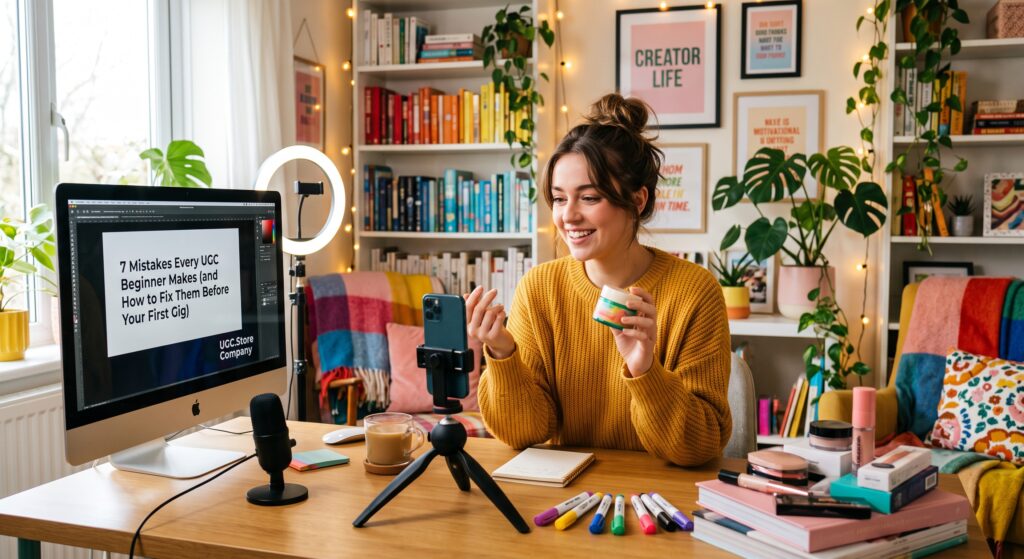
You have watched the tutorials. You have bought the tripod. You have filmed three practice videos and deleted all of them. You are standing at the edge of your UGC career, staring at the gap between where you are and where you want to be, convinced that everyone else figured this out faster than you. Here is the truth that no one posts in their highlight reel: every successful UGC creator you admire made the exact same mistakes you are about to make. The difference is not talent. The difference is that some beginners recognize their mistakes quickly, fix them systematically, and move on. Others let those same mistakes become habits that calcify into a failed career before it ever begins.
This guide is your shortcut. These are the seven most common mistakes that destroy beginner UGC careers, filmed and funded by the false assumptions that new creators carry into the industry. For each mistake, we will show you exactly how to fix it before you land your first client, before you sign your first contract, and before you waste months building a portfolio that no brand wants to buy. Fix these seven things and you will enter the UGC marketplace ahead of 90% of aspiring creators who are still stumbling in the dark.
“I spent three weeks ‘preparing’ to film my first UGC video. I bought a better tripod, researched lighting setups, and rewrote my script seventeen times. Then I realized I was just afraid of looking stupid on camera. The day I filmed a terrible first video was the day my UGC career actually started.”
— Alex R., UGC Creator (Tech & SaaS), $7K/month
Mistake 1: The Perfectionism Trap — Waiting Until You Feel Ready
The most common mistake among beginner UGC creators is not bad lighting, poor audio, or a weak niche. It is never starting at all. Perfectionism disguises itself as preparation. You tell yourself you need a better phone before you film. You need a ring light before you post. You need to lose ten pounds, learn Final Cut Pro, and study color theory before a brand will ever hire you. None of that is true. It is fear wearing a mask of professionalism.
UGC is not about perfection. It is about authenticity. Brands do not hire creators because their videos look like Super Bowl commercials. They hire creators because their content feels like a real person sharing a real opinion. A slightly grainy video with genuine enthusiasm converts better than a cinematic masterpiece with zero personality. Your first video will be awkward. Your tenth will be decent. Your fiftieth will be professional. But you will never reach the fiftieth if you are still waiting to film the first.
The fix: Give yourself a 48-hour deadline. Film one mock UGC video this week using only what you already own. No new purchases. No new research. Just your phone, a window, and a product from your bathroom or kitchen. Upload it to your UGC.Store portfolio even if you hate it. Especially if you hate it. The act of publishing imperfect work breaks the perfectionism spell and proves that the world does not end when your lighting is slightly off.
Create your first portfolio entry on UGC.Store and stop waiting for permission to begin.
Mistake 2: The Generalist Trap — Trying to Be Everything to Everyone
Beginners believe that casting a wide net catches more fish. They build portfolios with one beauty video, one tech review, one fitness routine, and one pet unboxing, thinking that variety proves versatility. It does not. It proves indecision. When a brand visits your portfolio and sees scattered content across unrelated categories, they do not think, “This creator is so flexible.” They think, “This creator has not figured out who they are yet.”
Specialization is not limiting. It is liberating. A UGC creator who owns the beauty niche can charge more, get discovered faster, and build repeat client relationships more easily than a generalist because brands trust specialists. A skincare company wants to hire someone who lives and breathes skincare, not someone who filmed a moisturizer video last Tuesday and a keyboard review on Wednesday.
The fix: Choose one niche today. Not two. Not “beauty and lifestyle.” One. Look at the products you already use daily. Look at the campaigns on UGC.Store to see where brand demand is highest. Pick the intersection of your personal interest and market opportunity, then delete or hide any portfolio videos that do not belong in that category. A focused portfolio with five strong videos in one niche beats a scattered portfolio with twenty videos in five niches every single time.
“I thought being a generalist would get me more UGC clients. I had beauty, tech, fitness, and pet videos in one portfolio. A brand told me, ‘We can’t tell what you’re actually good at.’ That hurt, but it was true. The moment I deleted everything except my tech content, my inquiry rate tripled.”
— Maria S., UGC Creator (Consumer Tech), $5K/month
Mistake 3: The Bargain Bin Trap — Underpricing Your UGC Work
Beginners consistently undervalue their UGC content because they confuse their lack of paid experience with a lack of value. They charge $20 or $30 per video, thinking that low prices will attract more brands and build their reputation faster. The opposite happens. Low prices attract low-quality clients who demand unlimited revisions, disappear on payment, and leave negative reviews when you finally push back. Worse, low prices train the market to see you as cheap, which makes raising your rates later nearly impossible.
Your time has value even when you are new. A 30-second UGC video requires filming, editing, captioning, and delivery. If that process takes three hours and you charge $30, you are earning $10 per hour before taxes and expenses. That is not a business. That is a charity.
The fix: Start at $50–$75 for your first video and climb the pricing ladder with every project. Raise your rate by 20% after every two paid gigs until you hit resistance. When brands stop booking, evaluate whether your portfolio needs improvement or whether you have simply reached the ceiling for your current experience level. Never give away unlimited usage rights for beginner rates. A video that a brand can run as a paid UGC ad forever is worth significantly more than a video for one organic Instagram post.
Mistake 4: The Brief Blindness — Ignoring Brand Requirements
Nothing damages a UGC creator’s reputation faster than delivering a video that ignores the brief. Beginners often read brand requirements quickly, assume they understand the assignment, and film what they think the brand wants rather than what the brand actually requested. They miss the required hook. They use the wrong aspect ratio. They forget a mandatory talking point. Then they are shocked when the brand requests a complete re-film.
A UGC brief is not a suggestion. It is a strategic document that reflects weeks of campaign planning. When a brand specifies a 15-second vertical video with a hook that starts with “I was skeptical until…” they are not being controlling. They are sharing data about what converts for their audience. Ignoring that data does not make you a creative rebel. It makes you an unreliable vendor.
The fix: Read every brief twice before filming. Highlight the non-negotiables: video length, aspect ratio, required talking points, hook language, caption requirements, and usage rights. If anything is unclear, ask questions before you film, not after you deliver. On UGC.Store, briefs are standardized and detailed, which makes this process easier. Treat the brief as your creative blueprint, not your enemy.
Mistake 5: The Silent Video Trap — Forgetting Captions
Here is a statistic that should terrify every beginner UGC creator: up to 85% of social media video is watched without sound. When a viewer scrolls through TikTok or Instagram Reels in a quiet office, a noisy train, or a bed next to a sleeping partner, they are not hearing your brilliant audio. They are reading your captions. A UGC video without captions is a UGC video that will be scrolled past in under two seconds.
Beginners skip captions because they are tedious to add manually. They assume viewers will turn on sound if the video is engaging enough. They will not. Captions are not an accessory in UGC content. They are a fundamental delivery requirement that brands expect by default.
The fix: Use auto-caption tools in CapCut or your preferred editing app. The process takes under three minutes and is 95% accurate. Always proofread for brand names and product terminology, then burn the captions directly into the video. Never deliver a UGC video without captions, even if the brief does not explicitly request them. This single habit will place you ahead of half the beginner market.
“I delivered a UGC video without captions because I thought they looked ‘messy.’ The brand rejected it immediately. ‘80% of our audience watches without sound,’ they said. I spent an hour adding captions and re-exporting. I never made that mistake again, and now I auto-caption everything before I even start editing.”
— Lena K., UGC Creator (Beauty & Wellness), $6K/month
Mistake 6: The Rights Giveaway — Not Understanding Usage Rights
The most expensive mistake a beginner UGC creator can make is giving away unlimited usage rights for a single project fee. Usage rights determine where, when, and how a brand can use your UGC content after delivery. A video with organic social rights for 30 days is worth one amount. A video with perpetual paid ad rights across all platforms is worth five times that amount. Beginners who do not understand this distinction sign contracts that let brands run their content in national ad campaigns for the next decade, all for the price of one $75 video.
This mistake is not just about money. It is about control. When you give away perpetual rights without compensation, you lose the ability to resell that content, use it in your own portfolio, or license it to other brands. You are essentially transferring ownership of your creative asset for pocket change.
The fix: Learn the four tiers of UGC usage rights before you accept your first project. Tier 1: organic social only, 30 days. Tier 2: paid social, 60–90 days. Tier 3: all digital, 6–12 months. Tier 4: perpetual, all media. Charge accordingly, with each tier adding 25–100% to your base rate. On UGC.Store, usage terms are built into the campaign structure, which protects you from accidentally giving away more than you intended.
Mistake 7: The Hobbyist Mindset — Treating UGC as a Side Project
The final mistake is the one that underlies all the others. Beginners treat UGC as a creative hobby that might someday generate income. They film when they feel like it. They accept whatever rate the brand offers because they are grateful for the opportunity. They ignore taxes, contracts, and systems because those things feel too corporate for their artistic identity. Then they wonder why their income never grows and why brands do not take them seriously.
UGC is a service business. The creators who earn $5,000, $8,000, or $10,000 per month are not necessarily better artists than beginners. They are better operators. They track their income. They save for taxes. They respond to inquiries within hours, not days. They deliver on deadline, every time. They treat every project as a professional commitment, not a favor.
The fix: Shift your identity from aspiring creator to freelance business owner today. Open a separate bank account for your UGC income. Save 30% of every payment for taxes. Create a simple spreadsheet to track clients, rates, and deadlines. Set specific work hours for filming, editing, and pitching. When you treat UGC like a business from day one, brands treat you like a professional from day one.
“My first ten UGC videos paid $40 each. I was proud of being ‘affordable’ until I calculated my hourly wage: $3.50 per hour. I was losing money on every project. The day I raised my rates to $100, fired my worst client, and started tracking my expenses, I became a business owner instead of a hobbyist. My income quadrupled in four months.”
— Jason T., UGC Creator (Home & Lifestyle), $9K/month
The Pre-Launch Checklist: Fixing Everything Before Your First Gig
Before you send your first pitch or apply to your first brief on UGC.Store, run through this checklist. Every box you check is a mistake you have already avoided.
- [ ] I have filmed at least one mock video and published it, even if imperfect
- [ ] I have chosen one specific niche and removed off-topic content from my portfolio
- [ ] I have set my starting rate at $50+ and understand basic usage rights pricing
- [ ] I have read the UGC brief guide and know how to extract requirements
- [ ] I auto-caption every video before delivery
- [ ] I understand the difference between organic social and perpetual usage rights
- [ ] I have created a simple tracking system for income, clients, and deadlines
From Mistakes to Momentum
Every mistake in this guide is a rite of passage. Every successful UGC creator you admire has underpriced their work, ignored a brief, skipped captions, and treated the industry like a hobby at some point. The ones who succeeded are the ones who recognized these errors, fixed them fast, and built systems that prevented them from happening again.
Your first UGC gig is not waiting for you to become perfect. It is waiting for you to become professional. That means starting before you feel ready, specializing before you feel qualified, charging before you feel confident, and operating like a business before you have the revenue to justify it. The brands who will hire you are not looking for the next viral superstar. They are looking for reliable creators who avoid the basic mistakes that cost campaigns time and money.
Register as a creator on UGC.Store today, build your portfolio with these fixes in mind, and make your first impression a professional one.
Learn more about how UGC.Store connects creators with brands under clear, protected terms on our About Us page.
