Executive Overview
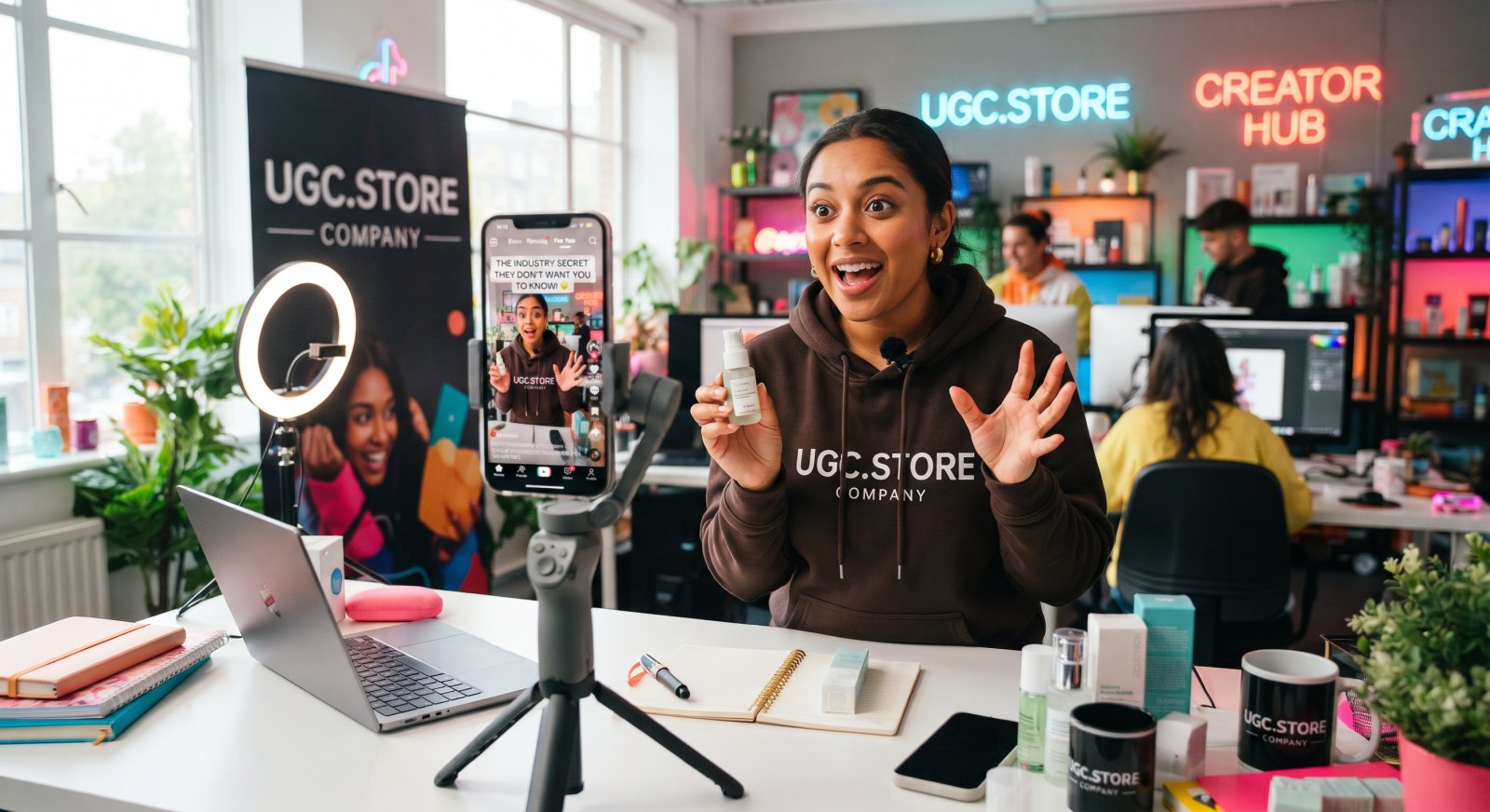
The "Industry Secret" hook is the most potent curiosity weapon in the TikTok UGC playbook. It operates on a primal human instinct: the desire to know what we are not supposed to know. When a creator leans into the camera and says, "The mattress industry does not want you to know this," they are not just making a claim. They are fundamentally shifting the viewer's psychological posture from a passive consumer to an active insider. The hook works because it creates an information asymmetry—the creator possesses forbidden knowledge, and the viewer is invited to share in it. However, this format walks a razor's edge. If executed with specificity and actual proof, it builds massive trust and drives high conversion. If executed as a baseless conspiracy or a false legal claim, it triggers instant skepticism, comment-section hostility, and potential platform violations. The brands that win with this hook are the ones that reveal actual inefficiencies, hidden fees, or outdated norms, not fabricated scandals.
Theoretical Basis and Psychology of Mechanics
The psychology behind the whistleblower framing is deeply rooted in Reactance Theory and the Forbidden Fruit Effect. Viewers are instinctively drawn to information that feels restricted. Standard advertising is perceived as sanctioned and polished; it exists to sell. The "Industry Secret" hook, by contrast, feels unsanctioned and raw. It exists to expose. This perceived rebellion against a powerful entity triggers an immediate orienting response.
The first mechanism is the us-versus-them tribalism. The hook immediately establishes a villain (the industry, the bank, the corporation) and a hero (the creator). The viewer is invited to join the hero's team. This is an incredibly powerful identity trigger. When the creator says, "They are hoping you never find out about this," the viewer implicitly aligns themselves against the "they." The product being sold is no longer just a product; it is a weapon in a shared fight against a rigged system.
The second mechanism is the specificity mandate. A fake secret ("Banks hate this one trick") triggers the ad-defense system because it is a well-worn marketing cliché. A real secret requires specificity. "Did you know that the standard 1% fee on your 401k will eat 28% of your total returns over 30 years? The financial industry relies on you not doing that math." The specificity—the exact percentage, the exact time frame—signals that the creator actually understands the hidden mechanism. The viewer stops because the claim is mathematically verifiable and personally threatening.
The third mechanism is the insider payoff. The hook is a promise, and the payoff must be a tangible revelation. If the video just says "the industry is bad" and then pitches a product, the viewer feels cheated. The video must actually reveal the secret: the hidden fee, the outdated regulation, the cheaper alternative. The product is then positioned as the tool that democratizes the secret, giving the viewer access to the insider advantage without needing insider connections.
The fourth mechanism is the compliance tightrope. The biggest danger of this format is making unsubstantiated, defamatory, or legally risky claims. You cannot say "Company X is a scam" without proof. You cannot make specific medical or financial claims that violate platform policies. The safe framing is to attack the system or the norm, not a specific named person, and to base the secret on verifiable facts or personal experience. "I worked in this industry for five years, and this is the standard practice they do not tell you about" is safe. "Company X is poisoning you" is a legal liability.
Step-by-Step Algorithm & Methodology
The framework below sequences an "Industry Secret" UGC asset from cold open to conversion, with each phase engineered to build insider trust while maintaining strict compliance.
Phase 1 — The Conspiratorial Whisper (0–3 seconds). The creator opens with a direct, slightly hushed delivery that signals forbidden information. The visual is a tight close-up of the creator’s face, avoiding the bright, polished lighting of a standard ad. "The mattress industry has been lying to you about one thing, and it is costing you thousands." The tone is not angry; it is matter-of-fact, like someone finally deciding to tell the truth. No greeting, no product name. The secret is the hook.
Phase 2 — The Specific Mechanism (3–10 seconds). The creator names the exact mechanism of the secret. This is where specificity is crucial. "They tell you that you need to replace your mattress every eight years. That is a marketing lie invented in the 1990s to double their sales cycle. A high-quality latex mattress will last twenty years if you maintain it properly." The claim is specific, verifiable, and directly tied to the viewer's wallet. The screen can show a graph, a quote from an industry report, or a visual comparison of materials.
Phase 3 — The App/Product as the Insider Tool (10–20 seconds). The product enters not as a magical solution, but as the tool that makes the insider knowledge actionable. "This app scans the materials in a mattress and tells you if it is actually built to last, or if it is the same cheap foam they have been selling you for a decade." The screen recording shows the app revealing the hidden data. The product is the flashlight the creator is handing to the viewer.
Phase 4 — The Honest Friction Note (20–28 seconds). The creator names the limitation of the product or the situation. "The app does not magically make a cheap mattress good. It just stops you from getting ripped off. You still have to pay for quality, but at least now you know what you are paying for." The honesty prevents the video from feeling like a bait-and-switch. It sets realistic expectations and builds trust.
Phase 5 — The Payoff and Resolution (28–35 seconds). The creator shows the result of using the insider knowledge. "I used this to buy my last mattress. I avoided the eight-year trap and bought a twenty-year one. It cost me a little more upfront, but it saved me from buying three mattresses over the next twenty years." The cognitive itch is scratched. The viewer feels smarter and more capable than the industry that tried to deceive them.
Phase 6 — The Shared Secret CTA (final 5–7 seconds). The creator closes with a question that invites the viewer’s own insider experiences into the comments. "What is the biggest industry secret you have ever learned? I need to know I am not the only one who was getting ripped off." The CTA generates shared stories, boosting engagement and pushing the video to a wider audience.
Ready-to-Use Working Templates & Scripts
Script One: "The 401k Fee Secret" (Format: finance app UGC, 38 seconds).
Opening frame: creator’s face, serious, leaning into the camera. Hook text: the finance industry's dirtiest secret. Dialogue: "The financial industry has a secret that they are legally allowed to keep from you. It is called the 1% fee. And it is robbing your retirement." Mechanism: screen shows a graph of a retirement portfolio over 30 years. "A 1% fee sounds tiny. But over thirty years, it eats twenty-eight percent of your total returns. The fund managers do not care because it is their salary. They are hoping you never do the math." App reveal: screen recording of a fee analysis app. "This app does the math for you. It scans your 401k and shows you exactly how much you are paying in hidden fees. I ran my own and found out I was paying five hundred dollars a year for nothing." Honest friction: face to camera. "The app does not manage your money. It just shows you the cost. You still have to move the funds." Payoff: "I moved my money to a low-cost index fund and saved a hundred and fifty thousand dollars over the next twenty years." Shared secret CTA: "What is the biggest hidden fee you have ever found? I need to know I am not the only one who got robbed by a 1% fee."
Script Two: "The Skincare Industry Lie" (Format: skincare app UGC, 34 seconds).
Opening frame: creator holding a generic bottle of face wash, looking disgusted. Hook text: your face wash is a lie.. Dialogue: "The skincare industry is lying to you about one thing. They tell you that you need a different cleanser for every skin type. That is a marketing scam." Mechanism: screen shows the ingredient list of a top-selling face wash. "This ingredient right here is just fragrance. It does nothing but irritate your skin. They put it in so it smells good, and then they sell you a separate moisturizer to fix the irritation they caused." App reveal: screen recording of a skincare analysis app scanning the bottle. "This app scans the barcode and flags every ingredient that is just a marketing filler. It caught three in my old face wash." Honest friction: face to camera. "The app does not tell you what to buy. It just tells you what to throw away. I had to find a new cleanser." Payoff: "I threw out four products that were just fragrance and water. My skin cleared up in a week." Shared secret CTA: "What is the worst skincare ingredient you have ever found in your bathroom? I need to know I am not the only one who got scammed by a face wash."
Script Three: "The Real Estate Trap" (Format: real estate app UGC, 40 seconds).
Opening frame: creator in a professional setting, speaking directly to camera. Hook text: realtors don't want you to know this.. Dialogue: "I was a real estate agent for eight years, and there is one thing we were trained to never tell you. The asking price is a psychological trap." Mechanism: screen shows a property listing with the price highlighted. "We price a house at $499,000 instead of $500,000 because it makes you feel like you are getting a deal. But if you offer the asking price, you are already losing. The real value is based on the comps, not the listing." App reveal: screen recording of a property analysis app. "This app pulls the comps and shows you what the house is actually worth. It scans the history and flags if the price has been dropped because it was overpriced." Honest friction: face to camera. "The app is not a realtor. It does not negotiate for you. It just tells you the truth before you make an offer." Payoff: "I used this to buy my current house. I offered thirty thousand below asking because the app showed it was overpriced. They accepted." Shared secret CTA: "What is the biggest real estate secret you have ever learned? I need to know I am not the only one who got trapped by an asking price."
Comparative Analysis Matrix
| Parameter | Standard Marketing Claim | "Industry Secret" Hook |
|---|---|---|
| Primary mechanism | Trust and aspiration | Curiosity and insider rebellion |
| Hook structure | "This product is great" | "The industry is hiding this from you" |
| Viewer posture | Passive consumer | Active insider |
| Trust architecture | Dependent on brand reputation | Dependent on specificity and proof |
| Engagement driver | Agreement and desire | Curiosity and shared enemy |
| Compliance risk | Low (if claims are accurate) | High (if claims are unsubstantiated) |
| Friction Point | Failed "Industry Secret" Hook | Successful "Industry Secret" Hook |
|---|---|---|
| Specificity | "Banks hate this one trick" | "A 1% fee will cost you 28% of your returns" |
| Proof | No evidence, just claims | Screen recording, report, or verifiable math |
| Target | Attacks a specific person or brand | Attacks a systemic norm or outdated regulation |
| Resolution | Video ends before revealing the secret | Video reveals the specific mechanism and the solution |
| Benchmark Metric | Standard UGC | "Industry Secret" Target |
|---|---|---|
| Hook rate (3-second) | 55–65% | 75–85% via forbidden curiosity |
| Hold rate (15-second) | 35–45% | Above 60% via unresolved secret |
| Comment rate | 0.8–1.5% | 3–5% via shared secret prompts |
| Save rate | Low to moderate | Exceptionally high; viewers save to remember the secret |
Real-World Case Study Breakdown
A personal finance app launched a TikTok UGC campaign targeting young professionals with high 401k balances. The initial creative relied on standard financial education hooks: "How to invest for retirement." The three-second view rate hovered at 45%, and the CPA was $6.50. The problem was that standard financial education felt like homework. The audience did not want a lecture; they wanted an advantage.
The strategic pivot introduced the "Industry Secret" Hook. The team recruited a creator who had worked as a financial advisor and was willing to share insider knowledge. The winning asset opened with the creator saying: "I worked in the financial industry for five years, and there is one fee they are hoping you never notice. It is called the 1% fee, and it is silently eating your retirement."
The hook worked because it combined the authority of insider experience with the forbidden nature of the secret. The app entered as the audit tool that reveals the hidden fee. The honest friction note was: "The app does not fix your portfolio. It just shows you the cost. You still have to move the money." The payoff was tangible: "I moved my money and saved $150,000 over twenty years."
The campaign ran for six weeks, generated 1.8 million views, and drove 6,800 attributed installs at a blended CPI of $3.40—a 47% decrease from the baseline. The three-second view rate jumped to 81%. The comment section was filled with users sharing their own hidden fee discoveries. The governing insight: the app had been selling financial education, but the buyer needed to feel like they were getting one over on the system that was rigging the game.
Real-World Engineering & Creative Feedback
“The secret has to be real. The moment the viewer suspects you are making up the conspiracy to sell a product, you lose them. The secret has to be verifiable. It has to be a fact that they can Google, a math equation they can do, or a document they can find. The product is just the tool that makes the secret actionable.” — Tasha Moreau, UGC Creator, 46K followers
“We killed every 'they don't want you to know' hook in our pipeline that did not have a specific mechanism behind it. A vague conspiracy is just noise. We rewrote the brief: 'The secret must be a specific, verifiable practice. It must cost the viewer money. And it must be solvable with our app.' The difference in output was immediate.” — Ben Achterberg, Head of User Acquisition, Cartwheel Finance
“The us-versus-them framing is the engine. The viewer wants to feel like they are on the inside. They want to feel like they are getting the advantage that the rich people have. The product is not a subscription; it is a secret weapon. The language of the hook must reflect that rebellion.” — Priya Deshmukh, Creative Strategy Lead, Pixel & Pulse Agency
“The compliance risk is massive. You cannot name a specific company and say they are scamming people without a lawsuit. You cannot claim a medical cure. You have to attack the system, the norm, or the outdated regulation. The safest secret is a widely known industry practice that the average person does not understand.” — Marcus Lehto, Performance Marketing Director, Northline Interactive
“We almost cancelled the whistleblower brief because the first batch of creators sounded too angry. They were yelling at the camera about banks and it felt like a conspiracy video. We rewrote the brief: 'You are not a conspiracy theorist. You are a calm, rational insider who is finally telling the truth.' The difference in output was immediate. The tone shifted from anger to quiet confidence. The CPI dropped by a third.” — Elena Vasquez, Brand Director, Mosaic Apps
Production Self-Check Checklist
Secret is specific and verifiable — the hook names a real, verifiable industry practice, fee, or outdated norm; no vague conspiracies.
Target is systemic — the hook attacks the industry norm or the system, not a specific named competitor or protected group.
Insider credential established — the creator establishes their right to know the secret ("I worked in this industry for five years").
Mechanism is explained — the video explains exactly how the secret works and why it costs the viewer money.
App enters as the tool — the product is positioned as the flashlight that reveals or solves the hidden mechanism.
Honest friction note spoken — the creator names what the app cannot do, setting realistic expectations.
Payoff is concrete — the video shows a specific dollar amount, time saved, or result achieved.
No defamatory claims — the video does not name a specific company or person as a criminal or scammer without absolute legal backing.
CTA invites shared secrets — the closing question asks for the viewer's own insider experience, generating comment engagement.
Safe-zone text legibility confirmed — the hook text is short, bold, and placed in the upper-middle third of the screen.
Advanced FAQ
How does a brand find a verifiable "industry secret" without exposing themselves to legal risk?
The safest secrets are documented industry practices, hidden fees, or outdated norms that are technically legal but broadly considered exploitative. Look at regulatory filings, consumer protection reports, or academic studies. For example, the 1% fee in retirement accounts is not a crime; it is a disclosed but poorly understood practice. A brand can safely expose it because the math is real and the practice is standard. The rule is to focus on systemic inefficiencies, not specific bad actors.
What is the correct way to handle the secret when the product is not a direct solution?
If the product does not directly solve the secret, it can still be the tool that provides the advantage. For example, a personal finance app might not be able to fix a bad credit score directly, but it can reveal the exact factors hurting the score. The app is the diagnostic tool, and the viewer is the one who takes the action. The hook is the revelation; the product is the flashlight.
Should the creator name the specific industry or keep it vague?
The creator should name the industry explicitly. "The mattress industry" is specific enough to trigger curiosity, but broad enough to avoid legal risk. "The finance industry" is safe. Naming a specific company ("Company X is lying to you") is a legal liability. The hook works better when it targets a recognizable, massive entity because the viewer already has a latent distrust of it. The specificity of the industry is the hook; the specificity of the practice is the proof.
How does the "Industry Secret" hook change for B2B SaaS versus consumer products?
For B2B SaaS, the secret is often about inefficiency or hidden costs in corporate workflows. The hook sounds like: "I managed marketing teams for eight years, and the software vendors are overcharging you for data you already own." The B2B buyer is highly motivated by cost savings and competitive advantage. For consumer products, the secret is usually about hidden fees or low-quality ingredients. The consumer is motivated by personal protection and feeling smart.
What is the right measurement stack for "Industry Secret" hooks beyond CPI?
The primary metric is three-second view rate, segmented by the specific secret type. A secret that costs the viewer money should outperform a general secret. The second metric is save rate, which is exceptionally high for this format because viewers save the videos to remember the secret or share it with friends. The third metric is comment specificity: do the comments reference the specific secret or just the product? If the comments are full of "I can't believe I didn't know this," the hook landed.
Custom Contextual Conclusion
The "Industry Secret" hook is not a conspiracy theory. It is a revelation of systemic truth. The brands that win with this format are not the ones that invent scandals. They are the ones that expose the actual, verifiable, boring secrets that the industry relies on the consumer not knowing. The math that eats the retirement fund. The fragrance that irritates the skin. The asking price that traps the buyer. The hook works because the viewer is tired of being lied to. The creator is the insider who finally tells the truth. The product is the tool that gives the viewer the advantage. The secret is the hook. The proof is the trust. The download is the viewer's way of joining the inside.