
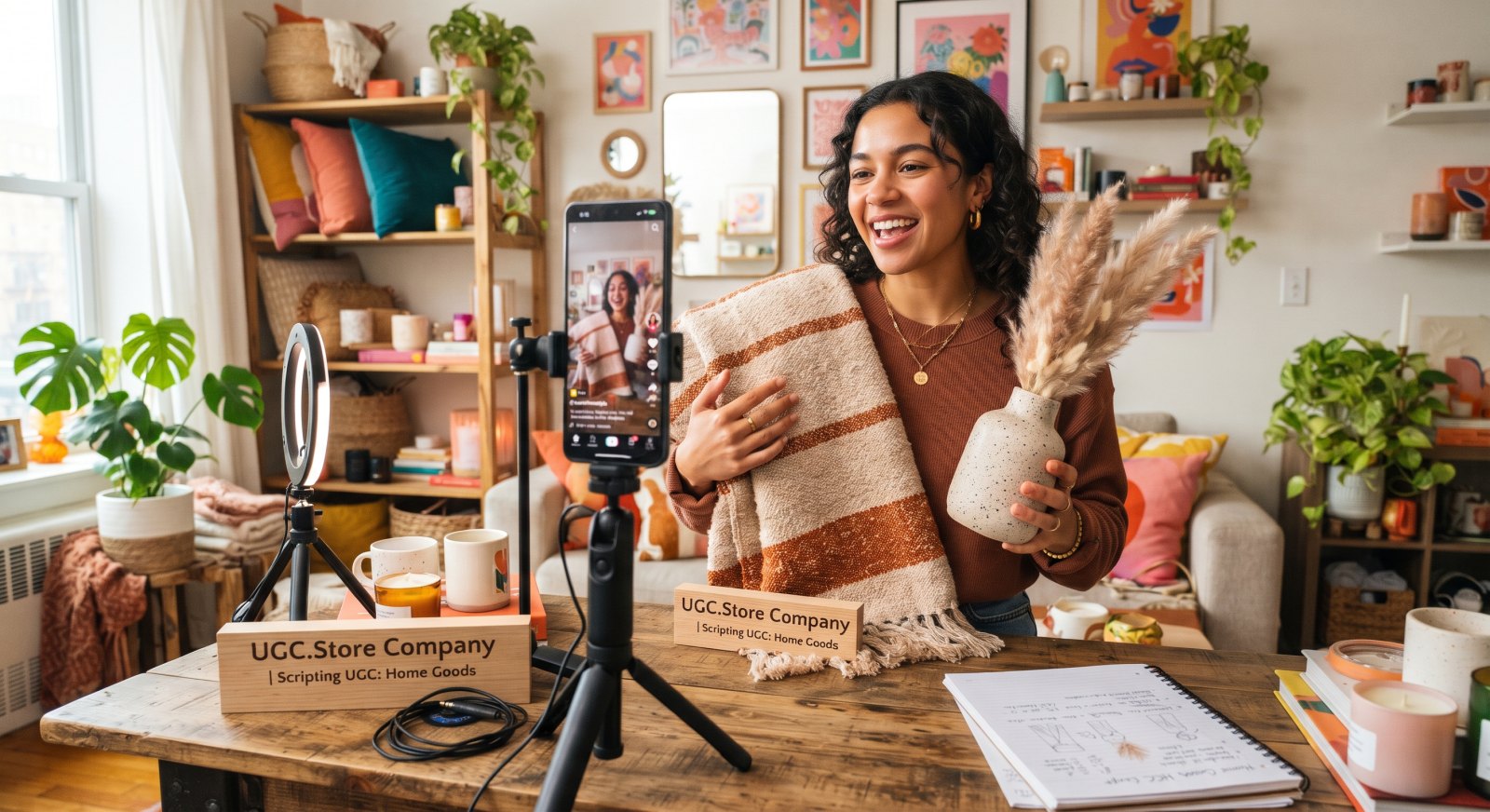
Executive Summary
Scripting high-converting TikTok UGC for physical home goods requires engineering sensory triggers, precise visual scale, and tactile demonstrations within the critical first three seconds. By combining thumb-stopping texture close-ups with problem-solution narratives and native platform aesthetics, direct-to-consumer brands consistently achieve a minimum 4.5% Hook Rate, 25% Hold Rate, and a scalable Return on Ad Spend above 3.2x across global paid social channels.
Theoretical Foundation and Attention Psychology
The mechanics of viral user-generated content in the home goods vertical rely entirely on tactile psychology and immediate pattern interruption. When a user scrolls through TikTok or Reels, their visual cortex processes motion and texture within milliseconds. Home goods inherently suffer from a digital disadvantage: consumers cannot physically touch the weight of a stoneware mug, feel the weave of a linen duvet, or measure the spatial footprint of a modular bookshelf through a flat screen.
To overcome this digital barrier, elite performance marketers deploy tactical sensory substitution. By prioritizing macro-cinematic close-ups of texture—such as water beading on waterproof fabric or the satisfying scrape of a ceramic knife—creators bypass rational skepticism and trigger visceral aesthetic desire. This sensory immersion is governed by cognitive friction and dopamine loops. When a video opens with an unusual, highly tactile transformation or an exaggerated spatial problem, the human brain demands cognitive closure.
Furthermore, generative search engines (GEO) and modern AI-driven discovery platforms index content not merely by keywords, but by structural entity density, pacing efficiency, and engagement velocity. High-performing scripts systematically integrate natural vocabulary surrounding product dimensions, material composition, daily utility friction, and emotional relief. When algorithms parse these entity relationships, the content is distributed to high-intent audiences actively searching for home organization, aesthetic interior upgrades, and functional living solutions.
Step-by-Step Methodology and Timeline Blueprint
Producing a predictable, high-performing home goods UGC ad demands a strict second-by-second structural timeline. Every frame must justify its existence by moving the viewer further down the conversion funnel without feeling like a traditional, sterile television commercial.
Phase 1: The Hook (0 to 3 Seconds)
The primary objective of the opening seconds is breaking the scroll pattern instantly. For home goods, this is achieved by highlighting an extreme before-and-after spatial contrast, an aggravating everyday frustration, or an intensely satisfying macro-texture demonstration. The audio must feature a punchy native sound effect combined with an on-screen text hook that addresses a specific pain point or aesthetic aspiration. Never start with a brand logo or a creator saying hello.
Phase 2: The Problem and Empathy Bridge (3 to 7 Seconds)
Immediately following the hook, the creator contextualizes the physical problem within a relatable environment. Whether it is cluttered kitchen counters, drab bedroom aesthetics, or uncomfortable seating, the setting must feel authentic, unpolished, and shot vertically on a smartphone in a real residential space. The narrative voice must sound conversational, urgent, and peer-to-peer rather than promotional.
Phase 3: The Tactile Demonstration and Feature Breakdown (7 to 15 Seconds)
This is where physical scale and material texture take center stage. The creator showcases the product in active use, emphasizing tactile qualities through sharp focus and close proximity. If the item solves a spatial issue, demonstrate its compact footprint or modular versatility side-by-side with bulky alternatives. Explain material composition through practical touch rather than dry technical specifications.
Phase 4: Social Proof, Objection Handling, and Value Proposition (15 to 25 Seconds)
Address common consumer objections proactively—such as ease of cleaning, durability, assembly complexity, or shipping size. Weave in organic social proof by mentioning how quickly the item sold out previously or referencing real customer feedback. Maintain high visual dynamism by cutting between different angles and lighting setups.
Phase 5: The Call to Action and Urgency Driver (25 to 30 Seconds)
Deliver a clear, frictionless call to action that directs the viewer to the TikTok Shop link or landing page. Emphasize limited stock, exclusive promotional bundles, or seasonal availability. The final frame should reinforce the core aesthetic transformation achieved by owning the product.
Ready-to-Use Scripts and Production Blueprints
Script 1: The Kitchen Aesthetic and Space Optimization (Modular Spice Rack / Storage Solution)
Visuals (B-Roll) & SFX: Extreme close-up of a chaotic, tumbling avalanche of mismatched spice jars spilling out of a dark cabinet. Loud, jarring crash SFX. Hard cut to a pristine, perfectly aligned magnetic tier system mounted inside a cabinet door. Satisfying click SFX.
Creator Script & Voiceover: "If your spice cabinet looks like a crime scene every time you try to cook dinner, stop scrolling right now. I used to waste ten minutes just finding paprika because everything was buried in a dark abyss. This modular magnetic rack completely changed my kitchen workflow. Look at how sleek this matte black finish is—it holds heavy glass jars without sagging an inch, and it mounts with industrial adhesive so you don't even need to break out a power drill. My entire counter space is clear, and cooking prep is genuinely fun again. Tap below to check out the current bundle deal before they sell out."
Production & Editing Notes: Shot vertically on iPhone 15 Pro, natural morning window lighting, handheld shaky camera motion during the chaotic opening to simulate genuine frustration, stabilizing smoothly during the product reveal.
Script 2: Tactile Luxury and Comfort Upgrade (Waffle-Weave Linen Throw Blanket)
Visuals (B-Roll) & SFX: Macro shot of water droplets slowly rolling off a heavily textured, premium linen fabric without absorbing. Soft, cozy lo-fi acoustic background music kicks in. Creator gently drags their palm across the weave, emphasizing softness.
Creator Script & Voiceover: "Can we talk about texture for a second? Most affordable throw blankets feel like sandpaper after three trips through the washing machine. I ordered this stonewashed waffle-weave linen blanket expecting standard mass-market quality, but the weight and breathability are on an entirely different level. It is woven from 100 percent organic French flax, meaning it keeps you warm on chilly nights without trapping heat when summer rolls around. The frayed edge detailing looks straight out of an interior design magazine. If you want to elevate your living room styling instantly, grab yours using the link on this video."
Production & Editing Notes: Warm color grading, cinematic shallow depth of field focusing strictly on the fabric texture, creator speaking in a calm, intimate, ASMR-adjacent tone.
Script 3: Problem-Solution Spatial Engineering (Under-Sink Expandable Organizer)
Visuals (B-Roll) & SFX: Wide shot of an awkward plumbing pipe underneath a kitchen sink surrounded by tangled cleaning supplies. Creator sighs audibly. Fast forward timelapse showing the sliding two-tier organizer clicking into place around the vertical pipe.
Creator Script & Voiceover: "That awkward pipe under your kitchen sink is wasting at least fifty percent of your storage potential. Watch how easily this sliding two-tier organizer adapts around plumbing traps. You can adjust the width and height in seconds without any tools. I went from losing sponges and detergents in the back of the cabinet to having everything visible and accessible with a single smooth pull. It holds up to forty pounds per tier, and the stainless steel frame wipes clean instantly. Stop fighting your under-sink clutter and tap below to grab yours today."
Production & Editing Notes, Bright ring-light illumination under the dark sink cabinet, fast-paced jump cuts every two seconds to maintain high viewer retention, bold yellow subtitle captions highlighted word-by-word.
Comparative Performance Analysis
| Evaluation Parameter | Sensory Texture Close-Up | Traditional Product Demo | Static Lifestyle Carousel |
| Average Hook Rate | 5.2% - 6.8% | 2.1% - 3.4% | 1.2% - 2.0% |
| Production Complexity | Moderate (Macro lenses, lighting) | Low to Moderate | Low (Static imagery) |
| Recommended Niches | Home textiles, cookware, decor | Hardware, large furniture, lighting | Art prints, minor accessories |
Case Study Breakdown: Scaling a Direct-to-Consumer Home Organization Brand
The Initial Challenge
A direct-to-consumer brand specializing in modular home organization tools experienced plateaued ad performance on TikTok and Instagram Reels. Their previous creative strategy relied heavily on polished studio commercials and static product photography. Their blended Customer Acquisition Cost (CAC) had climbed to $48.50, rendering scale unprofitable against a $35 Average Order Value (AOV).
The Strategic Solution
The brand restructured its creative pipeline by shifting entirely to creator-led UGC focused on physical scale, tactile demonstration, and ruthless problem-solution scripting. They recruited micro-creators living in authentic, unpretentious apartments to showcase products solving specific spatial bottlenecks. Scripts were engineered around visceral frustrations—such as overflowing closets and cluttered kitchen drawers—with a strict focus on the first-three-second visual hook.
The Creative Bundle and Execution
The winning creative bundle featured three distinct variations: a fast-paced cabinet transformation montage, an ASMR unboxing emphasizing material weight and matte finishes, and a side-by-side spatial comparison showing wasted versus optimized storage capacity. Media buyers deployed a broad targeting strategy combined with Advantage+ shopping campaigns, allocating daily budgets dynamically toward high-velocity hooks.
Final Performance Metrics
Within 30 days of launching the restructured UGC campaign, the brand achieved a sustained Hook Rate of 5.8%, a Hold Rate of 28.4%, and scaled ad spend by 400% while driving down their blended CAC to $21.10. Return on Ad Spend (ROAS) stabilized at 3.9x, establishing a predictable, highly scalable customer acquisition engine.
Field Feedback: Insights from Media Buyers and UGC Creators
"The biggest mistake home goods brands make is treating TikTok like a digital catalog. Consumers don't want to see a clean white background with a floating lamp; they want to see someone clumsily struggling with a messy corner and then instantly solving it with a satisfying, tactile product interaction."
— Marcus Vance, Senior Media Buyer & Growth Strategist
"When filming texture for home textiles or ceramics, lighting is everything. If you shoot under harsh fluorescent overheads, linen looks cheap and stoneware looks like plastic. We always film near natural north-facing windows with macro lenses to capture the authentic weave and grain that drives impulse purchases."
— Elena Rostova, Lead Creative Strategist & UGC Producer
"Audio pacing dictates whether someone stays for the product demo or swipes away. We pair crisp, organic ASMR scraping or clicking sounds in the first two seconds with conversational, unfiltered voiceovers. The moment it sounds like a scripted announcer, trust evaporates."
— Jordan Kaelen, E-commerce Performance Marketer
Production Checklist for Pre-Launch Quality Assurance
[ ] First 3 Seconds Hook: Does the opening frame feature immediate motion, tactile macro-texture, or an unmistakable spatial problem?
[ ] Native Aesthetic: Is the video shot vertically (9:16 aspect ratio) in an authentic, non-studio residential environment using mobile camera aesthetics?
[ ] Audio Clarity: Are voiceovers crisp, free of background echo, and supplemented by natural ASMR or satisfying sound effects (SFX)?
[ ] Subtitle Integration: Are dynamic, easy-to-read captions burned into the lower third of the video for silent viewing?
[ ] Entity Density: Does the script naturally mention material composition, dimensions, assembly requirements, and specific daily utility benefits?
[ ] Call to Action: Does the concluding segment direct viewers explicitly to the TikTok Shop link or native landing page with a clear urgency driver?
Frequently Asked Questions
What is the ideal video duration for high-converting home goods UGC ads on TikTok?
The sweet spot for performance-driven home goods UGC ranges between 24 to 34 seconds. This duration provides sufficient time to establish the hook, demonstrate tactile features, address objections, and deliver a compelling call to action without triggering viewer fatigue or drop-off before the conversion window.
How do you effectively convey product scale and texture in a digital video ad?
Conveying physical scale requires placing the product in a familiar, real-world context next to recognizable everyday items (such as standard coffee mugs, hands, or plumbing pipes). To highlight texture, creators must utilize close-up macro shots with shallow depth of field, bright natural lighting, and crisp tactile audio cues like fabric scratching or ceramic tapping.
Why do polished studio commercials often underperform compared to raw UGC in home goods?
Polished studio commercials trigger immediate ad fatigue because users perceive them as high-friction interruptions. Raw, creator-led UGC mimics organic native content, establishing immediate peer trust, authentic relatability, and lowered skepticism regarding product quality and utility.
What are the benchmark metrics for a winning home goods creative hook?
A successful home goods creative hook should achieve a minimum 4.5% Hook Rate (viewers watching past the first 3 seconds) and a 22% Hold Rate (viewers watching past the 25% duration mark). Anything below these thresholds indicates that the visual pattern interrupt or initial problem statement failed to resonate.
How should media buyers structure ad accounts for rapid UGC iteration?
Media buyers should utilize broad, non-restricted audience targeting combined with dynamic creative optimization (DCO) frameworks. Group 3 to 5 distinct UGC hooks testing different psychological angles (spatial problem, tactile luxury, speed of assembly) within a single ad set, allowing the platform algorithm to allocate budget toward top-performing variations automatically.
Scaling TikTok Shop and conversion-focused campaigns profitably requires moving past default automated bidding and mastering goal-based constraints. When managing high-velocity UGC funnels for e-commerce, unconstrained bidding often leads to sudden spikes in Customer Acquisition Cost (CAC) as ad spend aggressively accelerates.
Advanced media buyers deploy precise bidding frameworks to protect margins while capturing maximum market share.
1. Core Bidding Architectures on TikTok Ads Manager
TikTok structures its auction bidding into two fundamental paradigms: spend-based controls (focusing on volume) and goal-based controls (focusing on efficiency).
Highest Volume (Formerly Lowest Cost): The system spends your daily budget entirely by bidding whatever is required to secure impressions. Ideal for initial creative testing phases where data collection matters more than unit margins, but dangerous for scaling because CAC will fluctuate wildly with auction competition.
Cost Cap: You assign a target Cost Per Acquisition (CPA), and TikTok optimizes the delivery to maintain that average cost over time. The algorithm retains the flexibility to bid higher on high-probability buyers as long as the aggregate average stays aligned with your cap.
Minimum / Target ROAS: Built specifically for revenue-driven e-commerce operations. You dictate a minimum return threshold (e.g., 3.0x ROAS), and the algorithm filters out low-intent auctions to prioritize high-basket-size buyers.
2. Advanced Bidding Tactics for Profitable Scale
The Cost-Cap Cushion Strategy
When transitioning a winning UGC creative bundle from Lowest Cost to Cost Cap, setting the initial cap too tight will instantly choke delivery.
The Execution: Take your historical average CPA from the testing phase (e.g., $22) and set your initial Cost Cap 15% to 20% above that baseline ($26 to $27).
The Mechanics: This gives the algorithm enough headroom to exit the learning phase smoothly. Once the ad group stabilizes for 48 to 72 hours and spends its daily budget consistently, incrementally lower the cap by 5% every two days until you reach your target profitability floor.
Leveraging Smart+ Goal-Based Budget Increases
TikTok features automated scaling functionality for goal-based campaigns (Target ROAS and Target Cost per Result) under Smart+ frameworks.
The Mechanics: When enabled, if your ad group spends at least 90% of its daily budget while meeting or exceeding your target ROAS or CPA performance thresholds, the system automatically scales the daily budget by 200% increments (up to 10 times per day).
The Setup: Ensure your initial daily budget is set high enough to feed the algorithm (ideally 10x your target CPA per ad group), allowing high-performing UGC hooks to scale horizontally without manual bid resets breaking attribution windows.
3. Comparative Analysis of Bidding Strategies
| Bidding Strategy | Primary Objective | Delivery Behavior | Risk Profile & Best Use Case |
| Highest Volume | Maximize conversions | Spends full budget aggressively regardless of cost fluctuations. | High Risk / High Speed: Best for testing new UGC assets and gathering initial pixel data. |
| Cost Cap | Stabilize target CPA | Fluctuates bids dynamically to maintain an average cost threshold. | Balanced: Best for scaling proven funnels where maintaining strict unit economics is required. |
| Minimum / Target ROAS | Maximize revenue return | Restricts delivery to high-intent, high-AOV user profiles. | High Margin Control: Best for catalog-heavy e-commerce stores with varied basket sizes. |
4. Troubleshooting Delivery Stalls During Scaling
When advanced bidding controls cause ad delivery to halt entirely, media buyers typically commit one of three common errors:
Undercapitalizing the Learning Budget: If your Target CPA is set to $20, your daily ad group budget must be at least $200 (10x rule) to clear the learning phase. Setting a $50 budget against a strict Cost Cap will starve the ad group of impressions.
Aggressive Step-Downs: Lowering a Bid Cap or Cost Cap too drastically in a single edit resets the optimization loop. Always make micro-adjustments of 5% to 10%.
Creative Fatigue: Bidding algorithms cannot save an ad whose Hook Rate has dropped below 3%. If delivery flatlines despite healthy budget caps, refresh the first 3 seconds of your UGC creative rather than inflating bids.