
Executive Overview
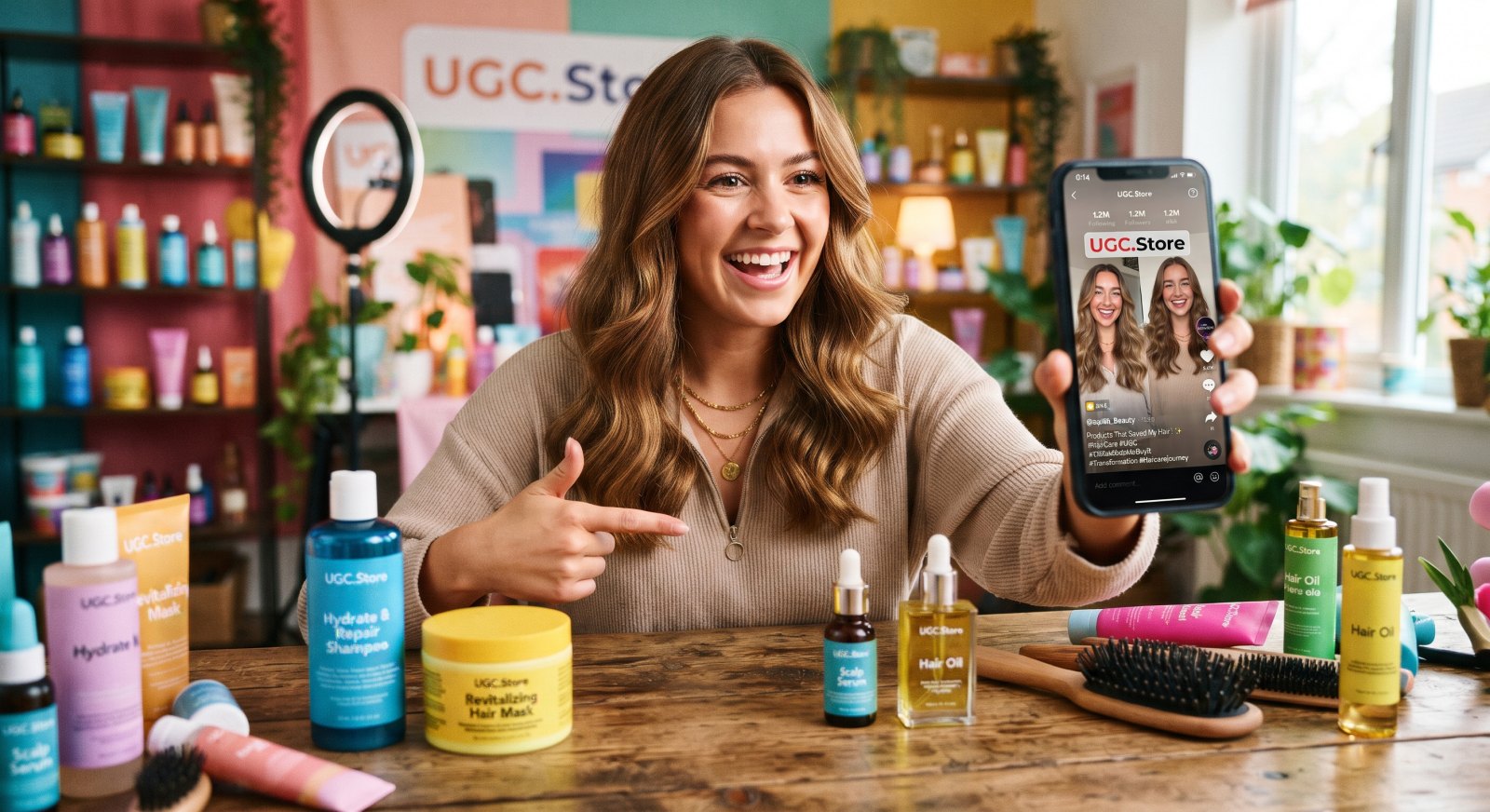
The "products that saved my hair" problem-solution journey is a UGC narrative architecture in which the creator opens with a hair-damage confession, names the specific failure point of past routines, introduces the saving product as a discovered turning point rather than a pitch, and closes with visible transformation proof delivered through honest, unfiltered comparison. Haircare is structurally perfect for this format because damage is visible, emotionally charged, and reversible-looking — and because the category is exploding on TikTok: haircare and styling captured 11.1% of all TikTok Shop US beauty units in Q3 2026 with unit volume growing 45% year over year and revenue growing 61.4% . Analysts tracking the platform attribute haircare's outperformance directly to the format itself — categories that can demonstrate tangible effects in before-and-after video convert better on TikTok, and haircare's before-and-after evidence is the most dramatic in beauty . The brands winning this category are scripting their UGC as redemption arcs — confession, cause, cure, proof — and letting the viewer's own hair anxiety write the closing argument.
Theoretical Basis and Psychology of Mechanics
Hair damage occupies a uniquely painful position in the beauty psyche because it is slow-motion loss with daily visual reminders. Unlike a breakout that fades in weeks, damage accumulates invisibly for months and then announces itself all at once — the snapped strands on the brush, the ponytail that feels half its former thickness, the ends that have stopped curling the way they used to. Trichology-informed content recognizes this emotional texture: damage is not experienced as a cosmetic inconvenience but as a grief-adjacent event, and the "saved my hair" narrative works precisely because it mirrors the structure of recovery stories that audiences find compulsively watchable across every storytelling medium.
The first mechanic is damage specificity as identity matching. The confession hook must name concrete, verifiable symptoms rather than vague distress — and the damage taxonomy is well-documented: dryness and brittleness from stripped moisture, breakage and split ends from weakened protein structure, loss of natural curl or wave pattern from repeated high-heat exposure, frizz and dullness from raised cuticles, and rough texture that resists styling . When a creator says "my curls stopped curling — they just hung there like rope," every viewer with heat damage recognizes the exact symptom in their own mirror. Specificity converts the video from advertising into diagnosis, and diagnosis is the highest-trust opening available in this category.
The second mechanic is causal attribution as credibility scaffolding. The confession alone creates empathy; the cause creates authority. The creator who explains that temperatures above roughly 350°F (180°C) cause irreversible protein breakdown in the hair shaft — and then admits she flat-ironed at 410°F for three years — demonstrates that her recovery was guided by understanding, not luck . This causal layer matters commercially because it justifies the product's role: the viewer doesn't just see that the creator's hair improved, she learns why the improvement happened and can audit whether the same mechanism would work on her own damage. Empathy opens the door; mechanism closes the sale.
The third mechanic is the discovered-cure framing. The turning point must never arrive as a recommendation — it arrives as a stumbled-upon solution inside the confession narrative: "I was about to book a big chop when a colorist friend told me to try one thing first." This narrative positioning preserves the creator's peer status, which is the entire trust architecture of UGC. Research on category performance consistently shows that haircare's TikTok advantage flows from its demonstrability — the platform rewards content where viewers can see the claim — and the discovered-cure framing ensures the demonstration lands as evidence rather than demonstration-as-advertisement.
The fourth mechanic is transformation proof with controlled honesty. Hair transformation content is the most audit-prone creative in beauty: viewers scrutinize lighting, filters, wet-versus-dry comparisons, and angle changes with forensic intensity. The winning scripts pre-empt this audit by engineering their own proof: same camera position, same lighting source, same section of hair, with the timeline stated out loud. And the honesty rule from conversion psychology applies with extra force here — one named residual imperfection ("the front pieces are still a little shorter than I'd like — that grow-out is real") converts better than a flawless reveal, because hair audiences have been burned by filtered transformations and calibrate their trust accordingly.
Step-by-Step Algorithm & Methodology
The framework below sequences a problem-solution hair journey from cold open to conversion, with each phase carrying a defined narrative and evidentiary function.
Phase 1 — The Damage Confession (0–3 seconds). The creator opens mid-crisis, holding the evidence: a clump of shed strands, a snapped ponytail elastic, or simply their own ends to the camera. Dialogue pattern: "This is how much hair I was losing every wash day — and I thought it was normal." The hook must present physical evidence within the first frame. Target hook rate: above 70% on cold audiences, because damage confession triggers the same identity-matching response that powers the acne vertical.
Phase 2 — The Cause Autopsy (3–12 seconds). The creator names what caused the damage with self-aware specificity: "Four years of bleach every eight weeks, flat iron at four hundred degrees, and zero trims because I was 'growing it out' — which, for the record, is not a thing." This phase converts confession into expertise and pre-frames the solution's logic. Where the product addresses a specific mechanism — protein loss, moisture stripping, cuticle damage — one phrase should connect the cause to that mechanism.
Phase 3 — The Turning Point (12–22 seconds). The discovered-cure beat, delivered in the creator's voice of reluctant hope: "I was literally screenshotting pixie cuts when my stylist told me to stop cutting and start repairing first." The product enters here as a tool within a recovery decision, never as the protagonist. On-screen text can carry the product name and the key mechanism ("bond repair," "protein + moisture balance," "bond-building") while the dialogue stays narrative.
Phase 4 — The Ritual Demonstration (22–40 seconds). Show the product in use within the recovery routine, emphasizing behavior that signals competence: how much is used, where it's applied, how long it's left, what changed in the wash-day sequence. SFX matters — wet hair sounds, product emulsion, the first comb-through without snags. Where the transformation is gradual, this phase carries interim evidence: "week two — my brush had half the hair in it."
Phase 5 — The Honest Reveal (40–50 seconds). Side-by-side or same-position comparison, with the audit defenses pre-built: "Same bathroom, same window light, same strand of hair — ten weeks apart." The reveal follows the two-truth structure: one residual imperfection named first, then the verdict. "The bleach damage at my ends is still there — that doesn't reverse. But the breakage stopped, and this is the first time my length has actually increased in three years."
Phase 6 — The Open-Loop CTA (final 5 seconds). The closing question routes the comment section: "If your hair is in its damage era, tell me what caused it — bleach, heat, or tight styles? I want to know what I'm dealing with in my comments." The link lives in the caption and pinned comment; the question generates the audience research that fuels the next batch of scripts.
Ready-to-Use Working Templates & Scripts
Script One: "The Breakage Ledger" (Format: evidence-driven damage recovery, 55 seconds).
Opening frame: creator holding a hair-collecting brush over a white sink, strands visible. Dialogue: "I counted forty-one hairs in this brush after one wash. That was my normal — and that's the part that scares me now." B-roll: close-up of the brush, strands lifted with fingers. Cause autopsy: "Years of box bleach, a straightener I never adjusted below four hundred degrees, and I 'sealed' my ends with more heat because I didn't know that heat above three-fifty starts breaking down the protein in your hair permanently." Turning point: "My colorist didn't let me book another bleach session. She handed me this instead and said 'repair first, lighten never.'" Demo: product application to wet hair, comb-through in real time. SFX: running water, wet-hair combing, product pump. Ritual detail: "Twice a week, ten minutes, and I stopped brushing it wet — that alone changed everything." Honest reveal: "Same sink, same light — eleven weeks later. This is what came out of the brush today. That's seven hairs. And look, my ends are still not perfect — but they stop when I run my fingers down them, and they didn't do that before." CTA: "Tell me in the comments what's destroying your hair right now — bleach, heat, or tension? I'll tell you which of my three products targets exactly that."
Script Two: "The Curl Revival" (Format: pattern-loss recovery narrative, 50 seconds).
Dialogue: "My curls didn't fall out. They just… gave up. Watch this." B-roll: current limp wave, then an old photo of defined curls. Cause autopsy: "Two years of blowouts for work — I was heat-styling four times a week and my curl pattern heat-exhausted into this." Turning point: "A curl specialist told me my hair wasn't dead, it was just trained flat — and you can retrain it back." Ritual demo: wash-day sequence — gentle cleanser, deep conditioning with heat cap, styling product applied to soaking hair, diffuser on low. SFX: diffuser hum, scrunching sounds. Checkpoint evidence: "Week three — look at this section right here. That's a curl trying to come back." Honest reveal: "Week twelve. Are these my 2021 curls? No — and anyone who tells you heat damage fully reverses is lying. But this is maybe seventy percent of what I had, from nothing, and it improves every month." CTA: "If your pattern is heat-trained, comment 'revival' and I'll send you my full wash-day order."
Script Three: "The Last Resort Before the Big Chop" (Format: high-stakes intervention story, 58 seconds).
Dialogue: "This video exists because I almost cut all my hair off on a Tuesday night." B-roll: hair gathered, ends visibly damaged in close-up. Cause autopsy: "Postpartum shedding plus aggressive highlights — my hair was snapping faster than it grew, and the math was not mathing." Turning point: "My appointment was booked. My stylist talked me into four weeks of one protocol instead." Ritual demo: the full protocol shown in compressed beats — bond treatment, scalp massage with oil, silk pillowcase swap, trim instead of cut. Interim evidence: "Week two — my ponytail holder went around three times instead of four. That was the first sign." Honest reveal: "Eight weeks. I kept the length — mostly. We cut two inches of truly dead ends and kept everything that could be saved. This is what's left, and it's the healthiest my hair has been in years." CTA: "Raise your hand in the comments if you've ever cried over your hair in a salon chair. I need to know it's not just me."
Comparative Analysis Matrix
| Opening frame | Product held to camera with smile | Physical damage evidence (brush, strands, ends) |
| Persuasion engine | Feature listing and aspirational finish | Confession, causal mechanism, redemption arc |
| Transformation handling | Instant glow reveal | Timeline-stamped recovery with named setbacks |
| Skepticism defense | Claims stated, audit left to viewer | Audit pre-empted via controlled comparison conditions |
| Comment section behavior | Product questions only | Damage story confessions, self-diagnosis threads |
| Emotional register | Aspiration | Recognition and relief — the recovery emotion |
| Damage confession | "My hair was damaged" | Symptom-level specificity matching documented damage signs |
| Cause explanation | Vague ("heat and bleach") | Named mechanisms — protein breakdown, moisture stripping, pattern loss |
| Turning point | "Then I found this product" | "Someone who understood hair told me to repair first" |
| Product introduction | Protagonist role, immediate | Tool role, discovered within the narrative |
| Reveal honesty | Filtered, flawless, unexplained conditions | Same-light, same-position, one residual flaw named |
| First exposure | "That looks like a nice product" | "That is exactly what my hair is doing" |
| Consideration | Ambiguous fit assessment | Self-diagnosis via the cause autopsy |
| Objection handling | None; doubt migrates to reviews | Mechanism explanation resolves "would it work for me" |
| Emotional resonance | Mild aspiration | Recognition — the strongest scroll-stopper |
| Post-purchase loyalty | Product-level attachment | Story-level attachment; creator follow and series return |
Real-World Case Study Breakdown
A bond-repair haircare brand entered TikTok Shop in early 2026 with a clinically credible formula — a peptide-and-bond-building leave-in positioned against salon treatments at a third of the price. The initial creative strategy leaned on ingredient authority: creators explained the bond-building mechanism, named the technology, and demonstrated product texture. Performance was decent but capped: a 1.2% CTR, CPA at $43, and a revealing comment pattern — viewers asked "but does it actually fix breakage?" under every single ad, while positive comments came almost exclusively from existing customers. The brand was winning the argument but losing the audience: mechanism content convinced people who already understood bond repair and left everyone else cold.
The strategic pivot rebuilt the entire creative program around the problem-solution journey. The brand commissioned twelve creators across distinct damage archetypes — bleach casualties, heat-styling veterans, postpartum shedders, protective-style tension cases — with one brief: open with your damage evidence, explain what caused it in your own words, and show me your brush. The creative bundle shipped as a damage-portfolio: four breakage-ledger stories, three curl-revival arcs, three last-resort intervention narratives, and two stylist-perspective rescue stories, with usage rights secured for Spark amplification and a mandate that every reveal use the same-light, same-position protocol.
Final empirical telemetry after a twelve-week window: CTR climbed from 1.2% to 2.4%, CPA fell from $43 to $27, and the comment sections transformed from objection threads into self-diagnosis confessions — viewers posting their own damage stories, tagging friends, and asking the creators which protocol fit their specific failure mode. The intervention-narrative asset from a postpartum creator with a modest following became the portfolio's champion, running ten weeks before fatigue and driving approximately 21% of quarter revenue when Spark-boosted. The governing insight matched the platform's own data: haircare wins on TikTok because damage shows, recovery shows, and the audience would rather watch a resurrection than a demonstration . The brand stopped selling a mechanism and started selling a recovery — and the recovery sold itself.
Real-World Engineering & Creative Feedback
"The brush shot is the most underused hook in haircare UGC. A creator holding a clump of their own shed hair in frame one is the single strongest scroll-stopper we test — it outperforms every transformation reveal we've run as an opener, because the reveal is the reward and the brush is the recognition. Brands resist it because it feels 'negative.' Their loss. Damage opens the door; recovery closes the sale." — Imani Okafor, Performance Creative Director, Root & Render Media
"We learned the hard way that hair transformation content is the most audited creative in beauty. We lost a creator relationship and three weeks of spend when viewers proved a before/after used different lighting — wet-versus-dry, warm-versus-cool bulb. Now every brief mandates the comparison protocol in writing: same position, same light source, hair in the same state. Creators who can't comply don't get booked. The audit never stops; you either engineer for it or it engineers your exit." — Tom Becker, Media Buyer and Founder, Northlight Performance
"The cause autopsy phase is where most hair scripts collapse into vagueness, and it's the most valuable sixty seconds in the video. 'Heat damage' converts nobody. 'Flat iron at four-ten for three years, no protectant, because nobody told me three-fifty is where protein breaks' — that's a sentence that sells, because it teaches the viewer to diagnose their own damage while watching. Education inside confession is the highest-trust content structure we run in any vertical." — Aisha Rahman, UGC Strategist, Strands Collective
"Platform enforcement on hair claims has tightened twice in eighteen months, and the 'saved my hair' framing sits right on the edge. What survives review: journey language, mechanism language, timeline-honest reveals. What gets flagged: 'reverses damage,' 'regrows hair,' anything touching medical claims — especially postpartum and shedding content. We maintain a claims lexicon with our legal team, updated quarterly, and creators sign it before their first brief. The brands treating compliance as creative infrastructure are the ones still running while competitors' libraries get pulled." — Marisol Vega, Paid Social Lead, Halcyon Growth Studio
"The unconventional insight from running hair accounts at scale: your best journey creators are the ones mid-recovery, not post-recovery. A creator at week six of their repair has stakes on camera you cannot script — her audience watches because the ending isn't written yet. We now contract creators for serialized arcs: confession at week zero, checkpoint at week four, reveal at week twelve. The serialization alone doubled our returning-viewer rate, and returning viewers convert at three times cold traffic." — Jade Thornton, Beauty Vertical Lead, Fieldcraft Media
Production Self-Check Checklist
Before final export and ad platform upload, every problem-solution hair journey UGC asset must clear the following quality gates:
- Damage evidence verified — physical proof of the damage claim appears in frame one (brush, strands, ends), not described verbally after the fact.
- Causal mechanism present — the cause autopsy names at least one specific mechanism, with the cause connected verbally to the product's addressable mechanism.
- Discovered-cure framing intact — the product arrives as a turning point within a narrative, never as an opening protagonist; no re-edit has promoted the product above the story.
- Comparison protocol enforced — reveal footage matches baseline on camera position, lighting source, hair state, and distance; wet-versus-dry and filter-based comparisons categorically rejected.
- Two-truth reveal structure checked — one residual imperfection named before the verdict language in every shipped asset.
- Timeline honesty validated — stated recovery windows match the footage evidence; zero claims of reversal for damage types that do not reverse (severed ends, chemically destroyed bonds).
- Claims lexicon compliance cleared — zero "regrowth," "reverses damage," or medical-outcome language; journey and mechanism framing throughout; documentation stored with the asset.
- Sound design intentional — wash-day audio preserved (water, product, comb-through), no music bed competing with confession or reveal dialogue.
- CTA mechanics functional — damage-cause comment bait delivered on camera, pinned comment prepared, Spark Ads authorization generated where applicable.
- Accessibility layer complete — captions covering 100% of spoken dialogue, safe-zone compliant on-screen text, 9:16 vertical integrity confirmed.
- Arc continuity logged — serialized checkpoints registered in the journey tracker so week-zero, week-four, and week-twelve assets reference each other accurately.
Advanced FAQ
How should a wear-test approach differ for hair versus skin, given hair transformations take months?
Hair journeys require serialized evidence architecture rather than single-day wear-tests. The correct structure is a three-asset arc: the confession asset (week zero evidence, evidence-led hook), the checkpoint asset (week four, interim signals like reduced shedding or improved comb-through), and the reveal asset (week eight to twelve, full comparison). Each asset must stand alone for algorithmic purposes but verbally reference its siblings to build returning-viewer behavior. The interim evidence matters more than the finale — a creator showing her brush count halved by week four converts skeptics who would dismiss a twelve-week reveal as staged. Budget for the full arc; a confession asset without its reveal underperforms and damages creator credibility.
Does the problem-solution journey format work for hair growth products, or only damage repair?
The format works but the compliance exposure changes dramatically, and this distinction must govern the script. Damage-repair journeys operate in safe territory — journey language, mechanism language, timeline-honest reveals. Growth-adjacent claims ("regrows hair," "reverses loss," anything in postpartum or medical shedding territory) trigger platform medical-claims review and can kill a creative library overnight. The compliant framing for growth-oriented products is journey-of-circumstances: the creator documents what she changed (routine, tension reduction, scalp care) and shows what her hair did, without claiming the product caused biological regrowth. "My shedding slowed when I fixed my scalp routine — here's everything I changed" survives review; "this serum regrew my edges" does not.
How many weeks of real transformation should pass before a reveal asset can ship?
Minimum eight weeks for structural claims (breakage reduction, length retention), with twelve preferred; four weeks suffices for interim checkpoint content. The governing constraint is not production patience but audit exposure: hair audiences track creator timelines across posts, and a reveal shipped too early relative to the confession date invites frame-by-frame scrutiny of the footage's plausibility. Shorter timelines work for surface-level transformations (shine, softness, frizz management), where the mechanism is cosmetic and immediate. Whatever the window, state it explicitly on camera — the stated timeline is itself an audit defense, and explicit timelines outconvert vague "after a few weeks" framing because specificity reads as honesty.
Should brands prioritize creators with severe damage stories or mild, relatable damage?
Middle-severity damage converts best at scale, with severe-damage creators deployed for high-stakes narrative assets. The reason is identification math: mild damage (frizz, dryness) is the modal viewer experience and maximizes recognition breadth, while severe damage (bleach destruction, postpartum shedding) maximizes narrative stakes but narrows identification to viewers in genuine crisis. The portfolio play uses mild-damage confession assets as always-on prospecting creative and reserves severe-damage intervention arcs for retargeting pools and high-intent audiences, where the drama justifies the longer runtime and the viewer's purchase intent is already warm.
What is the optimal way to handle the "does it work on my hair type" objection that dominates haircare comment sections?
Engineer the objection into the creative portfolio rather than answering it in comments. The brief should deploy creators across texture and damage-type diversity — at minimum coily, curly, wavy, and straight textures with chemically-treated and natural-hair variants — with the same narrative skeleton but texture-specific symptom language. Then use the comment-bait CTA to harvest the remaining specificity: "Tell me your texture and your damage type — I'll tell you which step matters most for you." The creator's replies to those comments become social proof beneath the paid placement, and the question-response threads train the algorithm to serve the asset to lookalike damage profiles.
Custom Contextual Conclusion
"Products that saved my hair" works because hair damage is one of the few beauty crises that is simultaneously visible, emotional, and narratively recoverable — a before-and-after with a story arc instead of just two images. The confession hook recognizes the viewer's private mirror moment in the creator's public one; the cause autopsy converts empathy into authority by showing the recovery was understood, not lucky; the discovered-cure framing keeps the product in its proper role as a tool inside a redemption story rather than a hero demanding worship; and the honest reveal — same light, same position, one named flaw — does what a decade of salon photography could not: it submits evidence the viewer is invited to audit. Haircare's TikTok momentum belongs to brands that stopped demonstrating products and started documenting recoveries . In this category, the viewer doesn't want to see perfect hair. She wants to see someone escape damaged hair — with the receipts, the timeline, and the brush to prove it.