
Executive Summary
Luxury and high-AOV (Average Order Value) e-commerce performance marketing on TikTok requires replacing ostentatious status signaling with hyper-specific tactile proof, material education, and emotional reassurance. The primary operational objective is resolving the buyer's internal risk-to-reward calculation by emphasizing craftsmanship, cost-per-wear utility, and sensory ASMR over performative lifestyle flexes. Implementing native, documentary-style creative architectures systematically lowers customer acquisition costs while maintaining premium brand equity across multi-hundred-dollar transaction funnels.
Theoretical Framework and the Neuro-Psychology of High-Ticket TikTok Media
Selling high-ticket items ($200 to $2,500+) through an algorithmic, hyper-fast short-form video platform like TikTok seems contradictory on the surface. Standard low-AOV impulse dropshipping thrives on artificial urgency, aggressive flash sales, and low cognitive friction. However, high-AOV transactions activate the brain’s anterior insula—the neural region associated with pain, loss aversion, and financial anxiety. When a user encounters an expensive consumer product in their feed, their baseline cognitive default is suspicion: "Is this dropshipped junk priced at an 800% markup?"
When brands attempt to compensate for this skepticism by relying on old-school Madison Avenue luxury tropes—such as models staring blankly in Paris, moody techno tracks, and superficial lifestyle flexes—the performance collapses on TikTok. Modern short-form audiences view staged perfection as deceptive advertising. The viewer scrolls away immediately, causing the Hook Rate (first 3-second retention) to drop under 18% and signaling to TikTok’s recommendation engine that the creative lacks native interest.
To manufacture sustained attention and purchase intent for premium SKUs without sounding arrogant, media buyers must tap into tactile validation and intellectualized justification. Value must be demonstrated organically through the lens of a discerning peer rather than dictated from an ivory tower. High-net-worth consumers and aspirational shoppers alike seek subtle status cues: structural durability, sourcing provenance, precise assembly, and intentional sensory details. High-performing high-ticket UGC operates through cognitive reframing: it shifts the transaction from an emotional splurge into a calculated, pragmatic investment in everyday personal utility.
The algorithmic mechanics behind TikTok’s content graph also heavily favor this documentary-style candor. TikTok's recommendation algorithm rewards watch time, completion rates, and meaningful comment-section debates over passive likes. When a creator transparently unpacks why an Italian full-grain calfskin leather bag costs $580 by breaking down tannery certifications, edge-paint longevity, and hardware machining, the audience stays engaged. The Hold Rate across the 25% to 75% video quartiles stabilizes, directly reducing blended ad costs across Spark Ads and dark-posted conversion campaigns.
The Value-Led Creative Scripting Methodology
High-ticket video architecture demands structural discipline. The goal is to eliminate viewer drop-off while building enough value to justify a $300+ checkout event directly from a mobile device.
0:00 - 0:03  | Anti-Flex Hook (Interrupt scroll; establish critical friction)
0:03 - 0:08  | The Disillusionment Frame (Expose cheap alternatives / systemic industry flaws)
0:08 - 0:20  | Sensory Engineering & Material Proof (ASMR, tactile zoom, material dissection)
0:20 - 0:35  | Practical Daily Utility (Cost-per-wear math, ergonomic handling, real-life context)
0:35 - 0:45  | Risk Mitigation & Frictionless CTA (Warranties, shipping safety, low-pressure close)
Phase 1: The Anti-Flex Scroll-Stopping Hook (0:00–0:03)
The hook must reject arrogant posturing and address buyer skepticism immediately. Avoid sweeping declarations like "The most luxurious coat in the world." Instead, lean into radical honesty, counter-intuitive consumer critiques, or sensory disruption. Use text overlays with high contrast, natural lighting, and zero studio polish to trigger native algorithmic curiosity.
Phase 2: The Disillusionment Frame (0:03–0:08)
Establish empathy by articulating common frustrations with commercial luxury or mass-market fast fashion. Highlight broken zipper hardware, plastic-coated bonded leather, synthetic fabrics masquerading as premium wool, or excessive logo tax. This positions the brand as an honest insider rather than a sales pitch.
Phase 3: Sensory Engineering and Material Dissection (0:08–0:20)
This segment is where perceived value is created. Rely on high-bitrate macro visual assets: tight close-ups of stitching lines, hand-beveled edges, mechanical latches, or the fluid drape of heavy-gauge organic silk. Couple these visuals with crisp, uncompressed Foley sound effects (SFX) to activate the ASMR response, simulating physical touch through the mobile screen.
Phase 4: Practical Utility and Cost-Per-Wear Math (0:20–0:35)
High-AOV shoppers need rational justifications for emotional purchases. Contextualize the product in everyday life—inside an office, an airport lounge, or a kitchen. Explicitly break down real-world usage and cost-per-use economics. When a creator shows how a durable $450 garment outperforms four disposable $150 alternatives over five years, financial resistance decreases significantly.
Phase 5: De-risking and Frictionless Low-Pressure Call-to-Action (0:35–0:45)
Hard-sell discounts like "Use code FLASH50" degrade brand equity and signal margin inflation. Instead, focus on trust anchors: lifetime structural guarantees, white-glove insured deliveries, and hassle-free return logistics. The closing invitation should be an educational nudge—such as taking a sizing assessment or inspecting the sourcing batch notes.
Production-Ready Creative Frameworks and Scripts
Script 1: The Material Sourcing Forensic Audit
Product Category: High-End Cashmere Outerwear ($680 AOV)
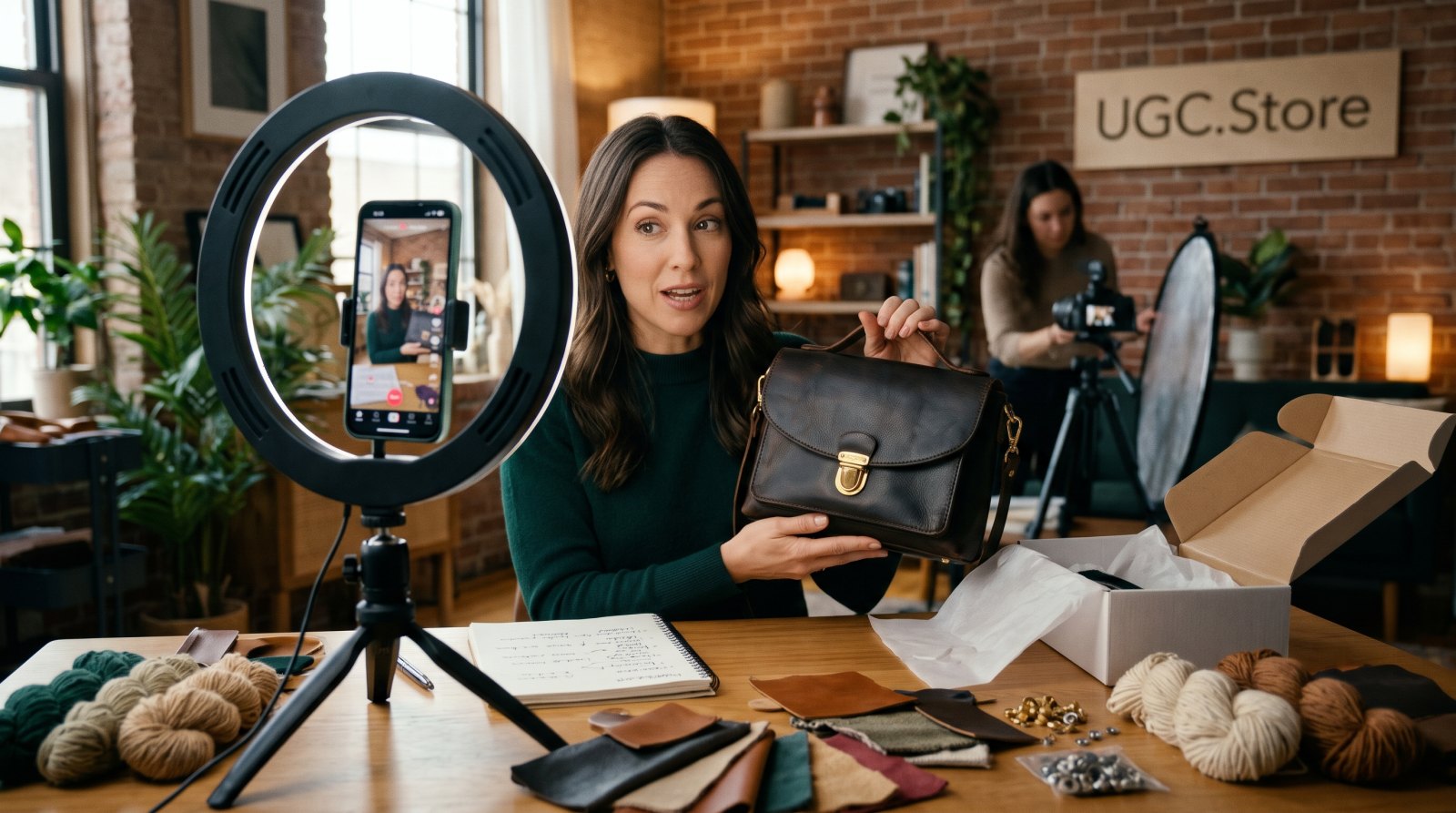
Creator Archetype: Pragmatic textile designer or garment collector (Age 28–38, minimal aesthetic, warm home studio setup)
Strategic Objective: Deconstruct traditional luxury retail markups and spotlight raw fiber micron specifications.
Visual & B-Roll Timeline:
0:00–0:03: Creator stands in front of a neutral backdrop, holding two dark overcoats. Direct-to-camera framing. Text overlay: Why your $900 designer sweater is pilling after two weeks.
0:03–0:09: Macro camera zoom pulling tightly across a competitor's sweater showing loose, frayed synthetic fibers, followed by an immediate macro transition onto the brand’s dense, tightly spun knit.
0:09–0:18: Split screen showing hands pulling the fabric sideways, demonstrating recovery elasticity. Cut to a sharp macro shot of the label highlighting Grade-A Inner Mongolian white cashmere specs.
0:18–0:28: Creator wearing the coat over everyday clothing in natural daylight outdoors, walking naturally, putting hands into deep, reinforced storm pockets.
0:28–0:38: Creator back in the studio, rolling the coat neatly into a travel bag to show wrinkle resistance, pulling it out completely uncreased.
0:38–0:45: Creator holds up the interior construction tag showing verified traceable sourcing serial numbers. Native TikTok text box: Inspect the lot certificates below.
Voiceover & Dialogue:
"I spent seven years working in luxury knitwear design, and this is the biggest lie in modern retail: high price tags do not equal raw material quality anymore. Most fashion houses take Grade-C fiber, bathe it in chemical silicone softeners to make it feel plush on the rack, and pocket an 80% margin while it falls apart in two months.
When we engineered this overcoat, we strictly sourced 15.2-micron raw Mongolian white cashmere fibers with an average length of 38 millimeters. That means it doesn't pill, it holds structural shape through years of daily wear, and it naturally thermoregulates your body heat. No loud monogram logos, no retail storefront markups. Just pure, uncompromised material honesty.
Try it in your standard size with fully insured, complimentary shipping, and feel the raw fiber weight yourself."
Sound Design & Foley (SFX):
Clean room-tone audio; no hype background music.
Subdued, low-frequency atmospheric synth bed sitting at -24 dB.
Crisp fabric rustling and wool surface brush audio amplified during macro inspection.
Tactile snap sound effect when showing the horn buttons sliding securely into place.
Script 2: The Practical Architecture Tear-Down
Product Category: Handcrafted Full-Grain Leather Briefcase ($540 AOV)
Creator Archetype: Industrial designer or senior architect (Age 32–45, deliberate delivery, authentic workbench environment)
Strategic Objective: Counter fast-fashion accessories by proving structural resilience and repairability.
Visual & B-Roll Timeline:
0:00–0:03: Creator drops the leather briefcase onto a wooden workbench with a solid, heavy thud. Direct glance into the camera lens. Text overlay: Stop buying disposable bags for work.
0:03–0:08: Extreme close-up of hands flexing the thick 6-ounce vegetable-tanned leather edge to show core density without cracking.
0:08–0:18: Overhead top-down camera view unpacking the interior layout: sliding a 16-inch heavy laptop into a padded wool-felt sleeve, dropping chargers, notebooks, and pens into custom slots.
0:18–0:28: Macro footage tracking solid brass hardware rivets, hand-stitched marine-grade polyester thread, and thick Japanese YKK Excella zippers operating smoothly.
0:28–0:36: Cut to creator wearing the bag with an everyday tailored coat, stepping effortlessly out of an office lobby into the rain.
0:36–0:43: Workbench shot highlighting the stamped lifetime repair guarantee code on the inner hide fold. Native CTA prompt displayed clearly.
Voiceover & Dialogue:
"If you're carrying a five-figure digital workstation in a flimsy synthetic bag held together by glued seams and cheap zinc alloy zippers, you are playing with fire.
We designed this case using vegetable-tanned full-grain bridle leather that actually gets richer with age instead of peeling into microplastics. Notice the hardware: that isn't cast aluminum painted gold—it's solid, individually machined naval brass anchored through heavy copper load-bearing rivets.
It holds a 16-inch laptop, cables, and documents without buckling or pulling on your shoulder. You buy this piece once, and you carry it for the next twenty years.
Explore the construction blueprints on their site to see the full assembly breakdown."
Sound Design & Foley (SFX):
Heavy structural impact thud on the initial bag drop.
Satisfying metallic zip sound as the polished teeth engage seamlessly.
Heavy click of solid brass latch locking into position.
Organic ambient studio room sound, entirely devoid of royalty-free stock music.
Script 3: The Sensible Luxury Daily Routine (Day in the Life)
Product Category: Clean Botanical Perfume Extract ($290 AOV)
Creator Archetype: Refined creative director or interior architect (Calm, articulate, high-aesthetic natural home environment)
Strategic Objective: Neutralize the barrier of ordering high-ticket fragrance online by demystifying concentration and dry-down profiles.
Visual & B-Roll Timeline:
0:00–0:04: Close-up of the creator applying one clean spray onto their wrist in morning bathroom sunlight. Liquid mist caught in the beam. Text overlay: The difference between smelling rich and giving people headaches.
0:04–0:10: Creator leans in, discussing common alcohol-heavy commercial fragrances that evaporate rapidly within 90 minutes.
0:10–0:20: Macro pan over the amber glass bottle detailing raw oil concentration numbers (Extrait de Parfum at 30% concentration). Cut to creator walking through their workday.
0:20–0:30: Time-lapse transitions showing morning meeting, afternoon transit, and evening dinner, touching on the complex base note shifts throughout the day.
0:30–0:38: Creator unboxes the heavy magnetic packaging on a linen tabletop, highlighting the included miniature discovery vial.
0:38–0:44: Screen shows the zero-risk trial system with an elegant closing graphic card.
Voiceover & Dialogue:
"Most mainstream luxury perfumes are just expensive water and industrial ethanol designed to smell overwhelmingly loud on a department store paper strip for five minutes, only to disappear by lunch.
This is a true 30% concentration perfume extract. Because there are no cheap synthetic fillers, it doesn't shout when you walk into an elevator. Instead, it creates an intimate, lingering scent bubble that shifts from crisp Italian bergamot into a warm, mineral amber over twelve full hours.
Every bottle arrives with a matching 2ml discovery vial. You wear the sample for a week; if it doesn't align with your personal body chemistry, you send the sealed full bottle back for a complete refund.
Experience the notes on their sensory map right now."
Sound Design & Foley (SFX):
Rich, highly amplified atomized mist spray sound at the opening second.
Deep, magnetic snap of the bottle closure engaging.
Soft piano notes sitting beneath warm conversational speech.
Gentle paper slide audio as the return box is shown.
Performance Framework Comparison
| Metric / Dimension | Traditional Studio Gloss Ads | The Aggressive Dropship UGC | High-AOV Educational Value UGC |
| Hook Rate Benchmark (3s) | Under 16% (Skipped as generic corporate ad) | 35%–48% (Aggressive shock-value triggers) | 28%–38% (High intent, intellectual curiosity) |
| Outbound Click-Through (CTR) | 0.40% – 0.85% (Passive, low motivation) | 1.80% – 3.20% (Low purchase intent traffic) | 1.20% – 2.10% (High-intent, pre-sold buyers) |
| TikTok ROAS Potential | 0.8x – 1.4x (Fails to balance acquisition costs) | 1.2x – 2.0x (Prone to high refund/chargeback rates) | 2.5x – 4.2x (Sustained margins, low returns) |
| Average Order Value (AOV) | $120 – $180 | $35 – $65 | $250 – $800+ |
| Creative Fatigue Velocity | 7 to 10 days before performance decay | 3 to 5 days under aggressive spending | 21 to 45 days sustained algorithmic shelf life |
| Production Friction & Cost | Extremely High ($5k–$15k per finished asset) | Low ($50–$100 bulk creator sourcing) | Moderate ($300–$800 specialized creator buy-in) |
Case Study Breakdown: Scaling a $420 Footwear Brand on TikTok
Initial Bottleneck & Baseline Performance
A direct-to-consumer artisanal footwear brand selling Goodyear-welted dress boots ($420 AOV) was burning capital on TikTok Ads. Their internal media buying team was running cinematic studio lifestyle videos alongside standard micro-influencer product unboxings.
The campaign returned a poor 0.95 ROAS, a Hook Rate of 14.2%, and an alarming customer acquisition cost (CAC) hovering at $380 against their target of $175. The creative was repeatedly dismissed in viewer comments as overpriced, snobbish, and out of touch with realistic everyday wear.
The Strategic Pivot
The creative team eliminated all corporate studio assets and commissioned three industrial design students and one professional cobbler to film native TikTok shorts. Rather than focusing on status and red-carpet aesthetics, the new creatives zeroed in on the anatomy of shoe construction.
The creative team restructured the core hook into an anti-flex friction point: "Why your favorite $500 designer sneakers will end up in a landfill by next summer, and how these are built to be resoled for life." Macro cameras documented the thick Horween leather lining, the hand-hammered steel shank, and the natural cork filler that gradually molds directly to the wearer's foot geometry.
Deployment and Media Buying Setup
Campaign Structure: Simplified CBO (Campaign Budget Optimization) scaling setup targeting broad US audiences aged 25–54, with zero interest targeting overlays to maximize algorithmic liquidity.
Ad Format: Dark-posted Spark Ads utilizing creators' authentic personal profiles to retain native user trust.
On-Page Destination: Dedicated advertorial landing pages detailing leather tannery sourcing, side-by-side cost-per-year breakdown charts, and a zero-friction concierge home-try-on guarantee.
Quantifiable Performance Results
| Performance Indicator | Pre-Pivot Performance | Post-Pivot Results (Day 60) | Delta Improvement |
| Hook Rate (3-Second View) | 14.2% | 34.6% | +143.6% Increase |
| Hold Rate (100% Completion) | 2.4% | 8.8% | +266.6% Increase |
| Average Outbound CTR | 0.62% | 1.84% | +196.7% Increase |
| Blended Customer Acquisition Cost | $380.00 | $142.50 | -62.5% Cost Reduction |
| Blended Campaign ROAS | 0.95x | 2.94x | +209.4% Revenue Scale |
Field Feedback: Practitioner Perspectives
"The biggest mistake media buyers make with high-ticket UGC is scripting it like a TikTok Shop gadget. If you throw flashing neon text, automated robot voices, and artificial countdown timers onto a $600 trench coat, you destroy consumer trust instantly. High-AOV buyers on TikTok aren't looking for a bargain; they're looking for an excuse to believe the product is legitimately worth the money. When we stripped out the marketing fluff and started shooting macro close-ups of the double-needle lockstitching with raw ambient workshop audio, our cost-per-acquisition plummeted by nearly half across our prospecting ad sets."
— Julian Vance, Head of Performance Creative, Omnia Growth Partners
"Creator selection in the luxury and high-AOV space is fundamentally different. We no longer partner with conventional lifestyle influencers who simply pose with the product in a trendy restaurant. We actively hunt for what I call 'articulate nerds'—leather crafters, textile conservators, watch collectors, interior designers. When an authentic specialist sits down and explains the mechanical tolerances of an item with quiet authority, the viewer doesn't feel targeted by a brand. They feel like they're receiving an exclusive masterclass. That distinction alone drives our sub-$150 CACs in luxury jewelry."
— Sarah Jenkins, Senior Media Buyer, Aperture Direct
Production & Pre-Launch Quality Checklist
Before allocating ad budget to high-ticket TikTok UGC creatives, ensure every asset clears this quality control framework:
Audio Quality and Sound Engineering: Voiceover must be crisp, warm, and recorded using a dedicated condenser or lavalier mic. Zero hollow room echo, zero harsh digital clipping, and no grating royalty-free EDM background music.
Lighting and Visual Clarity: High-bitrate 4K vertical (9:16) resolution. Natural window lighting or high-CRI soft diffused light to highlight true product colors, surface textures, and weave clarity without digital blowout.
Macro Sensory Coverage: At least two distinct macro-level (macro lens or 3x telephoto) shots isolating construction details: seam joins, edge paint, metallic hardware, and material tension.
Anti-Flex Verification: The first three seconds must completely avoid ostentatious status posturing or arrogant self-praise. The hook must highlight a problem, a counter-intuitive industry fact, or a tactile sensory event.
Economic Rationalization: The script must explicitly communicate real-world longevity, cost-per-use economics, or multi-scenario utility to alleviate post-purchase cognitive dissonance.
Safe Zone Layout: All critical text overlays, captions, and key focal points must sit comfortably within TikTok’s safe operational zone—clear of the right-hand engagement icons and the bottom caption/sound description field.
De-risking Touchpoints: The final ten seconds must clearly communicate trust anchors: warranty terms, easy size exchanges, insured shipping, or guaranteed return windows.
Frequently Asked Questions
Can you scale cold TikTok traffic for products priced above $1,000 without high drop-offs?
Yes, provided the post-click experience matches the educational rigor of your video creative. For four-figure price points, TikTok ads should rarely link directly to a bare-bones product display page (PDP). Instead, direct users to an editorial long-form advertorial, an interactive sizing quiz, or a detailed material provenance breakdown. The video acts as the initial pattern interrupt and emotional qualifier, while the post-click landing page systematically unpacks the engineering and trust credentials needed to complete the high-ticket transaction.
Should luxury brands utilize creator whitelisting (Spark Ads) or native brand channels?
Dark-posted Spark Ads run through authenticated creator handles consistently outperform brand-owned native profiles in high-ticket segments. When users see a verified luxury brand profile in their feed, their natural commercial guard goes up immediately. Seeing an articulate creator handle delivering deep material analysis feels like an authentic recommendation, softening sales resistance and generating higher retention through the checkout funnel.
How do you introduce a discount for a high-AOV brand without degrading brand prestige?
Avoid public site-wide banners and bottom-funnel clearance language like "60% OFF TODAY ONLY." Instead, protect perceived value by structuring entry points around frictionless trial mechanisms and bundled utility. Offer a complimentary leather conditioning kit with a footwear purchase, free insured express shipping, or an exclusive gift-with-purchase for first-time orders. If a direct price reduction is non-negotiable, frame it around production cycles—such as an "Archive Sourcing Vault" or "Limited Pre-Order Production Batch"—to ensure exclusivity remains intact.
How should ambient background music be handled in high-ticket UGC?
In mass-market TikTok UGC, trending pop audio and dynamic viral tracks drive engagement. For luxury performance assets, loud background music often distracts from the core message. Rely on raw, amplified ambient room sound, clean Foley sound effects (zippers sliding, leather creasing, heavy clasps closing), or subtle, low-frequency instrumental soundscapes sitting low in the audio mix (-22 dB to -26 dB). The audio environment should feel calm, focused, and deliberate.
What is the ideal video duration for high-ticket TikTok UGC?
While standard low-AOV ads perform best in rapid 15-to-25-second bursts, high-AOV creative requires room to build defensible value. The optimal duration for high-ticket conversion creative ranges between 35 and 55 seconds. This window provides adequate runway to hook the user, systematically break down material specifications, frame the cost-per-wear economic rationale, and provide clear purchase reassurances without fatiguing the audience.