
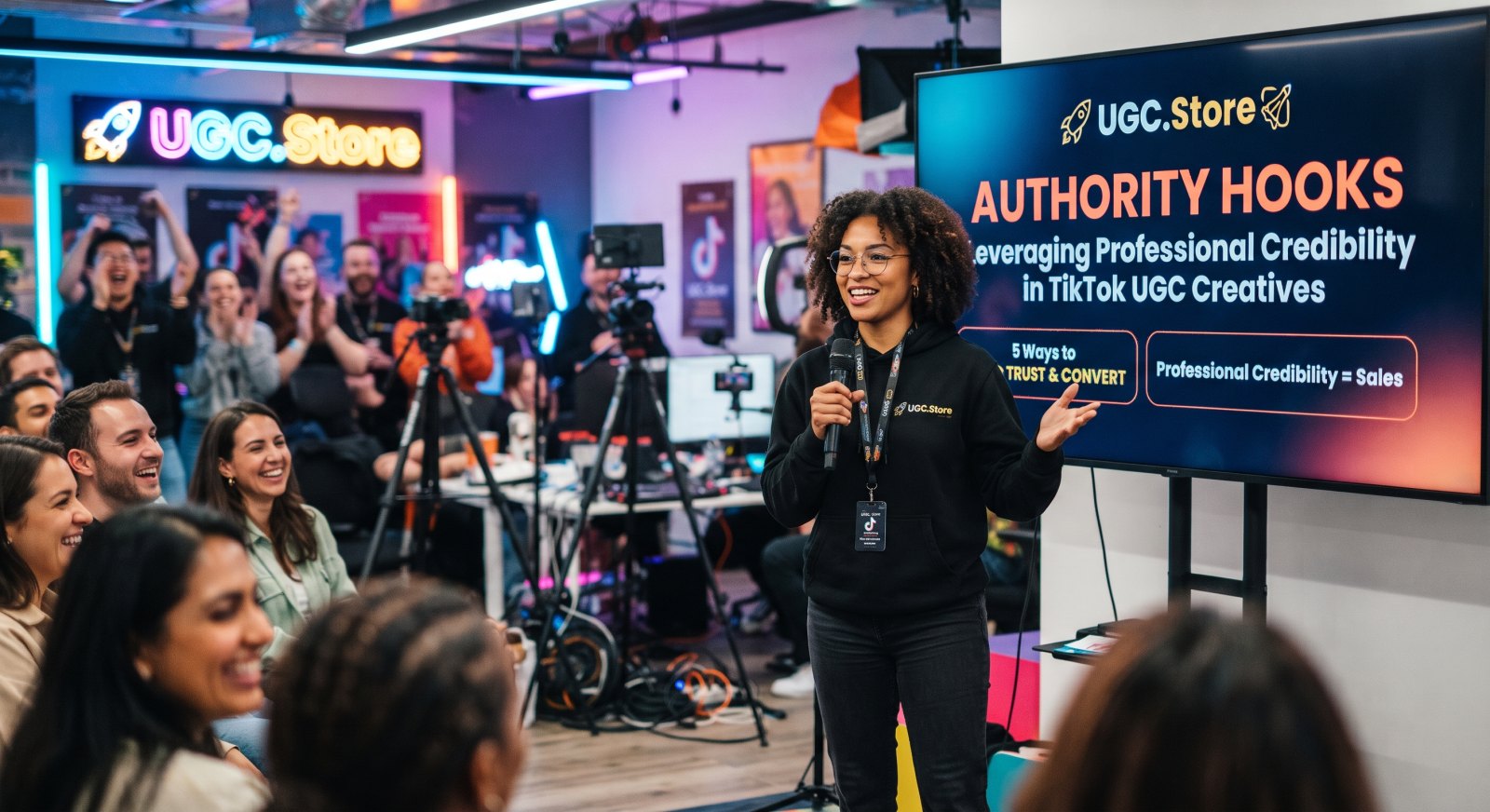
Executive Overview
The authority hook is the most powerful trust mechanism in the TikTok UGC arsenal, but it is also the most fragile. In a feed flooded with unqualified influencers and exaggerated claims, the viewer’s default state is skepticism. An authority hook works because it introduces a credibility asymmetry—the creator knows something the viewer does not, and the viewer is compelled to listen because the creator has earned the right to speak. However, if the authority is perceived as fake, arrogant, or overly corporate, the hook triggers immediate ad-blindness and a scroll. The line between a converting authority hook and a failing one is thin: it must be specific, verifiable, and immediately tied to the viewer’s personal gain. The brands and creators who succeed on TikTok are not the ones who shout the loudest about their credentials. They are the ones who use their authority to validate the viewer’s own suspicions.
Theoretical Basis and Psychology of Mechanics
The psychology of the authority hook is rooted in Milgram’s obedience to authority and the halo effect, adapted for the ruthless speed of the TikTok feed. The viewer does not have time to fact-check a creator; they rely on cognitive shortcuts. When a creator signals authority, the viewer’s brain temporarily suspends critical judgment, assuming that the information presented is accurate. The hook’s job is to earn that suspension of judgment before the viewer’s thumb decides to swipe.
The first mechanism is the specificity premium. Vague credentials (“I am a business expert”) trigger the ad-defense system instantly. Specific credentials (“I have been a commercial real estate attorney for eleven years”) force the brain to pause. Specificity signals a real human with a real job, not a paid actor holding a product. The viewer cannot categorize the specific credential as an ad because it does not fit the standard marketing template. The specificity is the credibility.
The second mechanism is the insider promise. Authority hooks work best when they promise to reveal something the viewer is not supposed to know. The phrase “What they do not tell you” or “The secret the banks keep” works because it positions the creator as an ally who is pulling back the curtain on a system. The viewer stops because they want access to the forbidden information. The authority is the key that unlocks the door.
The third mechanism is the vulnerability bridge. The highest-converting authority hooks are not boasts; they are confessions of past incompetence. An expert who admits they used to be terrible at the thing they are now an expert in is far more relatable than an expert who has always been perfect. The line “I have been a financial advisor for ten years, and I was terrible with money before that” creates a bridge between the viewer’s current struggle and the creator’s current authority. The vulnerability earns the trust, and the authority delivers the solution.
The fourth mechanism is the anticipated objection. Experts know what the viewer is going to argue before the viewer argues it. The authority hook preempts the objection: “I know you are thinking that this is just another budgeting app. I thought the same thing until I saw the backend.” By acknowledging the viewer’s skepticism, the expert proves they are not an outsider pitching a generic product. They are a practitioner who has already asked the hard questions.
Step-by-Step Algorithm & Methodology
The framework below sequences an authority hook from cold open to conversion, with each phase engineered to establish credibility without triggering skepticism.
Phase 1 — The Credential Drop (0–3 seconds). The creator opens with a specific, verifiable credential delivered directly to camera. The tone is calm and conversational, not boastful. “I have been a CPA for twelve years, and I have seen this exact mistake cost people thousands of dollars.” The visual is the creator’s face, mid-expression of someone who is genuinely concerned. No greeting, no product name, no setup. The credential is the first thing the viewer hears or reads.
Phase 2 — The Insider Gap (3–8 seconds). The creator names the specific problem that their authority allows them to see, but the average person misses. “The tax code is written in a way that rewards people who know the loopholes. If you are just filing the standard deduction, you are leaving money on the table.” The gap is not a generic complaint; it is a structural reality that the authority understands. The viewer who has ever felt they were paying too much tax is now locked in.
Phase 3 — The App Reveal (8–16 seconds). The app enters as the tool that makes the insider knowledge accessible. The creator shows the app interface—the dashboard, the audit feature, the calculator—and reveals how it bridges the gap. “This app does the audit for you. It scans your return and flags the deductions you missed.” The screen recording is the proof. The app is the flashlight that reveals the hidden money.
Phase 4 — The Honest Friction Note (16–24 seconds). The creator names the limitation of the app or the situation. “The app is not a CPA. It does not file for you, and it does not replace professional advice if your situation is complicated. But for the eighty percent of people with simple returns, it will find the money you are missing.” The honesty prevents the video from feeling like a magic trick. It sets realistic expectations and builds trust.
Phase 5 — The Payoff and Resolution (24–32 seconds). The creator answers the question completely. “I ran my own return through it and found a deduction I had missed. It was a business expense I thought was too small to claim. It saved me four hundred dollars.” The cognitive itch is scratched. The viewer feels smarter and more capable.
Phase 6 — The Shared Question CTA (final 5–7 seconds). The creator closes with a question that invites the viewer’s own experience into the comments. “What is the biggest tax mistake you have ever made? I need to know I am not the only one who has missed an obvious deduction.” The CTA generates shared stories, boosting engagement and pushing the video to a wider audience.
Ready-to-Use Working Templates & Scripts
Script One: “The CPA Warning” (Format: tax/finance app UGC, 38 seconds).
Opening frame: creator’s face, direct to camera, calm and serious. Hook text: CPA here. stop doing this.. Dialogue: “I have been a CPA for twelve years, and I need to tell you something. If you are doing your own taxes with a standard software, you are probably overpaying. Not by a little. By hundreds of dollars.” Insider gap: screen shows a complex tax form with a red circle around a missed deduction. “The code is designed to reward people who know what to look for. The home office deduction, the mileage, the educational expenses. The software does not ask you the right questions.” App reveal: screen recording of a tax audit app, scanning the return and flagging deductions. “This app asks the questions the software forgets. It scanned my return and found three deductions I had completely missed.” Honest friction: face to camera. “It is not a CPA. If you own a business or have complicated investments, you still need a human. But if you are a normal person with a normal job, this will find your money.” Payoff: “I found four hundred dollars. It took eight minutes.” Shared question CTA: “What is the biggest tax mistake you have ever made? I need to know I am not the only one who missed a deduction.”
Script Two: “The Commercial Realtor” (Format: real estate app UGC, 34 seconds).
Opening frame: creator looking directly at the camera, holding a coffee mug. Hook text: 11 years in commercial real estate.. Dialogue: “I have been a commercial real estate attorney for eleven years. I have seen hundreds of lease agreements. And I can tell you that ninety percent of small business owners are signing leases that are designed to trap them.” Insider gap: screen shows a lease document with a highlighted clause. “This clause right here is the personal guarantee. If the business fails, they come after your house. Most people do not even know it is there.” App reveal: screen recording of a lease review app highlighting the clause. “This app scans the lease and flags the dangerous clauses before you sign. It caught one in a lease I was reviewing last week.” Honest friction: face to camera. “The app is not a lawyer. It does not negotiate for you. It just makes sure you know what you are signing.” Payoff: “I made a client read this app report before signing. He walked away from a terrible deal.” Shared question CTA: “What is the worst clause you have ever found in a contract? I need to know I am not the only one who has seen this.”
Script Three: “The Financial Advisor” (Format: investing app UGC, 40 seconds).
Opening frame: creator in a casual setting, speaking directly to camera. Hook text: 10 years as a financial advisor.. Dialogue: “I have been a financial advisor for ten years, and I have seen the same mistake destroy more portfolios than any market crash. It is not a bad stock. It is a bad fee.” Insider gap: screen shows a fee breakdown with a hidden percentage. “This one percent fee does not sound like much. But over thirty years, it eats a third of your returns. The fund manager does not care. It is their salary.” App reveal: screen recording of a fee analysis app. “This app scans your portfolio and shows you exactly what you are paying. I ran my own retirement account through it and found a hidden fee I did not know about.” Honest friction: face to camera. “The app does not manage your money. It just shows you the cost. You still have to make the decisions.” Payoff: “I moved my money and saved a hundred and fifty thousand dollars over the next twenty years.” Shared question CTA: “What is the hidden fee that burned you? I need to know I am not the only one who found one.”
Comparative Analysis Matrix
| Parameter | Generic Influencer Hook | Authority Hook |
|---|---|---|
| Primary trust mechanism | Relatability and emotion | Credential and insider knowledge |
| Hook structure | "I tried this and loved it" | "I have been doing this for X years, and I see this mistake" |
| Viewer response | "That looks cool" | "I need to hear what the expert says" |
| Engagement driver | Entertainment value | Risk avoidance and financial gain |
| Ad-defense trigger | High; feels like a standard sponsorship | Low; feels like a public service warning |
| Conversion mechanism | Desire for the product | Trust in the expert's recommendation |
| Friction Point | Failed Authority Hook | Successful Authority Hook |
|---|---|---|
| Vague credential | "I am a business expert" | "I have been a CPA for twelve years" |
| Arrogance | "I am the best at this" | "I was terrible at this before I learned" |
| Insider gap | "This is a great app" | "This app found the mistake the software missed" |
| Honest limit | "This fixes everything" | "This is not a CPA, it just finds the money" |
| Benchmark Metric | Standard UGC | Authority Hook Target |
|---|---|---|
| Hook rate (3-second) | 55–65% | 70–80% via credential specificity |
| Hold rate (15-second) | 35–45% | Above 55% via insider tension |
| Comment rate | 0.8–1.5% | 2.5–4% via shared mistake prompts |
| Save rate | Low | High; viewers save expert warnings |
Real-World Case Study Breakdown
A tax preparation SaaS launched a TikTok UGC campaign targeting freelancers and gig workers. The initial creative relied on standard consumer-style hooks: "This app makes taxes easy." The three-second view rate hovered at 48%, and the CPA was $5.80 against a $4.00 target. The problem was trust. Freelancers are naturally skeptical of tax software, and a generic claim of ease did not address their primary fear: missing a deduction and overpaying.
The strategic pivot introduced the Authority Hook. The team recruited a creator who was an actual CPA and had a following of freelancers. The winning asset opened with the creator saying: "I have been a CPA for twelve years, and I have seen this mistake cost freelancers thousands of dollars. You are not claiming your home office correctly."
The hook worked because the credential was specific, and the insider gap (missing deductions) was a direct financial threat. The app entered as the audit tool that catches the mistake. The honest friction note was: "The app is not a replacement for a CPA if you have complex returns, but for standard freelancers, it finds the money."
The campaign ran for five weeks, generated 1.1 million views, and drove 4,500 attributed installs at a blended CPI of $3.20—a 45% decrease from the baseline. The three-second view rate jumped to 74%. The comment section was filled with freelancers sharing their own tax mistakes. The governing insight: the app had been selling convenience, but the buyer needed to hear a professional confirm their worst fear: they were leaving money on the table.
Real-World Engineering & Creative Feedback
“The credential has to be real, and it has to be visible. If the viewer even suspects that the 'expert' is just an actor in a lab coat, the trust is gone instantly. I only work with creators who have actual experience in the field they are talking about. The specificity of their knowledge is what makes the hook work.” — Tasha Moreau, UGC Creator, 44K followers
“We stopped hiring beauty influencers for our skincare line and started hiring actual aestheticians. The aesthetician hooks ('I have been treating acne for eight years, and this is what your dermatologist is not telling you') converted twice as well as the influencer hooks. The audience wants professional authority, not just entertainment.” — Ben Achterberg, Head of User Acquisition, Cartwheel Health
“The insider gap is the entire engine. The viewer does not want to know that you are an expert. They want to know what being an expert allows you to see. The credential is the ticket, but the insider information is the ride. If you do not reveal the hidden thing, the hook is just a flex.” — Priya Deshmukh, Creative Strategy Lead, Pixel & Pulse Agency
“The vulnerability bridge is the difference between an authority hook that feels like a lecture and one that feels like advice. The expert who admits they were once bad at the thing is far more relatable than the expert who was born perfect. The confession earns the trust; the credential delivers the solution.” — Marcus Lehto, Performance Marketing Director, Northline Interactive
“We almost cancelled the expert brief because the first batch of creators made the videos too academic. They sounded like they were reading a textbook. We rewrote the brief: 'You are not teaching a class. You are warning a friend.' The difference in output was immediate. The view rate jumped by twenty points when the tone shifted from academic to urgent.” — Elena Vasquez, Brand Director, Mosaic Finance
Production Self-Check Checklist
Credential is specific and verifiable — the authority is named with a specific profession and timeframe ("CPA for twelve years," not "finance expert").
Insider gap is explicit — the creator names a specific mistake or hidden mechanism that the average person misses.
Vulnerability bridge included — the creator admits to a past mistake or struggle, making the authority relatable rather than arrogant.
Tone is urgent, not academic — the creator delivers the warning like a friend who is genuinely concerned, not a professor reading a textbook.
App enters as the solution to the insider gap — the screen recording shows how the app catches the mistake the creator just named.
Honest friction note spoken — the creator names what the app cannot do, setting realistic expectations.
Specific numbers used — the creator names a real dollar amount or time frame saved, avoiding vague claims.
CTA invites shared mistakes — the closing question asks for the viewer's own experience, generating comment engagement.
No false claims — the expert does not claim to be a doctor, lawyer, or CPA if they are not, avoiding legal and platform violations.
Safe-zone text legibility confirmed — the credential text is short, bold, and placed in the upper-middle third of the screen.
Advanced FAQ
How does a brand verify a creator’s authority without being overly intrusive?
The verification process is standard due diligence. For a licensed professional like a CPA, attorney, or financial advisor, the brand should request a license number or a redacted professional certificate. For a non-licensed expert like a fitness trainer or a software developer, the brand should review their portfolio, their employment history, or their existing content. If the creator cannot provide basic verification of their claim, they cannot use the authority hook. The risk of a fake authority being exposed in the comments is too high.
What is the correct way to handle the authority hook when the creator is not a licensed professional?
The authority hook does not require a license. It requires demonstrated experience. A creator can be an authority on "how to survive your first year as a freelancer" without being a CPA. The credential is the specific experience: "I have been freelancing for six years, and I made this exact mistake." The rule is simple: the credential must be true, and it must be specific. "I have been doing this for a long time" is vague and fails. "I ran a successful Etsy shop for five years" is specific and works.
How does the authority hook change for B2B SaaS versus consumer products?
For B2B SaaS, the authority hook is often a practitioner-to-practitioner transfer. The creator is not a celebrity; they are a department head, a manager, or a power user who has used the software in a real corporate environment. The hook sounds like: "I have managed marketing teams for eight years, and this is the tool we use to stop wasting money on ads." The B2B buyer trusts the practitioner more than the influencer because the practitioner has faced the same internal pressures.
Should the authority hook be spoken, on-screen text, or both?
Both, with different functions. The spoken credential carries the emotional weight and the urgency. The on-screen text carries the verifiable specificity. The voice says: "I have been a CPA for twelve years and I see this mistake constantly." The text says: CPA · 12 years · stop doing this. The text compresses the credential into a scannable unit, and the voice delivers the warning. The muted viewer sees the credential; the sound-on viewer hears the concern.
What is the right measurement stack for authority hooks beyond CPI?
The primary metric is three-second view rate, segmented by the specific credential type. A specific credential should outperform a vague one consistently. The second metric is comment sentiment classification: are the comments expressing gratitude ("thank you for the warning") or skepticism ("is this guy really a CPA")? A high percentage of gratitude indicates the authority landed. The third metric is save rate, which is unusually high for authority hooks because viewers save expert warnings for later reference.
Custom Contextual Conclusion
The authority hook is not a flex. It is a transfer of responsibility. The viewer is not just watching a video; they are looking for someone to tell them the truth in a feed full of noise. The credential is the proof that the creator can be trusted, but the insider gap is the reason to listen. The brands that win with this format are not the ones that hire the most famous doctors or the loudest influencers. They are the ones that find the practitioner who has been in the trenches, who has seen the mistake happen a hundred times, and who is willing to warn the viewer before it happens again. The credential is the key. The warning is the hook. The download is the viewer’s way of protecting themselves.